Alison Weir - Captive Queen
Здесь есть возможность читать онлайн «Alison Weir - Captive Queen» весь текст электронной книги совершенно бесплатно (целиком полную версию без сокращений). В некоторых случаях можно слушать аудио, скачать через торрент в формате fb2 и присутствует краткое содержание. Год выпуска: 2010, ISBN: 2010, Издательство: BALLANTINE, Жанр: Историческая проза, на английском языке. Описание произведения, (предисловие) а так же отзывы посетителей доступны на портале библиотеки ЛибКат.
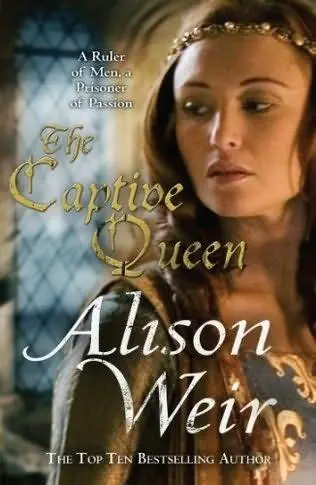
- Название:Captive Queen
- Автор:
- Издательство:BALLANTINE
- Жанр:
- Год:2010
- ISBN:978-0-345-52195-8
- Рейтинг книги:3 / 5. Голосов: 1
-
Избранное:Добавить в избранное
- Отзывы:
-
Ваша оценка:
Captive Queen: краткое содержание, описание и аннотация
Предлагаем к чтению аннотацию, описание, краткое содержание или предисловие (зависит от того, что написал сам автор книги «Captive Queen»). Если вы не нашли необходимую информацию о книге — напишите в комментариях, мы постараемся отыскать её.
Renowned for her highly acclaimed and bestselling British histories, Alison Weir has in recent years made a major impact on the fiction scene with her novels about Queen Elizabeth and Lady Jane Grey. In this latest offering, she imagines the world of Eleanor of Aquitaine, the beautiful twelfth-century woman who was Queen of France until she abandoned her royal husband for the younger man who would become King of England. In a relationship based on lust and a mutual desire for great power, Henry II and Eleanor took over the English throne in 1154, thus beginning one of the most influential reigns and tumultuous royal marriages in all of history. In this novel, Weir uses her extensive knowledge to paint a most vivid portrait of this fascinating woman.
Captive Queen — читать онлайн бесплатно полную книгу (весь текст) целиком
Ниже представлен текст книги, разбитый по страницам. Система сохранения места последней прочитанной страницы, позволяет с удобством читать онлайн бесплатно книгу «Captive Queen», без необходимости каждый раз заново искать на чём Вы остановились. Поставьте закладку, и сможете в любой момент перейти на страницу, на которой закончили чтение.
Интервал:
Закладка:
Patrick proved himself to be a charming and witty companion. She sensed that he liked her, and could see in his hazelnut-colored eyes the kind of admiration she had inspired in men many times in the past. It was balm to her bruised pride. She thought that Raoul saw it too, and was jealous. But Raoul was not to nurture his jealousy for long.
The spring being glorious, with flowers budding unseasonably early and the winds mild and gentle, Eleanor planned a hawking expedition with Earl Patrick. Word reached them that Henry had efficiently crushed the rising at Lusignan, then ridden north to treat with Louis—the news that he had gone so far from her sparked a twinge of anguish in Eleanor’s breast—and now Patrick deemed it safe to ride out for the day.
“There have been no recent reports of any trouble,” he smiled, “so I’ll leave my armor at home, and we’ll take just a small escort.”
It was good to be out in the sunshine, Eleanor found, even though her heart was heavy. She was surprised to discover herself thrilling to the sport, watching her mighty falcon soar into the blue sky and swoop with unerring precision to catch its prey, then return to her outstretched hand and settle on her glove, meekly accepting its gay scarlet hood and the jesses with which she tethered it.
“Bravo, my lady!” exclaimed Earl Patrick. The men-at-arms clapped and cheered admiringly from a distance; they themselves would never be privileged enough even to touch a royal bird like Eleanor’s.
The ambush, when it came, was sudden and deadly, with mounted armed men closing in on them from every side, uttering bloodcurdling war cries.
“It’s the Lusignans!” the earl cried, frantic. “À moi! À moi!”
Eleanor quickly collected herself; in that instant, she could see herself being captured and ransomed, if not worse. But as she made to gallop away, Earl Patrick, shouting orders to his men, dismounted from his horse, quick as lightning, and grabbed her bridle.
“Take my steed, my lady, you’ll not find a faster in Christendom.” She wasted not a moment in swapping mounts, as the earl told her to make for a ruined castle a mile distant and wait for him there.
Their assailants were almost upon them as Eleanor, spurring her borrowed steed, deftly evaded them by almost flying through the only gap in their ranks, then cantered off like the wind toward safety. They would have come after her had not Earl Patrick and his escort engaged them furiously in battle. As the Queen rode away, she could hear the clash of steel and the shouts of men receding into the distance, and was in a fever of anxiety to know which way the combat was going.
Having ridden for several miles and reached the sanctuary of the ruins, Eleanor stood fuming in the peace of the afternoon. How dare the Lusignans make an attempt on her person! No doubt they wished to wring concessions from Henry. Wait until he heard! Then she paused. She was ruler here now, not Henry. Undoubtedly he would come and deal with them, if summoned; he would be furious on her account, if only because she was his queen and duchess, but she decided now that she must prove to him that she did not need him, and show him that she was capable of dealing with problems efficiently by herself.
She waited an hour or so, becoming increasingly anxious. Then she heard horses’ hooves, and shrank back behind some lichen-covered masonry until she could assure herself that it was her escort—or what was left of it—come to find her. She shuddered. How bad had it been?
“Lady,” said the captain, a big, florid man, “I bear heavy news. Earl Patrick is dead, stabbed in the back by the traitors as he donned his hauberk.”
“Oh, dear God!” Eleanor wailed. “That chivalrous man! Those bastards! I will repay them, by God, for they have added grievous injury to grievous insult.” And she smote her balled fist in her palm. Then fear gripped her.
“Are they defeated, these rebels? Where are they?”
“Gone back to their castle,” the captain told her. “It was the young knight, John the Marshal’s son William, who held them off, with great courage and skill, until he himself was wounded and captured. They took him with them, my lady, no doubt hoping for a fat ransom.”
“And they shall have it,” said Eleanor, fighting down her fury and thinking of the tall, dignified young man who had so bravely defended her. He was, she was aware, a soldier of fortune, who had made a reputation as a champion in tournaments, winning many rich prizes. She herself had watched him distinguish himself in the lists and been much impressed.
“They are bringing Earl Patrick’s body, lady,” the captain told her, indicating a small party of his men approaching on horseback. She froze as she espied the bloody corpse of the former governor slumped across a saddle, but resolutely walked forward to pay all due honor to it, bowing her head in grief and respect.
“We will have him buried in Poitiers and pay for masses to be said for his soul,” she declared, suppressing her emotion. There would be time enough for weeping later. “Letters must be sent to his family in England.”
And so it was done, and the young William Marshal was, at length, ransomed. When he presented himself before the duchess, brimming with gratitude, she gave him a gift of money and expressed concern about his wounds.
“They are healing, my lady,” he said cheerfully, “yet no thanks to Guy of Lusignan. He and his followers refused to have them dressed.” As Eleanor gasped in horror, he smiled at her. “It is no matter, for I count it an honor to have served you thus, my Queen.”
“It is rare to find such loyalty,” Eleanor told him. “They tell me you fought as a wild boar against dogs. I owe you much, possibly my very life. Rest assured, the King my lord will come to hear of your valor.”
It occurred to her, as she kept a proprietorial eye on William Marshal in the weeks that followed, and her admiration for him grew, that he would make a fine mentor for Young Henry; and in due course, with the King’s approval, he was appointed guardian, tutor, and master of chivalry to the prince, a role Becket had once filled. Thankfully, there was little risk of this fine knight causing such grief as Becket had. He filled the role magnificently, and Eleanor rewarded him lavishly, with horses, arms, gold, and fine clothing. William was proving to be, she knew—and as her contemporaries would soon come to agree—one of the best knights who ever lived.
Henry had met with Louis, and for once Eleanor had cause to be grateful to her former husband. They had thrashed out a peace, and Louis gave Henry wise advice regarding the disposing of his empire after his death. Her heart was immeasurably gladdened when the King’s messenger brought news of the agreement that had been reached.
“The Lord Henry is to pay homage to the French King for Anjou, Maine, and Brittany; the Lord Geoffrey is to hold Brittany as the Lord Henry’s vassal; and the Lord Richard is to pay homage to King Louis for Aquitaine, and be betrothed to the French King’s daughter, Alys.”
Richard was to have Aquitaine after all! Her prayers had been answered. Her first thought, as she went rejoicing to her chapel to give thanks, was that Henry had done this for her, as a peace offering. Then she remembered that he had ignored her pleadings and her displays of anger on numerous occasions before, and that he never did anything unless there was a political motive. The truth, she guessed, was that Louis, fearing the power of his Angevin vassals, had urged the division of Henry’s domains on his death, and made that a condition of the peace. She wondered if Henry was making a virtue of expediency, and began to fear that he might well renege on the new treaty as soon as the opportunity presented itself.
Читать дальшеИнтервал:
Закладка:
Похожие книги на «Captive Queen»
Представляем Вашему вниманию похожие книги на «Captive Queen» списком для выбора. Мы отобрали схожую по названию и смыслу литературу в надежде предоставить читателям больше вариантов отыскать новые, интересные, ещё непрочитанные произведения.




Обсуждение, отзывы о книге «Captive Queen» и просто собственные мнения читателей. Оставьте ваши комментарии, напишите, что Вы думаете о произведении, его смысле или главных героях. Укажите что конкретно понравилось, а что нет, и почему Вы так считаете.