Alison Weir - Captive Queen
Здесь есть возможность читать онлайн «Alison Weir - Captive Queen» весь текст электронной книги совершенно бесплатно (целиком полную версию без сокращений). В некоторых случаях можно слушать аудио, скачать через торрент в формате fb2 и присутствует краткое содержание. Год выпуска: 2010, ISBN: 2010, Издательство: BALLANTINE, Жанр: Историческая проза, на английском языке. Описание произведения, (предисловие) а так же отзывы посетителей доступны на портале библиотеки ЛибКат.
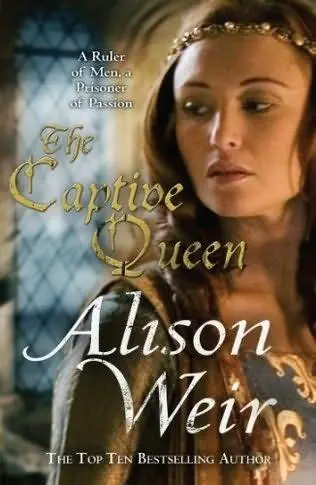
- Название:Captive Queen
- Автор:
- Издательство:BALLANTINE
- Жанр:
- Год:2010
- ISBN:978-0-345-52195-8
- Рейтинг книги:3 / 5. Голосов: 1
-
Избранное:Добавить в избранное
- Отзывы:
-
Ваша оценка:
Captive Queen: краткое содержание, описание и аннотация
Предлагаем к чтению аннотацию, описание, краткое содержание или предисловие (зависит от того, что написал сам автор книги «Captive Queen»). Если вы не нашли необходимую информацию о книге — напишите в комментариях, мы постараемся отыскать её.
Renowned for her highly acclaimed and bestselling British histories, Alison Weir has in recent years made a major impact on the fiction scene with her novels about Queen Elizabeth and Lady Jane Grey. In this latest offering, she imagines the world of Eleanor of Aquitaine, the beautiful twelfth-century woman who was Queen of France until she abandoned her royal husband for the younger man who would become King of England. In a relationship based on lust and a mutual desire for great power, Henry II and Eleanor took over the English throne in 1154, thus beginning one of the most influential reigns and tumultuous royal marriages in all of history. In this novel, Weir uses her extensive knowledge to paint a most vivid portrait of this fascinating woman.
Captive Queen — читать онлайн бесплатно полную книгу (весь текст) целиком
Ниже представлен текст книги, разбитый по страницам. Система сохранения места последней прочитанной страницы, позволяет с удобством читать онлайн бесплатно книгу «Captive Queen», без необходимости каждый раз заново искать на чём Вы остановились. Поставьте закладку, и сможете в любой момент перейти на страницу, на которой закончили чтение.
Интервал:
Закладка:
Henry said nothing, but suddenly slid his arms tightly about her and held her until the storm of weeping had passed; she could not see his face with hers pressed wetly against his beard, and wondered why she wanted to. Even when the tears dried and she was still, she stood there in his embrace, wanting to free herself, yet needing to be held there forever, and dreading the moment ending. It was a bitter realization that the only man who could comfort her was the man who had dealt her a mortal hurt. But just then she felt him stir against her.
“No!” she declared, beginning to struggle. “Not that. Never that.”
“You are my wife,” Henry muttered. “It is my right.”
“Then you will have to rape me!” she spat.
“Don’t tempt me,” he said, then let her go. When he spoke again, his voice was barely controlled. “Very well. I was trying to mend things between us, but you have made yourself clear. From now on we will observe the courtesies, and no more. You will not mind, I take it, if I indulge my lust in other beds?”
“Do as you please.” Eleanor seethed with the desperation of one who realizes she has deliberately, impulsively burned her bridges. “I will go to Aquitaine, and we will keep up the pretense that all is well between us, if that is what you wish.”
“You know very well I wished for something rather different,” Henry told her.
“No, my lord, it’s you who have got it all wrong,” Eleanor said, resolutely wiping away the last of her tears. “Our marriage is dead. You cannot have us both.”
36
Fontevrault, 1168
They were riding south together, making for Poitiers, a veritable army of lords, servants, and soldiers at their heels. Henry had insisted on escorting his wife, warning her that the times were lawless and that his mailed fist stretched only so far. They traveled in hostile silence.
Eleanor was in turmoil, resentful that her joy in her yearned-for return to Aquitaine as its rightful ruler had been ruined by the dread knowledge that it effectively signaled her separation from Henry, a situation that was her doing but in no way her fault. Every mile was taking them nearer to that parting, after which they would go their own ways, partners in a marriage, yes, but miles apart in far more than distance. She ached for inner peace, and could only pray that, once settled in her beloved domains in the South, she would find it.
There was to be more than one parting. With the King and Queen rode their children: Young Henry, now styled Count of Poitiers, fair of face and shooting up in height, wearing his royal status with all the assurance of his race. He would be remaining with his father from now on, to learn the business of government. Richard, eleven years old, long-limbed and blue-eyed, already a hardy warrior who was praised alike by the captains who drilled him in military exercises and the tutors who taught him Latin and book learning. He was to accompany his mother to Aquitaine with his brother Geoffrey, dark and handsome Geoffrey, who was patiently suffering the twittering of vain young Constance, who rode by his side; he would be wasted on her, this clever boy, Eleanor thought. Then there were the little girls, Eleanor and Joanna, golden-haired images of herself, but gentler, and far more docile and biddable.
They were very subdued today, her daughters. It had been decided, by Henry, with her reluctant approval, that they should be brought up by the good nuns of Fontevrault until such time as they were married. Eleanor knew there could be no better education for girls of high birth. Her family—and Henry’s—had a long tradition of sending daughters to Fontevrault. But the decision saddened her. She would miss Eleanor and Joanna, and felt that in some way she was abandoning them, much as she had abandoned two other little girls all those years before. Recently, at long last, in response to her own importunings, she received another letter from Marie, to which she had felt constrained to reply in conventional fashion. She took pride in the knowledge that the young Countess of Champagne had inherited her own love of music and poetry, but there was no true bond there—it had been loosed long ago. It was like writing to a stranger. She did not have the will to pursue the correspondence further.
She smiled encouragingly at her little girls as a pang gripped her heart. It was for the best that they be entrusted to the good sisters of Fontevrault, she told herself. Henry had warned her that she would have enough on her hands trying to control her rebellious vassals, and that most girls of high birth were reared by nuns. Yet she had prided herself that, contrary to the common custom of royalty, she had until recently kept all her children with her. She wondered if this consignment of Eleanor and Joanna to a convent was some form of revenge on Henry’s part, or if he feared she might go behind his back and make alliances between his daughters and Aquitainian lords, to keep the latter sweet. He would not want to waste the fruit of his loins on such ingrates—she understood that.
That left young John, little more than a year old. Try as she might, Eleanor still could not bring herself to love him, this child conceived in sorrow and born in betrayal. His existence conjured up too many memories of that terrible Christmastide when she had gone to Woodstock and come face-to-face with catastrophe and ruin, and then endured that bloody, agonizing travail at Oxford. No, John was the fruit of a marriage in its death throes, and sometimes she could not bear to look upon him. His nurses had the care of him.
John was going to Fontevrault too. Young though he was, Eleanor urged Henry to consider him for a career in the Church, and Henry had agreed. As the youngest of four sons, it did not seem likely that there would be much of a landed inheritance for him, so the Church seemed an obvious choice. John would be brought up as an oblate, in preparation for his ordination to the priesthood. The gift of a son to God would undoubtedly be one of the best ways of storing up treasure in Heaven, for both parents. And God knows, we need it, Eleanor thought bitterly. She would not miss her last-born; indeed, she was thankful that others would have the rearing of him. Her guilt was overwhelming.
But there was one other whom she would miss, whose smile would never again gladden her day. Poor Petronilla had died three months before, the victim of her own helpless predilection for the fruit of the grape. At the end she had been comatose, her skin yellowed, her belly horribly distended. Eleanor had wept pitifully for her sister, but could not deny that death had come as a merciful release. But there was now an empty space in her life, which Petronilla had once filled; there were too many empty spaces, she reflected mournfully. Sadness seemed to be her lot these days.
Amiable Abbess Isabella had gone to her well-earned rest many years before, and it was her successor, Abbess Audeburge, who was waiting to receive them; her monks, nuns, and lady boarders drawn up in a respectful semicircle behind her. As the royal cavalcade drew to a halt, the entire convent fell to its knees and the abbess stepped forward. Audeburge was a capable, dynamic woman whom Eleanor had long liked and admired. She knew she could not have entrusted her children to a better guardian. And her confidence seemed to be justified, for when Eleanor and Joanna were formally committed to her care, Abbess Audeburge bent to kiss them affectionately and summoned forward two of her boarders with a parakeet and a monkey to distract her new charges, instantly winning their hearts. Then she reached out her strong, aristocratic hands to take John from his nurse, removed his thumb from his mouth, and gentled him, receiving a tentative smile in return. Before Eleanor knew it, the good-byes had been said and her children spirited away by a bevy of smiling nuns.
Читать дальшеИнтервал:
Закладка:
Похожие книги на «Captive Queen»
Представляем Вашему вниманию похожие книги на «Captive Queen» списком для выбора. Мы отобрали схожую по названию и смыслу литературу в надежде предоставить читателям больше вариантов отыскать новые, интересные, ещё непрочитанные произведения.







Обсуждение, отзывы о книге «Captive Queen» и просто собственные мнения читателей. Оставьте ваши комментарии, напишите, что Вы думаете о произведении, его смысле или главных героях. Укажите что конкретно понравилось, а что нет, и почему Вы так считаете.