Alison Weir - Captive Queen
Здесь есть возможность читать онлайн «Alison Weir - Captive Queen» весь текст электронной книги совершенно бесплатно (целиком полную версию без сокращений). В некоторых случаях можно слушать аудио, скачать через торрент в формате fb2 и присутствует краткое содержание. Год выпуска: 2010, ISBN: 2010, Издательство: BALLANTINE, Жанр: Историческая проза, на английском языке. Описание произведения, (предисловие) а так же отзывы посетителей доступны на портале библиотеки ЛибКат.
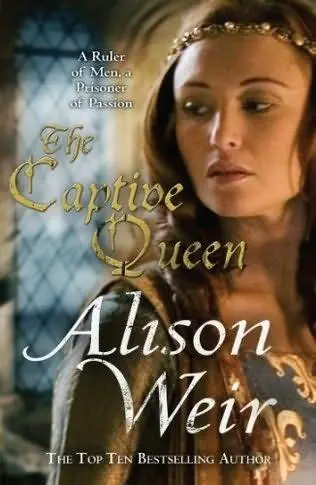
- Название:Captive Queen
- Автор:
- Издательство:BALLANTINE
- Жанр:
- Год:2010
- ISBN:978-0-345-52195-8
- Рейтинг книги:3 / 5. Голосов: 1
-
Избранное:Добавить в избранное
- Отзывы:
-
Ваша оценка:
Captive Queen: краткое содержание, описание и аннотация
Предлагаем к чтению аннотацию, описание, краткое содержание или предисловие (зависит от того, что написал сам автор книги «Captive Queen»). Если вы не нашли необходимую информацию о книге — напишите в комментариях, мы постараемся отыскать её.
Renowned for her highly acclaimed and bestselling British histories, Alison Weir has in recent years made a major impact on the fiction scene with her novels about Queen Elizabeth and Lady Jane Grey. In this latest offering, she imagines the world of Eleanor of Aquitaine, the beautiful twelfth-century woman who was Queen of France until she abandoned her royal husband for the younger man who would become King of England. In a relationship based on lust and a mutual desire for great power, Henry II and Eleanor took over the English throne in 1154, thus beginning one of the most influential reigns and tumultuous royal marriages in all of history. In this novel, Weir uses her extensive knowledge to paint a most vivid portrait of this fascinating woman.
Captive Queen — читать онлайн бесплатно полную книгу (весь текст) целиком
Ниже представлен текст книги, разбитый по страницам. Система сохранения места последней прочитанной страницы, позволяет с удобством читать онлайн бесплатно книгу «Captive Queen», без необходимости каждый раз заново искать на чём Вы остановились. Поставьте закладку, и сможете в любой момент перейти на страницу, на которой закончили чтение.
Интервал:
Закладка:
“Becket is older,” Raoul ventured. “Mayhap Henry reveres him as a father figure, or elder brother. Maybe there is something in Becket that Henry would like to be.”
“Or maybe he gave Henry the kind of companionship that I could not,” Eleanor added bitterly.
“I don’t think it has anything to do with you,” Raoul comforted her.
“Oh, yes, it does! As soon as Becket came on the scene, I was second in importance to Henry. Before that everything had been wonderful between us. We were a formidable partnership. That all finished with Becket. There are moments when it’s there again, just within my grasp, but not for long. Always that man intrudes. And another thing. My Lord Bishop of Poitiers is here. I expect that this matter he wishes to discuss with me concerns him too. Raoul, I am going to give him an audience in a few minutes. I want you to be there when he comes.”
“You know I will,” Raoul said, gently touching her cheek.
“Raoul!” she reproved. “You know there can be nothing between us.”
“Ah, but I may live in hope, like a true troubadour,” he said, and smiled sadly.
Eleanor received Jean aux Bellesmains, Bishop of Poitiers, in her solar. She was seated in her high-backed chair, her yellow samite skirts fanned out at her feet, a gold coronet on her snowy veil. Behind her stood Raoul, his hand grasping the finial on her chair back.
The bishop bustled in self-importantly. Eleanor remembered that he had been with Becket in Archbishop Theobald’s household, that they became friends, and that, even though he owed his bishopric to Henry, Jean aux Bellesmains had stayed staunchly loyal to Becket. She sensed that this interview wasn’t going to be easy, but sat smiling pleasantly, asking how she could be of service.
“Madame the Duchess, I come on behalf of His Grace the Archbishop of Canterbury,” the bishop said grandly, almost as if he were throwing down a gauntlet. “He sends his duty and affection to you, his dear daughter in Christ, and begs you most earnestly to intervene on his behalf in this quarrel with the King your husband.”
As Eleanor caught Raoul’s sharp intake of breath, she quickly collected her wits. She had not expected Becket to approach her, of all people.
“I am flattered that His Grace believes I could help him,” she answered, “but he cannot but be cognizant of the fact that, since he and my husband became such good friends , my influence has declined.”
Before she could say anything further, Raoul interrupted. “The Archbishop, of all people, should know that a wife’s first duty is to her husband, and that to him she owes obedience. How, then, could she intervene on behalf of the man who has deliberately defied him and made himself his enemy?”
Eleanor’s face briefly registered amused surprise. Not an hour before, Raoul had been doing his best to make her forget her duty to her husband!
The bishop flushed with anger. “Surely one’s first duty is to God, my Lord of Faye?”
“Let’s leave God out of this,” Raoul retorted. “This is about one man’s vanity.”
“It is about far more than that, and you know it!” Jean aux Bellesmains turned to Eleanor. “Madame, I did not come here hoping for much. But if you would consent only to act as a messenger—”
“No! How can you ask that of her?” Raoul interrupted.
The bishop glared at him. “Can you not let Madame the Duchess answer for herself, my lord?”
“Yes, Raoul, please allow me to speak,” Eleanor insisted. “My Lord Bishop, it is my greatest desire to see my husband at peace with all his subjects. But as my lord here has said, it would not be appropriate for me to become involved in this quarrel. All I can do is pray every day for its happy resolution.”
The bishop shot her a withering look.
“In truth, I am not surprised, madame. I myself told His Grace that he could hope for neither aid nor counsel from you, and John of Salisbury said the same. He shares Becket’s exile, you know, and his many privations. But I see you have put all your faith in my lord here, and that he is hostile to His Grace.”
“How dare you speak to me like that!” Eleanor flared. “You are impertinent, my Lord Bishop. You would not address me thus if the duke were here, or so insult his deputy.”
Jean aux Bellesmains bristled with outrage, which loosened his tongue.
“Maybe you have not heard what people are saying, madame, and maybe I would be doing you both a kindness by informing you. There are conjectures that grow day by day in regard to the influence that my Lord of Faye here appears to wield over you. Some say they deserve credence. I say, have a care to your reputation.”
Eleanor stood up, quivering with rage. “I have never in my life been so insulted!” she hissed. “You will quit my presence right now, my Lord Bishop, and never return until you have abased yourself and craved my pardon for the baseless accusations you have made. Rest assured, my lord shall hear of them. He will not be pleased. In fact, if I were you, I would make sure I was not in Poitiers when he returns there.”
The bishop stared at her, aghast.
“Madame, in my disappointment, I forgot myself,” he babbled. “I apologize unreservedly! I make a thousand apologies! I lay myself at your feet—”
“That will not be necessary,” Eleanor said coldly; privately, she would have loved to see this pompous fool groveling on his knees. “I accept your apologies—and I will hear no more of these calumnies, you understand?”
When he had backed out of the room, assuring her of his love, loyalty, and discretion, Eleanor turned to Raoul.
“You heard what he said, my uncle.” Her face was serious. “I pray you, keep a wise distance. And please don’t speak for me in future!”
“Eleanor, I would die to serve you!” Raoul protested.
“You might well, if Henry gets word of this!” she told him with a grim smile.
27
Bredelais Castle, the Welsh Border, 1165
Henry slowed his horse to a trot. He had far outgalloped his companions, who were some way behind with the huntsmen, carrying with them the game they had caught that day. Ahead, in the distance, loomed the castle of Bredelais, the home of their host, Sir Walter de Clifford, whose services in the so far unsuccessful campaign had nevertheless been admirable. But the tide seemed to be turning, thank God, and, flushed with success, both in the field of battle and in the chase, Henry was in a holiday mood, looking forward to a merry supper with his genial host and his lordly companions.
Behind him, he could hear faint shouts and guffaws. Close by, a cuckoo called. It was the early evening of a glorious summer day, with the sun sinking to the west in a blaze of gold and roseate hues. God, but it was warm. He had long since stripped off his tunic and stuffed it in his saddle bag, and wore only his shirt and hose. He trotted along whistling, feeling as if he had not a care in the world. He even thought he might ask for a bath to be prepared on his return. That should set them scuttling!
He steered his mount through some woodland, keeping the castle always in his view through the trees, and emerged onto a grassy meadow, a vast green expanse that swept up to the moat. There was a girl there, kneeling in the long grass, her tight-laced dress a vivid blue against the emerald sward. She had her back to him, so he could not see her face. Long fair tresses rippled unbound and uncovered over her shoulders, proclaiming her a maiden as yet untouched, and her fine raiment bore testament to her gentle birth. She was gathering flowers, and made, in all, a pretty, fetching sight.
His eye roving on the slender lines of her body and hips, Henry felt the familiar upsurge of lust. He had not been so aroused by a woman in a long time. Rohese he had abandoned months before, tired to satiety of her all too familiar charms. Eleanor was in Angers, pestering him with demands for aid against some rebellious vassals, and no doubt bitching about Becket to anyone who would listen. Try as he might, he could not recapture the happiness he had once shared with her. There had been a fleeting resurgence of it, back in the spring, but it had as briefly waned, at least on his part. He could not forgive Eleanor her hostility to Thomas, her searching questions, her neediness. He loved her still, and knew he always would, but not in the way she wanted. It grieved him, but there it was. Something that had died could not be brought to life again.
Читать дальшеИнтервал:
Закладка:
Похожие книги на «Captive Queen»
Представляем Вашему вниманию похожие книги на «Captive Queen» списком для выбора. Мы отобрали схожую по названию и смыслу литературу в надежде предоставить читателям больше вариантов отыскать новые, интересные, ещё непрочитанные произведения.









Обсуждение, отзывы о книге «Captive Queen» и просто собственные мнения читателей. Оставьте ваши комментарии, напишите, что Вы думаете о произведении, его смысле или главных героях. Укажите что конкретно понравилось, а что нет, и почему Вы так считаете.