Alison Weir - Captive Queen
Здесь есть возможность читать онлайн «Alison Weir - Captive Queen» весь текст электронной книги совершенно бесплатно (целиком полную версию без сокращений). В некоторых случаях можно слушать аудио, скачать через торрент в формате fb2 и присутствует краткое содержание. Год выпуска: 2010, ISBN: 2010, Издательство: BALLANTINE, Жанр: Историческая проза, на английском языке. Описание произведения, (предисловие) а так же отзывы посетителей доступны на портале библиотеки ЛибКат.
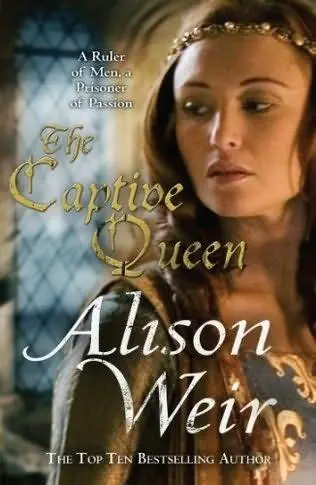
- Название:Captive Queen
- Автор:
- Издательство:BALLANTINE
- Жанр:
- Год:2010
- ISBN:978-0-345-52195-8
- Рейтинг книги:3 / 5. Голосов: 1
-
Избранное:Добавить в избранное
- Отзывы:
-
Ваша оценка:
Captive Queen: краткое содержание, описание и аннотация
Предлагаем к чтению аннотацию, описание, краткое содержание или предисловие (зависит от того, что написал сам автор книги «Captive Queen»). Если вы не нашли необходимую информацию о книге — напишите в комментариях, мы постараемся отыскать её.
Renowned for her highly acclaimed and bestselling British histories, Alison Weir has in recent years made a major impact on the fiction scene with her novels about Queen Elizabeth and Lady Jane Grey. In this latest offering, she imagines the world of Eleanor of Aquitaine, the beautiful twelfth-century woman who was Queen of France until she abandoned her royal husband for the younger man who would become King of England. In a relationship based on lust and a mutual desire for great power, Henry II and Eleanor took over the English throne in 1154, thus beginning one of the most influential reigns and tumultuous royal marriages in all of history. In this novel, Weir uses her extensive knowledge to paint a most vivid portrait of this fascinating woman.
Captive Queen — читать онлайн бесплатно полную книгу (весь текст) целиком
Ниже представлен текст книги, разбитый по страницам. Система сохранения места последней прочитанной страницы, позволяет с удобством читать онлайн бесплатно книгу «Captive Queen», без необходимости каждый раз заново искать на чём Вы остановились. Поставьте закладку, и сможете в любой момент перейти на страницу, на которой закончили чтение.
Интервал:
Закладка:
“But where do our daughters fit into this?” Eleanor asked, wondering if this plan was as foolproof as it sounded.
“I have proposed that the alliance be cemented by two marriage treaties,” Henry explained. “It is my intention that Matilda marry the Emperor’s greatest vassal and ally, Henry the Lion, Duke of Saxony, while Eleanor will wed the Emperor’s young son, Frederick. I have written requesting the Emperor to send his envoys to Rouen to draw up the agreements. I hope to meet them there in February.”
“Are your plans so far advanced?” Eleanor asked, utterly dismayed at this news and at the prospect of losing two more daughters—cherished daughters this time—and furious that Henry had said nothing of this business until now, when he must have been planning it for weeks. “Did you not think to discuss it with me first? They are my children too.”
“I am discussing it with you now,” Henry said. “You of all people know very well that kings marry their daughters for policy. These are advantageous marriages that will benefit us all.”
“You are using our daughters to be revenged on Becket!” Eleanor cried.
“That would be one advantage of the treaty,” Henry admitted, “but there would be many others.”
“I do hope so!” she retorted. “And when are you sending our little girls to Germany? Henry, they are so young! Eleanor is but three.”
“That is to be decided, but it will not be for a while yet,” he told her.
“Then I must be grateful for that small mercy,” Eleanor hissed, and hastened from the room before the tears fell.
She stood her ground all through January and into February. She would not go to Normandy to witness the selling of her daughters in a hopeless cause. She was adamant about that. Henry shrugged and did not bother to argue with her.
“You can stay here in England,” he said.
“I shall go to Winchester with the children,” she told him. “Then perhaps I might travel a little. Shall I act as regent for you?”
“No,” Henry replied crushingly. “My justiciar can act in my absence.”
She hid her distress and wondered—not for the first time—why he was increasingly reluctant of late to allow her any autonomy in state affairs. At one time, he unhesitatingly would have relied upon her to rule in his absence, but that had been before this distance had opened up between them. It had been four years now since she had issued a writ in her own name. It was all Becket’s fault, she believed. Becket had been the sole cause of the discord between them.
“When the treaty is signed, I want you to summon the Great Council to Westminster to confirm it,” Henry commanded her. “I shall then send the Emperor’s envoys to pay their respects to you in England, and to meet Matilda and Eleanor. You will receive them with all honor. I know you will not fail me.” His tone was aggressive.
“You can rely on me,” Eleanor said coolly. “I know how these things are done.”
On the last night before Henry’s departure for Normandy, he came to her bed and took his pleasure of her, little caring whether or not he was welcome. She lay beneath him, wishing she could give him more, but her heart was too bitter against him. She did not like the man he had become, the vengeful, petty man who could use his own daughters to score points against his enemies. She grieved to find his heart closed to her, to have him treat her as an adversary, and, worse than that, a mere chattel he could use at will. It seemed that no one could oppose Henry these days: he would not brook it. You were either for him or against him.
They said their farewells in public the next morning, Eleanor standing by Henry’s great charger with the warming stirrup cup.
“God speed you, my lord,” she said formally.
“Join me as soon as you can,” he said, bending down in the saddle to kiss her hand. Then he wheeled his horse around and was off, clattering through the gatehouse, his motley retinue and cumbersome baggage train lumbering in his wake.
26
Rouen and Angers, 1165
It was May before Eleanor was reunited with Henry in Rouen, and by then she knew she was pregnant again. He was delighted by the news, but it only saddened her, for this was the first of her children not to have been conceived in love. Yet she supposed the infant would be as precious to her as the others when it arrived.
She was shocked by the change in the Empress. Matilda had aged much in the years since they had last met and was now quite frail and stiff in her joints. Eleanor had brought Richard with her, and the younger Matilda, and had to sternly enjoin them not to behave so boisterously around their grandmother.
The Empress had mellowed with the years. There was little left of the antipathy she had once shown toward her daughter-in-law. Eleanor found it comforting to sit with the older woman and confide her opinions of the quarrel between Henry and Becket, and was gratified to have her own position bolstered by the old lady’s wise views robustly expressed.
“That man has written repeatedly to me, claiming that Henry is hell-bent on persecuting the Church,” she revealed. “Of course, he got no satisfaction from me. I ignored all his letters.”
“It is Henry who worries me,” Eleanor confessed.
“Henry was a fool to advance Becket,” the Empress declared, sipping delicately at her wine cup.
“He is obsessed with him. He will not listen to reason.”
“But Henry is right!” his mother said sharply. “He has good reason to be angry. Becket is a menace, and he appears deliberately to have provoked Henry from the moment of his consecration.” She leaned forward, her faded blue eyes steely beneath paper-thin lids. “This issue of the criminous clerks—it is all wrong, and must be stopped. Becket is a fool to take his stand on that.”
“I know, but it seems to me he has taken his stand on so many things that we have all lost sight of what the quarrel was originally about.” Eleanor sighed. “I have done my best to support Henry, truly I have, but he does not appear to need my support. I too am the enemy these days. I have criticized his need for vengeance too often.”
“You were right to do so,” Matilda pronounced. “Someone needs to keep my son in check. He is too passionate and headstrong for his own good.” She leaned her bewimpled head back against her chair. “Alas, I fear this will end badly. It goes on relentlessly.”
“It dominates our lives to an unacceptable extent,” Eleanor told her. “It has spoiled my marriage. I pray God it is resolved soon.”
“Amen to that,” the Empress murmured. “But I suspect it will not be.”
Eleanor spent a mere fortnight with Henry before he was off on his horse again, bound this time for Wales, to teach a lesson to the Welsh princes who had united to cast off his rule.
His mood had been kinder these past few days. She wondered if his mother had said anything to make him treat her more tenderly. He’d come to her bed every night, and they had made love frequently—not as fervently as they once had, but with something of their former passion and a sense of closeness. Eleanor dared to hope that if things went on like this, they would in time recapture some of the joy they had once taken in each other.
She knew for certain that matters were mending between them when Henry told her, two days before he left, that he was entrusting the government of Anjou and Maine to her while he was overseas.
“I want you to go to Angers,” he said. “Take up residence there; be a visible presence in my dominions.” It was wonderful—and heartening—to have him pay her such a compliment.
She went, her heart singing, to Angers. Once installed in the massive fortress that dominated the town, she sent to Poitiers, requesting that her faithful uncle, Raoul de Faye, come to join her to assist her in her great task. Henry had never had a good opinion of Raoul’s abilities, but Eleanor had found him to be a true and loyal deputy these past few years, dedicated to her service and diligent at attempting—not always successfully, she had to admit—to keep her troublesome lords in check. Anyway, Henry was far away, fighting the Welsh. The decision to send for Raoul was hers to make.
Читать дальшеИнтервал:
Закладка:
Похожие книги на «Captive Queen»
Представляем Вашему вниманию похожие книги на «Captive Queen» списком для выбора. Мы отобрали схожую по названию и смыслу литературу в надежде предоставить читателям больше вариантов отыскать новые, интересные, ещё непрочитанные произведения.








Обсуждение, отзывы о книге «Captive Queen» и просто собственные мнения читателей. Оставьте ваши комментарии, напишите, что Вы думаете о произведении, его смысле или главных героях. Укажите что конкретно понравилось, а что нет, и почему Вы так считаете.