Alison Weir - Captive Queen
Здесь есть возможность читать онлайн «Alison Weir - Captive Queen» весь текст электронной книги совершенно бесплатно (целиком полную версию без сокращений). В некоторых случаях можно слушать аудио, скачать через торрент в формате fb2 и присутствует краткое содержание. Год выпуска: 2010, ISBN: 2010, Издательство: BALLANTINE, Жанр: Историческая проза, на английском языке. Описание произведения, (предисловие) а так же отзывы посетителей доступны на портале библиотеки ЛибКат.
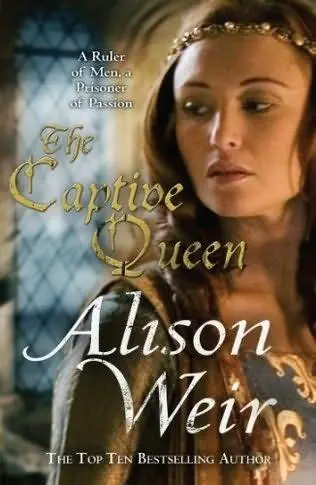
- Название:Captive Queen
- Автор:
- Издательство:BALLANTINE
- Жанр:
- Год:2010
- ISBN:978-0-345-52195-8
- Рейтинг книги:3 / 5. Голосов: 1
-
Избранное:Добавить в избранное
- Отзывы:
-
Ваша оценка:
Captive Queen: краткое содержание, описание и аннотация
Предлагаем к чтению аннотацию, описание, краткое содержание или предисловие (зависит от того, что написал сам автор книги «Captive Queen»). Если вы не нашли необходимую информацию о книге — напишите в комментариях, мы постараемся отыскать её.
Renowned for her highly acclaimed and bestselling British histories, Alison Weir has in recent years made a major impact on the fiction scene with her novels about Queen Elizabeth and Lady Jane Grey. In this latest offering, she imagines the world of Eleanor of Aquitaine, the beautiful twelfth-century woman who was Queen of France until she abandoned her royal husband for the younger man who would become King of England. In a relationship based on lust and a mutual desire for great power, Henry II and Eleanor took over the English throne in 1154, thus beginning one of the most influential reigns and tumultuous royal marriages in all of history. In this novel, Weir uses her extensive knowledge to paint a most vivid portrait of this fascinating woman.
Captive Queen — читать онлайн бесплатно полную книгу (весь текст) целиком
Ниже представлен текст книги, разбитый по страницам. Система сохранения места последней прочитанной страницы, позволяет с удобством читать онлайн бесплатно книгу «Captive Queen», без необходимости каждый раз заново искать на чём Вы остановились. Поставьте закладку, и сможете в любой момент перейти на страницу, на которой закончили чтение.
Интервал:
Закладка:
Already Eleanor’s brothers were becoming restive. They had made no secret of the fact that they disliked England. It was too cold, and the food was ghastly. Soon, they warned her, by her leave, they would return to the sunnier climes of Aquitaine. That gave her a pang. She always tried her best not to think of her own land, knowing that it might be many moons, and probably years, before she saw it again. Understanding their homesickness, she had told William and Joscelin that they might depart whenever they wished, with her blessing; she would not keep them here against her will. She knew they would go soon. They were not creatures of the court, but men of property who had fiefdoms to look after. She would be sorry to see them go, but glad for them, all the same.
Eleanor was resting in her bower with her feet up, reading letters, when Petronilla, a little blurred at the edges with wine, as she so often was these days, knocked and entered.
“Eleanor, I think you should come and see young William. He has developed a fever in this last hour, and the nurse is a little concerned.”
Weary and ungainly as she was, Eleanor got clumsily but hastily to her feet, her heart full of fear. Children died young—it was a common occurrence—and she had only yesterday given thanks to God for being blessed with such healthy boys. Had she been too complacent? Had there been some symptom she had missed? She had last seen William after dinner; he seemed well enough then, had eaten up every morsel, so she had been told. Maybe she was overreacting—but she did not think so. She had appointed the best nurse to be had, and if she was concerned enough to summon her mistress, when usually she dealt competently with childhood ailments herself, then there must indeed be cause for worry.
As swiftly as she could she ascended the turret stairs to the princes’ apartments on the topmost floor of the keep, a weepy Petronilla lurching in her wake. Bursting into the boys’ bedchamber, she found William lying hot and sweating beneath the rich covers, surrounded by his own nurse and Young Henry’s, the rockers who tended Henry’s cradle, and the nursery servants. As they all stood aside to allow the Queen to approach the bed, she could see from their expressions that her alarm was justified. In the far corner the bastard Geoffrey stood taking it all in, his little face taut with fright. There was much love between him and his half brothers.
“William, sweeting,” Eleanor said, sinking to her knees and clasping her son’s limp hand. He did not respond. The fever was at its height, and he was barely conscious, moaning fitfully in his stupor, his black curls on the pillow wet with perspiration. This could not be happening! He had been well and thriving only hours before!
Eleanor felt her son’s brow. It was burning.
“When did this come on?” she asked, her voice abrupt with terror.
“An hour ago, lady,” Alice, William’s nurse, replied. There were tears of distress—and fear—in her eyes. “Young ones of that age—he’s not yet three—take ill quickly; they’re up and down like windmills.”
“He’s so hot!” Eleanor cried, running her hands over his small body, frantic to do something to alleviate her child’s plight. “We must uncover him.”
“That be dangerous.” Alice frowned, aghast. “He’d catch cold and it could kill him.”
“Then what are we to do?” the Queen almost sobbed, gathering her child to her breast and rocking him in her arms. “Oh, my boy, my little boy! Get better for Mother, please!” She turned desperately to the attendants. “Have the physicians been sent for?”
“They are here,” said Petronilla, her face white, her voice shaking. “And the chaplain.”
At mention of the chaplain, Eleanor began to tremble, and tightened her arms around William’s fevered body. His head was against her shoulder, damp and tousled; his eyes were closed. How could her sweet, innocent child be struck down so rapidly? It was like a nightmare from which she would surely soon wake.
The physicians gathered by the bed. They pulled back the covers and took turns examining the patient, their faces grave.
“It is an imbalance of the humors, my lady,” one pronounced. “We could try bleeding him, although it might be best to let him sweat it out.”
“I will make up a remedy of caraway, cucumber, and licorice,” said a second. “They are all trusted cures for fever.”
William was tossing fitfully. Eleanor felt his brow again. It was hot. Her hands roved searchingly over his restless little body and touched dry heat; he was burning up, and no longer seemed to be aware of her. She was praying inwardly, desperately bargaining with God, willing Him to restore her son to health.
I will promise anything, Lord, she vowed, anything at all, in return for his life.
Just then William’s body stiffened and his limbs went rigid. His head jerked back and his arms and legs began to convulse. His skin seemed to drain of blood and took on a blue tinge.
“Dear God, do something!” Eleanor screamed at the doctors in panic.
“It is the fever, my lady,” they told her helplessly, with tears in their eyes. “It has reached its crisis. We can but wait for it to pass. The Lord William is in God’s hands now.”
The terrifying jerking ceased almost as suddenly as it had begun. William’s body went limp and mercifully he lay at peace, his breathing shallow.
“Thank God!” Eleanor sobbed, collapsing to her knees by the little bed and clasping the child tightly, rocking him gently in her arms for what seemed like an eternity, not daring to let him go. Behind her the physicians were shaking their heads. They had seen the tiny hand fall lifeless onto the coverlet. It was only when Eleanor had finally laid her son gently back on the pillow that she realized he had gone from her forever.
16
Rouen, 1160–Four Years Later
Eleanor smiled despite herself as the fair-haired little girl, unsteady on her feet, was escorted by her guardian, the Chief Justiciar of Normandy, up to the altar rails of the cathedral of Notre Dame. There, awaiting her, stood her bridegroom, the Lord Henry, heir to England, Normandy, and Anjou, fidgeting in his best tunic and cloak, his red curls crowned with a small gold circlet. His father, King Henry, was smiling too, well satisfied with this new marriage alliance, and, standing beside him, the Empress was nodding her approval. This was a fitting match for her grandson.
The bride, not quite three years old, performed a wobbly curtsey to the King and Queen and, at the bidding of the justiciar, placed her hand in that of the Lord Henry. Then the papal legate stepped forward and began intoning the marriage service.
Eleanor watched, her younger children at her side. Matilda, who had been born during that terrible time of mourning for poor William, was the physical image of her grandmother, for whom she had been named, yet a much gentler soul. Her pleasant, placid round face was framed by the red-gold locks of her race. She was a good, dutiful girl, and one day would make some lucky prince a fine wife.
Geoffrey, two years old, black-haired, handsome, and willful, clung to Eleanor’s hand. As the King and Queen’s third living son, he was already aware of the need to assert himself against his older brothers, and knew that he came lowest in their pecking order. But he had the tenacity to hold his own and to make his mark, Eleanor thought. No one will make a fool of my Geoffrey.
Behind her, firmly constrained by his nurse, the plump and motherly Hodierna, fidgeted Henry and Eleanor’s middle son, three-year-old Richard, a handsome, robust, and vigorous little boy with angelic features and the Plantagenet red hair and temper. If any of the Queen’s children could be said to have replaced her precious William, it was Richard. When they had laid him in her arms, bloody and bawling after he came bursting from her womb, ready to take on the world, she had looked upon him and instantly fallen in love. It was wrong, she knew, but he was by far her favorite of all her brood. She could not help it. She loved him so fiercely that it almost hurt, and lived in dread that anything evil would befall him. It was inexplicable, but her fears for him were far greater than her fears for her other children. She had not realized it was possible for a mother to feel such love.
Читать дальшеИнтервал:
Закладка:
Похожие книги на «Captive Queen»
Представляем Вашему вниманию похожие книги на «Captive Queen» списком для выбора. Мы отобрали схожую по названию и смыслу литературу в надежде предоставить читателям больше вариантов отыскать новые, интересные, ещё непрочитанные произведения.










Обсуждение, отзывы о книге «Captive Queen» и просто собственные мнения читателей. Оставьте ваши комментарии, напишите, что Вы думаете о произведении, его смысле или главных героях. Укажите что конкретно понравилось, а что нет, и почему Вы так считаете.