Alison Weir - Captive Queen
Здесь есть возможность читать онлайн «Alison Weir - Captive Queen» весь текст электронной книги совершенно бесплатно (целиком полную версию без сокращений). В некоторых случаях можно слушать аудио, скачать через торрент в формате fb2 и присутствует краткое содержание. Год выпуска: 2010, ISBN: 2010, Издательство: BALLANTINE, Жанр: Историческая проза, на английском языке. Описание произведения, (предисловие) а так же отзывы посетителей доступны на портале библиотеки ЛибКат.
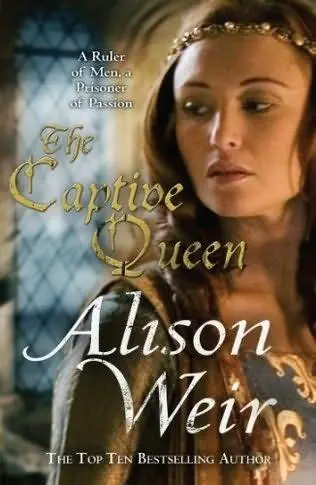
- Название:Captive Queen
- Автор:
- Издательство:BALLANTINE
- Жанр:
- Год:2010
- ISBN:978-0-345-52195-8
- Рейтинг книги:3 / 5. Голосов: 1
-
Избранное:Добавить в избранное
- Отзывы:
-
Ваша оценка:
Captive Queen: краткое содержание, описание и аннотация
Предлагаем к чтению аннотацию, описание, краткое содержание или предисловие (зависит от того, что написал сам автор книги «Captive Queen»). Если вы не нашли необходимую информацию о книге — напишите в комментариях, мы постараемся отыскать её.
Renowned for her highly acclaimed and bestselling British histories, Alison Weir has in recent years made a major impact on the fiction scene with her novels about Queen Elizabeth and Lady Jane Grey. In this latest offering, she imagines the world of Eleanor of Aquitaine, the beautiful twelfth-century woman who was Queen of France until she abandoned her royal husband for the younger man who would become King of England. In a relationship based on lust and a mutual desire for great power, Henry II and Eleanor took over the English throne in 1154, thus beginning one of the most influential reigns and tumultuous royal marriages in all of history. In this novel, Weir uses her extensive knowledge to paint a most vivid portrait of this fascinating woman.
Captive Queen — читать онлайн бесплатно полную книгу (весь текст) целиком
Ниже представлен текст книги, разбитый по страницам. Система сохранения места последней прочитанной страницы, позволяет с удобством читать онлайн бесплатно книгу «Captive Queen», без необходимости каждый раз заново искать на чём Вы остановились. Поставьте закладку, и сможете в любой момент перейти на страницу, на которой закончили чтение.
Интервал:
Закладка:
Henry had considered it, briefly, but it had not occurred to him that Eleanor would be offended by a bastard child conceived and born before they had even met.
“I doubt it will concern her very much,” he replied. “The boy is no threat to her or the children she has borne me.”
“Women can be sensitive about such things,” Thomas said. “She might take your acknowledgment of Master Geoffrey as an insult to herself.” He forbore to add that Eleanor might react even more violently were she to find out about Henry’s covert dalliance with Avice de Stafford, one of her damsels. Henry had boasted of this conquest to Thomas while in his cups one night—although now he probably had no recollection of ever mentioning it. Thomas shuddered at the thought of Henry and Avice together, much as he had shuddered several times during the past months whenever Henry casually referred to other amorous exploits, all of them casual encounters, and none of them troubling his conscience. Becket was well aware, as Eleanor was not, that the King’s reputation was already such that the barons had taken to keeping their womenfolk out of his way.
“The Queen is a woman of the world,” Henry declared confidently. “She is not easily outraged.” Thomas knew this too; he had not forgotten what he had heard in Archbishop Theobald’s household, from his friend John of Salisbury, who had worked for the Papal Curia when Eleanor was trying to obtain a divorce from Louis. John had confided to him several interesting, even scandalous, pieces of information that he could never repeat. And there had been colorful rumors going the rounds for years. Becket had heard them repeatedly, from many people. If ever a man needed evidence that women were frail creatures, what Thomas had learned of Eleanor would suffice.
“Do you think me a fool to acknowledge my son?” Henry asked, fixing his steely gaze on his friend.
“I should have advised discretion,” Thomas said candidly. “But it is a private matter for my lord himself to decide.”
“I intend to advance the boy. He could prove useful to me in time. I remember my bastard uncle, Robert of Gloucester. He was a rock of support to my mother in her quarrel with Stephen.”
Becket glanced down at the child; the boy was listening intently. He had intelligent eyes. A child to watch, certainly. Henry was right.
“Might I suggest a career in the Church?” he ventured. “Although his bastardy might be a bar to high ecclesiastical office.”
“Popes can be bought,” Henry said. “I could make young Geoffrey here Archbishop of Canterbury! Or even chancellor, when you are in your dotage, Thomas!” He winked, then began chuckling. “My barons won’t approve, of course!”
“Then they will have to do as the Queen must, and put up with it,” was the apposite rejoinder. The King smiled ruefully. As ever, Thomas had got his measure.
“I think the Queen does not like me,” Thomas said.
“Nonsense!” Henry replied. “You have been a staunch friend and a great support to me. How could she not like you?”
“I fear she resents my influence. I suspect she would like to be first in your counsels.”
“I dare say she would,” Henry said, “but she is a woman, with a woman’s limitations, although she is more able than most. She has no need to be jealous. I sleep with her, don’t I?” Becket winced, but Henry did not notice. “And I allow her considerable power. I trust her to rule in my absence, and even when I am here, she can issue writs and official documents under her own name and seal. I’ve even told her she can sit in my courts and dispense justice if she wants, and settle disputes on request. So why should she resent you?”
“Then mayhap I have imagined her resentment,” Thomas conceded, keeping his doubts to himself. He suspected that Eleanor already regarded him as a rival. God knew, that was how he regarded her.
“The Queen knows you are invaluable to me,” Henry went on. “Where else would I find a man of such diligence and industry, experienced in affairs, and able to discharge the duties of his office to the praise of all? Who else is such a staunch friend to me? Thomas, I tell you, you are my right-hand man. I put all my trust in you. Together, we will make this kingdom great!”
“My lord flatters me,” Thomas said, with that slow, gentle smile that was so endearing. “I am ever happy to be of service with my small talents.”
“You speak like a courtier!” Henry scoffed. “Accept praise where it is due, man. You earned it by your merits.”
They rode on companionably for some time, past the peasants toiling on their strips of land, and beasts grazing in the fields, with Henry pointing out butterflies, cows, and pigs to the inquisitive Geoffrey, and answering his persistent, incisive questions.
“This child is clever!” he announced delightedly. “He wants to know everything. Young William is all bombast and will make a great warrior, but this one has a brain.”
“I shouldn’t let the Queen hear you saying that!” Thomas warned.
Henry laughed, then drew his habitual short mantle around him. It was unseasonably cold for June. He felt a momentary yearning for the warmer climes of Anjou and Aquitaine.
Presently, the sky darkened and it began to rain. Soon it was sheeting down, and fearful of being soaked to the skin, they tethered their horses under a tree and sought shelter in a church porch, huddling in their cloaks. Suddenly, they realized that they were sharing their sanctuary with a beggar, shivering in his meager wet rags. He regarded them hopefully, as if he had guessed they were persons of some importance.
“Who is that man?” Geoffrey asked.
“He is a poor vagrant,” Henry explained.
The poor vagrant continued to regard him with speculative eyes. The King turned to his friend.
“Would it not be an act of merit to set the boy an example and give that poor old man a warm cloak to shield him from the rain?” he asked, a glint of mischief in his eye.
“It would,” Thomas agreed, missing the glint, and thinking this was uncharacteristically generous of Henry.
“Yours be the merit then!” the King announced gleefully, and whipping Becket’s expensive cloak from his shoulders, thrust it at the astounded beggar, who gathered it around him and scuttled off without a word, leaving Thomas with no choice but to accept his loss; but he was angered and shocked, realizing in that moment that Henry could be unthinkingly cruel. It was the first time he had felt anything other than love for the younger man, and he was further grieved with Henry for making him feel that way. As he stood there, shivering in the damp porch, it even occurred to him to wonder how far his unpredictable master, in times to come, might put their friendship to the test.
Eleanor stared as her husband stood before her, giving the strange little boy a push in her direction.
“Bow to the Queen,” he instructed, as the black-haired child stood there uncertainly. Henry grabbed him by the collar and jerked his head forward. “Like that!” he said. “Eleanor, this is Geoffrey. He is my natural son, born before our marriage. I have brought him to court to receive an education and to be company for our boys.”
Eleanor froze. She knew that kings and lords took mistresses as a matter of right and sired bastards unthinkingly, especially those whose arranged marriages were unhappy. Her father and grandfather had done it, and to prove it her two illegitimate brothers were even now in her household, eating her out of house and home. No prude herself, she knew too that Henry had had mistresses in the past, and accepted that, but being confronted with the living evidence of his rutting with other women was a shock to her. In a flash she realized what the true purpose of the hunting expedition had been.
Читать дальшеИнтервал:
Закладка:
Похожие книги на «Captive Queen»
Представляем Вашему вниманию похожие книги на «Captive Queen» списком для выбора. Мы отобрали схожую по названию и смыслу литературу в надежде предоставить читателям больше вариантов отыскать новые, интересные, ещё непрочитанные произведения.





Обсуждение, отзывы о книге «Captive Queen» и просто собственные мнения читателей. Оставьте ваши комментарии, напишите, что Вы думаете о произведении, его смысле или главных героях. Укажите что конкретно понравилось, а что нет, и почему Вы так считаете.