Alison Weir - Captive Queen
Здесь есть возможность читать онлайн «Alison Weir - Captive Queen» весь текст электронной книги совершенно бесплатно (целиком полную версию без сокращений). В некоторых случаях можно слушать аудио, скачать через торрент в формате fb2 и присутствует краткое содержание. Год выпуска: 2010, ISBN: 2010, Издательство: BALLANTINE, Жанр: Историческая проза, на английском языке. Описание произведения, (предисловие) а так же отзывы посетителей доступны на портале библиотеки ЛибКат.
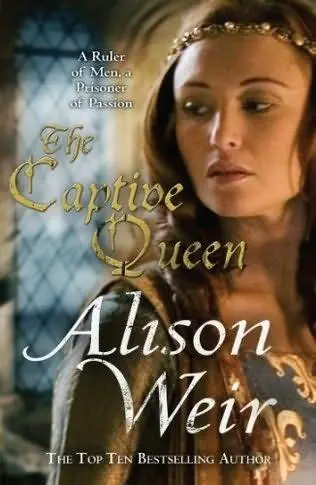
- Название:Captive Queen
- Автор:
- Издательство:BALLANTINE
- Жанр:
- Год:2010
- ISBN:978-0-345-52195-8
- Рейтинг книги:3 / 5. Голосов: 1
-
Избранное:Добавить в избранное
- Отзывы:
-
Ваша оценка:
Captive Queen: краткое содержание, описание и аннотация
Предлагаем к чтению аннотацию, описание, краткое содержание или предисловие (зависит от того, что написал сам автор книги «Captive Queen»). Если вы не нашли необходимую информацию о книге — напишите в комментариях, мы постараемся отыскать её.
Renowned for her highly acclaimed and bestselling British histories, Alison Weir has in recent years made a major impact on the fiction scene with her novels about Queen Elizabeth and Lady Jane Grey. In this latest offering, she imagines the world of Eleanor of Aquitaine, the beautiful twelfth-century woman who was Queen of France until she abandoned her royal husband for the younger man who would become King of England. In a relationship based on lust and a mutual desire for great power, Henry II and Eleanor took over the English throne in 1154, thus beginning one of the most influential reigns and tumultuous royal marriages in all of history. In this novel, Weir uses her extensive knowledge to paint a most vivid portrait of this fascinating woman.
Captive Queen — читать онлайн бесплатно полную книгу (весь текст) целиком
Ниже представлен текст книги, разбитый по страницам. Система сохранения места последней прочитанной страницы, позволяет с удобством читать онлайн бесплатно книгу «Captive Queen», без необходимости каждый раз заново искать на чём Вы остановились. Поставьте закладку, и сможете в любой момент перейти на страницу, на которой закончили чтение.
Интервал:
Закладка:
“My lady, I grieve to tell you that the Lord King has departed this life,” Berneval said quietly. “He died at Chinon four days ago. My lady, I am so very sorry to have to give you this news.”
She supposed she had half expected it. Henry had been ill and not getting better. But that he was dead, that vital autocrat who had bestrode half of Christendom, her husband these thirty-seven years, God help them both, seemed inconceivable … But as she stood there, trying to understand and accept her loss, the great bell of the cathedral started tolling in the distance, and other churches nearby in turn picked up the dread message, signaling to all England that its king was no more. Fifty-six chimes in all, one for every year of the King’s life … That ominous sound would be heard across the length and breadth of the land, as word spread of Henry’s passing.
“Do you know what happened?” Eleanor asked.
“No, my lady. We had the news from the carter who came up from Southampton. All he knew was that the King had died at Chinon. No doubt messengers will come soon with further tidings.”
Eleanor said nothing, but stared unseeing through the window, dry-eyed, her mind conjuring up the image of a magnificent young man with a straight, noble profile and unruly red curls, who had swept her off her feet, bedded and wedded her, to the scandal of all Europe. Henry had been so vigorous, so lusty! It was impossible to comprehend that all that vitality was now dust, that the virile hero who had shared with her such passion and, later, such blistering discord, was gone from her forever.
Occasionally, during these sixteen difficult years of her confinement, and even before that, when their marriage was crumbling and seemingly beyond redemption, there had been times when she sensed they might put all the pain and betrayal behind them and salvage some spark of their former ardor, some semblance of the close affinity they once shared; but the moment had never been right: always, some fresh trouble intervened. And yet, when she had taken what was to be her last farewell of Henry—a year ago, now—and they readily extended their forgiveness to each other, and were kind together for once, she had truly believed that some real chance of a reconciliation lay in the future. And now it was not to be. The realization should have broken her, but she only felt numb.
Amaria’s face was set in stone; the two custodians still stood before their queen, respectfully unwilling to intrude on her silence. Beyond the windows, the bells clanged mournfully. Soon they would ring out in rejoicing for a new ruler and life would move on, consigning Henry FitzEmpress to history. It was then that Eleanor realized that Richard was now King of England and undisputed ruler of the mighty Angevin empire. The realization brought a mixture of triumph and pain. If only her beloved son’s rightful inheritance had come to him in any other circumstances than these, with his father dying while they were so bitterly at odds.
She had been plunged suddenly into mourning, but even so, she knew she had more than one cause to rejoice, and she looked every inch the Queen as, her voice steady, she addressed her gaoler. “Master Berneval, I command you, in the name of King Richard, to set me at liberty at once.”
Berneval had been wondering if he dared free her without a mandate. The late King had commanded him to keep her secure until he received further orders, and he’d carried out those instructions faithfully. He was unsure now how to respond, and looked helplessly at Glanville for guidance.
The latter did not hesitate. “It is well known that King Richard has much love for his mother, and, bearing in mind his fearsome reputation, it might be as well to obey the Queen’s just command,” he declared. At that, Henry Berneval fell to his knees, detached the keys from the ring at his belt, and laid them in Eleanor’s outstretched hands. She bestowed a warm look of gratitude on Ranulf.
She was free, yet her freedom was an empty thing in such circumstances, and she had no desire to go anywhere. Again, she must wait on developments.
“I pray you will attend me until the King comes,” she said to both men. “And now, I desire only to go to the chapel and pray for the soul of the King my late lord.”
Later that day, William Marshal arrived, soaked to the skin after his breakneck ride to bring the news of King Henry’s death to the Queen, along with King Richard’s orders for her release. He was astonished, therefore, to find her already at liberty and waiting to receive him at the castle doorway, with a nervous Henry Berneval and a respectful Ranulf Glanville at her side.
Eleanor, garbed in her black widow’s weeds and a wimple crowned with a simple golden circlet, greeted Marshal with a smile, putting on a courageous mien and extending her hand to be kissed.
“Madame, I am overjoyed to see you free,” he told her, thinking she looked more the great lady than ever. “King Richard was most anxious that you should not be held captive any longer than necessary. He has much need of you at this time.”
Henry Berneval relaxed. He was not going to be censured for disobeying his instructions. That terrifying man who was now his king would be grateful to him for anticipating his orders. He was indebted to Ranulf Glanville for his wise counsel.
“We are just about to eat, William,” Eleanor told Marshal, having reverted effortlessly into her former accustomed role as royal châtelaine. “There is time for you to change and refresh yourself, and then I should be grateful if you would join me and give me all your news.”
Marshal was gratified to see that many lords and ladies had hurried to join the Queen’s hastily assembled court, but relieved to learn that he would be her guest at a private supper that night, for what he had to tell her was best recounted away from the public gaze. When it came to it, only the maid was present, the one who had attended Eleanor throughout her long captivity; also wearing mourning, she moved discreetly around the solar, serving food, topping up the wine and removing dishes, then making herself scarce.
William could not have guessed, from her calm manner, that Amaria was beside herself with exultation that her mistress had been freed from her captivity, and from her long purgatory of a marriage. As far as Amaria was concerned, the Queen was better off without that bastard to whom she had been chained in wedlock—“chained” being an apt word—and she was glad that the good Lord had called King Henry to his reward. She knew what she would have liked to reward him with! Yes, she was wearing black, but only out of deference to custom. As soon as King Richard came, she was buying herself a fine scarlet gown!
“Tell me what happened,” Eleanor said, when she and William Marshal were alone.
He had been dreading this moment. Yet she must be told.
“The King was in a terrible state when we got him back to Chinon. He felt his humiliation deeply, and kept cursing his sons and himself, rueing the day that ever he was born. He uttered dreadful blasphemies. He asked why he should worship Christ when He allowed him to be ignominiously confounded by a mere boy. He meant Richard, of course.”
“I cannot bear to think of his state of mind,” Eleanor said, deeply moved. “He surely could not have meant those blasphemies. He was ever one to say all kinds of rash things when his temper was aroused, and then regret them afterward. What happened to Becket was a prime example. Henry suffered agonies of remorse over that.”
“He repented of these utterances too,” Marshal told her. “Archbishop Baldwin was waiting for him at Chinon, and when he heard what the King was saying, he braved his anger and made Henry go to the chapel and make his peace with God. And he did, for all that he was near fainting with pain; and so he confessed his sins and was shriven. Then he took to his bed.”
Читать дальшеИнтервал:
Закладка:
Похожие книги на «Captive Queen»
Представляем Вашему вниманию похожие книги на «Captive Queen» списком для выбора. Мы отобрали схожую по названию и смыслу литературу в надежде предоставить читателям больше вариантов отыскать новые, интересные, ещё непрочитанные произведения.









Обсуждение, отзывы о книге «Captive Queen» и просто собственные мнения читателей. Оставьте ваши комментарии, напишите, что Вы думаете о произведении, его смысле или главных героях. Укажите что конкретно понравилось, а что нет, и почему Вы так считаете.