John Williams - Augustus
Здесь есть возможность читать онлайн «John Williams - Augustus» весь текст электронной книги совершенно бесплатно (целиком полную версию без сокращений). В некоторых случаях можно слушать аудио, скачать через торрент в формате fb2 и присутствует краткое содержание. Жанр: Историческая проза, на английском языке. Описание произведения, (предисловие) а так же отзывы посетителей доступны на портале библиотеки ЛибКат.
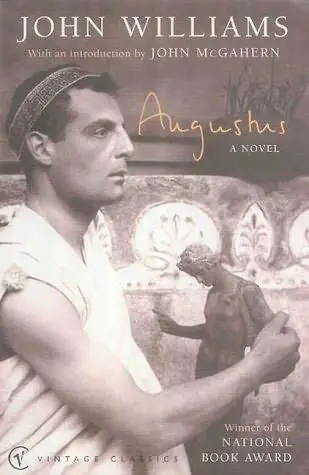
- Название:Augustus
- Автор:
- Жанр:
- Год:неизвестен
- ISBN:нет данных
- Рейтинг книги:3 / 5. Голосов: 1
-
Избранное:Добавить в избранное
- Отзывы:
-
Ваша оценка:
Augustus: краткое содержание, описание и аннотация
Предлагаем к чтению аннотацию, описание, краткое содержание или предисловие (зависит от того, что написал сам автор книги «Augustus»). Если вы не нашли необходимую информацию о книге — напишите в комментариях, мы постараемся отыскать её.
Augustus — читать онлайн бесплатно полную книгу (весь текст) целиком
Ниже представлен текст книги, разбитый по страницам. Система сохранения места последней прочитанной страницы, позволяет с удобством читать онлайн бесплатно книгу «Augustus», без необходимости каждый раз заново искать на чём Вы остановились. Поставьте закладку, и сможете в любой момент перейти на страницу, на которой закончили чтение.
Интервал:
Закладка:
The oath I took as a young soldier bound me to the authority of the magistrates, the consuls, and the Senate for the defense of my country. To that oath I have been faithful, and have served Rome with that honor of which I am capable. I am now in my fifty-third year, and I ask release from military service, so that I may return to Velletri and spend my remaining years in privacy and peace.
I know that, in the law, you may refuse this release, despite my age and service, since I volunteered freely for another campaign; and I know, too, that what I shall now say may put me in jeopardy. If it is to do so, I shall accept my fate.
When I was detached from the army of Marcus Agrippa and sent to Athens and thence to Alexandria and finally here to Ephesus and the army of Marcus Antonius, I did not protest; that is the soldier's lot, and I have grown accustomed to it. I had fought the Parthians before, and had no fear of them. But the events of the past few weeks have put me into a deep doubt; and I must turn to you, with whom I fought in Gaul under Julius Caesar, and whose honorable behavior toward me gives me some hope that you may hear me before you judge me too harshly.
It is clear that we shall not fight the Parthians, or the Medians, or anyone else to the East. And yet we arm, and we train, and we build the engines of war.
I have given my oath to the consuls and the Senate of the Roman people; it is an oath that I have not broken.
And yet where is the Senate now? And where is my oath to find its fulfillment?
We know that three hundred senators and the two consuls of the year have quit Rome, and are now here in Ephesus, where the Imperator Marcus Antonius has convened them against the seven hundred senators who have remained in Rome; and new consuls in Rome have replaced those who have come here.
To whom do I owe my oath? Where is the Roman people, whom the Senate must represent?
I do not hate Octavius Caesar, though I would fight him, were that my duty; I do not love Marcus Antonius, though I would die for him were that my duty. It is not the place of the soldier to think of politics, and it is not the business of the soldier to hate or love. It is his duty to fulfill his oath.
A Roman, I have fought against Romans before, though I have done so with sorrow. But I have not fought against Romans under the banner of a foreign queen, and I have not marched against my nation and my countrymen as if they were the painted barbarians of a foreign province, to be plundered and subdued.
I am an old man, and tired, and I ask release to return quietly to my home. But you are my commander, and I shall not move against your authority. If it is your decision that I may not be released, I shall acquit myself with that honor in which I trust I have lived.
XI Letter: Munatius Planem, Commander of the Asian Legions, to Octavius Caesar, from Ephesus (32 B. c.)
Though we have differed, I have not been your enemy so much as I have been friend to Marcus Antonius, whom I have known since those days when we were both the trusted generals of your late and divine father, Julius Caesar. Through all the years, I have tried to be loyal to Rome, and yet be loyal to the man whom I have had for friend.
It is no longer possible for me to remain loyal to both. As if in an enchantment, Marcus Antonius follows blindly wherever Cleopatra will lead; and she will lead where her ambition takes her, and that is simply the conquest of the world, the succession of her progeny m kingship over that world, and the establishment of Alexandria as the capital ofthat world. I have been unable to dissuade Marcus Antonius from this disastrous course. Even now, troops from all the Asian provinces gather at Ephesus to join the sad Roman legions which Antonius will hurl against Rome; the doors of Cleopatra's treasury are open to prosecute the war against Italy; and she will not leave Marcus Antonius ‘s side, but goads him bitterly toward your destruction and the fulfillment of her ambition. It is said that henceforward she will march at his side and command, even in battle. Not only myself, but all of his friends have urged him to send Cleopatra back to Alexandria, where her presence might not provoke the hatred of the Roman troops, but he will not, or cannot, move.
Thus I have been forced to choose between a waning friendship for a man and a steady love for my country. I return to Italy, and I renounce the Eastern adventure. And I will not be alone. I have spent my life with the Roman soldier, and I think I know his heart; many will not fight under the banner of a foreign queen, and those who in their confusion will fight, will do so with sorrow and reluctance, so that their strength and soldierly determination will be lessened.
I come to you in friendship, and I offer you my services; if you cannot accept the former, perhaps you will find use for the latter.
XII. The Memoirs of Marcus Agrippa: Fragments (13 B. c.)
I come now to the account of those events which led to the battle of Actium and at last to the peace of which Rome had long despaired.
Marcus Antonius and the Queen Cleopatra gathered their strength in the East, and moved their armies from Ephesus to the Island of Samos, and thence to Athens, where they poised in threat to Italy and peace. In the second consulship of Caesar Augustus, I was aedile of Rome; and when the year of those duties was over, we turned ourselves to the task of rebuilding the armies of Italy that would repel the threat of Eastern treason, a task which necessitated our absence from Rome for many months. We returned to discover the Senate subverted by the friends of Antonius who were the enemies of the Roman people; we opposed those enemies, and when it became clear to them that they would not prevail in their designs against the order of Italy, the two consuls of the year, and behind them three hundred senators without faith or love for their homeland, quit Rome and made their way out of Italy to join Antonius; and went without hindrance or threat from Caesar Augustus, who saw them depart with sorrow, but without anger.
And in the East, loyal Roman troops, at first by tens and then by hundreds, refusing the yoke of a foreign queen, made their way to Italy; and from them we knew that there would be no escape from war; and knew also that that war would come soon, for Antonius was weakening from the desertions, and would, if he delayed too long, be wholly dependent upon the caprice and inexperience of his barbarian legions and their Asian commanders.
Thus in the late autumn of the year after his second consulship, Caesar Augustus, with the consent of the Senate and the Roman people, did declare that a state of war existed between the Roman people and Cleopatra, Queen of Egypt; and led by Caesar Augustus, the Senate in solemn march took themselves to the Campus Marthas, and at the Temple of Bellona, the herald read the words of war, and the priests made sacrifice of a white heifer to the goddess, and prayed that the army of Rome be made safe in all the battles that were to come.
After the defeat of Sextus Pompeius, Augustus had vowed to the Roman people that the civil wars were ended, and that not again would the soil of Italy suffer to receive the blood of her sons. Throughout the winter we trained our soldiers on land, repaired and augmented our fleet, exercising upon the sea when weather allowed us; and in the spring, learning that Marcus Antonius had gathered his fleet and his army at the seaward opening of the Bay of Corinth, whence he purposed to strike swiftly across the Ionian Sea at the Eastern coast of Italy, we moved against him, to save Italy from the wounds of war.
Against us was arrayed the might of the Eastern world-one hundred thousand troops, of which thirty thousand were Roman, and five hundred ships of war, deployed along the coastal lands of Greece; and eighty thousand reserves of troops that remained in Egypt and Syria. Against this force we brought fifty thousand Roman soldiers, a number of which were veterans of the sea campaign against Pompeius, two hundred fifty ships of war, the latter under my command, and one hundred fifty vessels of supply.
Читать дальшеИнтервал:
Закладка:
Похожие книги на «Augustus»
Представляем Вашему вниманию похожие книги на «Augustus» списком для выбора. Мы отобрали схожую по названию и смыслу литературу в надежде предоставить читателям больше вариантов отыскать новые, интересные, ещё непрочитанные произведения.











Обсуждение, отзывы о книге «Augustus» и просто собственные мнения читателей. Оставьте ваши комментарии, напишите, что Вы думаете о произведении, его смысле или главных героях. Укажите что конкретно понравилось, а что нет, и почему Вы так считаете.