Bernard Cornwell - Excalibur
Здесь есть возможность читать онлайн «Bernard Cornwell - Excalibur» весь текст электронной книги совершенно бесплатно (целиком полную версию без сокращений). В некоторых случаях можно слушать аудио, скачать через торрент в формате fb2 и присутствует краткое содержание. Год выпуска: 1999, Издательство: MacMillan Publishers, Жанр: Историческая проза, на английском языке. Описание произведения, (предисловие) а так же отзывы посетителей доступны на портале библиотеки ЛибКат.
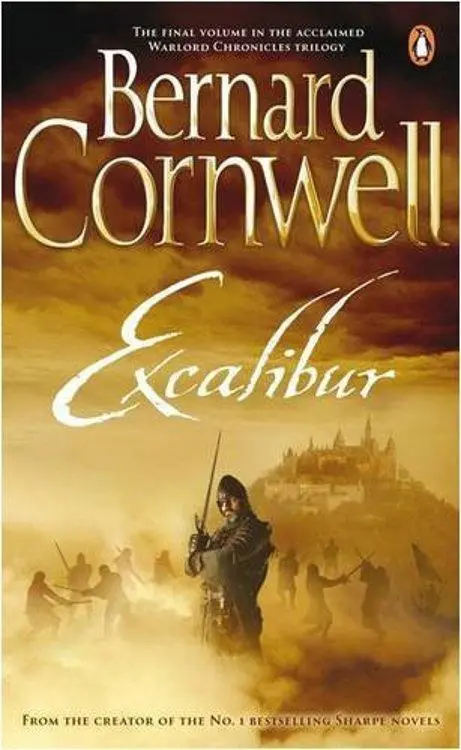
- Название:Excalibur
- Автор:
- Издательство:MacMillan Publishers
- Жанр:
- Год:1999
- ISBN:нет данных
- Рейтинг книги:4 / 5. Голосов: 2
-
Избранное:Добавить в избранное
- Отзывы:
-
Ваша оценка:
Excalibur: краткое содержание, описание и аннотация
Предлагаем к чтению аннотацию, описание, краткое содержание или предисловие (зависит от того, что написал сам автор книги «Excalibur»). Если вы не нашли необходимую информацию о книге — напишите в комментариях, мы постараемся отыскать её.
to Marion Zimmer Bradley's
, the legend of King Arthur has haunted and inspired generations of writers to reinvent the ancient story. In
and
, Bernard Cornwell demonstrated his astonishing ability to make the oft-told legend of King Arthur fresh and new for our time. Now, in this riveting final volume of the
, Cornwell tells the story of Arthur's desperate attempt to triumph over a ruined marriage and the Saxons' determination to destroy him.
Set against the backdrop of the Dark Ages, this brilliant saga continues as seen through the eyes of Derfel, an orphan brought up by Merlin and one of Arthur's warriors. In this book, the aging Arthur has been betrayed by, among others, his beloved Guinevere; but although he is alone and deeply saddened, he still embraces his dreams of a world in which civilization triumphs over brute force. Arthur and his warriors must face the dreaded Saxons — now allied with Arthur's betrayer Lancelot — for the throne of Britain.
This is the tale not only of a broken love remade but also of enemies more subtle than any Saxon spearman — of forces both earthly and unearthly that threaten everything Arthur stands for. When Merlin and Nimue embark on a dangerous quest to summon the Gods back to Britain, they unleash forces that will lead to a last desperate battle on the sands of Camlann, where it seems that Arthur must fail unless Merlin's final enchantment can avert the horror.
Peopled by princesses and bards, warriors and magicians, Excalibur is a story of love, war, loyalty, and betrayal, the unforgettable conclusion to a brilliant retelling of one of the most powerful legends of all time.
Excalibur — читать онлайн бесплатно полную книгу (весь текст) целиком
Ниже представлен текст книги, разбитый по страницам. Система сохранения места последней прочитанной страницы, позволяет с удобством читать онлайн бесплатно книгу «Excalibur», без необходимости каждый раз заново искать на чём Вы остановились. Поставьте закладку, и сможете в любой момент перейти на страницу, на которой закончили чтение.
Интервал:
Закладка:
‘Sansum!’ she called. ‘My sweet!’
‘Precious!’ Sansum said, and the two clasped each other in the night.
‘Dear one,’ Morgan babbled, stroking his face, ‘what have they done to you?’
Taliesin smiled, and even I, who hated Sansum and had no love for Morgan, could not resist a smile at their evident pleasure. Of all the marriages I have ever known, that was the strangest. Sansum was as dishonest a man as ever lived, and Morgan as honest as any woman in creation, yet they plainly adored each other, or Morgan, at least, adored Sansum. She had been born fair, but the terrible fire that had killed her first husband had twisted her body and scarred her face into horror. No man could have loved Morgan for her beauty, or for her character which had been as fire-twisted into bitterness as her face had been ravaged into ugliness, but a man could love Morgan for her connections for she was Arthur’s sister, and that, I ever believed, was what drew Sansum towards her. But if he did not love her for herself, he nevertheless made a show of love that convinced her and gave her happiness, and for that I was willing to forgive even the mouse lord his dissimulation. He admired her, too, for Morgan was a clever woman and Sansum prized cleverness, and thus both gained from the marriage; Morgan received tenderness, Sansum received protection and advice, and as neither sought the pleasures of the other’s flesh, it had proved a better marriage than most.
‘Within an hour,’ I brutally broke their happy reunion apart, ‘Mordred’s men will be here. We must be far away by then, and your women, Lady,’ I said to Morgan, — ’should seek safety in the marshes. Mordred’s men won’t care that your women are holy, they will rape them all.’
Morgan glared at me with her one eye that glinted in the mask’s hole. ‘You look better without a beard, Derfel,’ she said.
‘I shall look worse without a head, Lady, and Mordred is making a pile of heads on Caer Cadarn.’
‘I don’t know why Sansum and I should save your sinful lives,’ she grumbled, ‘but God commands us to be merciful.’ She turned from Sansum’s arms and shrieked in a terrible voice to wake her women. Taliesin and I were ordered into the church, given a basket, and told to fill it with the shrine’s gold while Morgan sent women into the village to wake the boatmen. She was wonderfully efficient. The shrine was suffused with panic, but Morgan controlled all, and it took only minutes before the first women were being helped into the flat-bottomed marsh boats that then headed into the mist-shrouded mere. We left last of all, and I swear I heard hoofbeats to the east as our boatman poled the punt into the dark waters. Taliesin, sitting in the bow, began to sing the lament of Idfael, but Morgan snapped at him to cease his pagan music. He lifted his fingers from the small harp. ‘Music knows no allegiance, Lady,’ he chided her gently.
‘Yours is the devil’s music,’ she snarled.
‘Not all of it,’ Taliesin said, and he began to sing again, but this time a song I had never heard before.
‘By the rivers of Babylon,’ he sang, ‘where we sat down, we shed bitter tears to remember our home, and I saw that Morgan was pushing a finger beneath her mask as if she was brushing away tears. The bard sang on and the high Tor receded as the marsh mists shrouded us and as our boatman poled us through whispering reeds and across the black water. When Taliesin ended his song there was only the sound of the lake rippling down the hull and the splash of the boatman’s pole thumping down to surge us forward again.
‘You should sing for Christ,’ Sansum said reprovingly.
‘I sing for all the Gods,’ Taliesin said, ‘and in the days to come we will need all of them.’
‘There is only one God!’ Morgan said fiercely.
‘If you say so, Lady,’ Taliesin said mildly, ‘but I fear He has served you ill tonight,’ and he pointed back towards Ynys Wydryn and we all turned to see a livid glow spreading in the mist behind. I had seen that glow before, seen it through these same mists on this same lake. It was the glow of buildings being put to the torch, the glow of burning thatch. Mordred had followed us and the shrine of the Holy Thorn, where his mother was buried, was being burned to ashes, but we were safe in the marshes where no man dared to go unless he possessed a guide.
Evil had again gripped Dumnonia.
But we were safe, and in the dawn we found a fisherman who would sail to Siluria in return for gold. And so I went home to Arthur.
And to new horror.
Ceinwyn was sick. The sickness had come swiftly, Guinevere told me, just hours after I had sailed from Isca. Ceinwyn had begun to shiver, then to sweat, and by that evening she no longer had the strength to stand, and so she had taken to her bed and Morwenna had nursed her, and a wise-woman had fed her a concoction of coltsfoot and rue and put a healing charm between her breasts, but by morning Ceinwyn’s skin had broken into boils. Every joint ached, she could not swallow, and her breath rasped in her throat. She began to rave then, thrashing in the bed and screaming hoarsely of Dian. Morwenna tried to prepare me for Ceinwyn’s death. ‘She believes she was cursed, father,’ she told me, ‘because on the day you left a woman came and asked us for food. We gave her barley grains, but when she left there was blood on the doorpost.’
I touched Hywelbane’s hilt. ‘Curses can be lifted.’
‘We fetched the Druid from Cefu-crib,’ Morwenna told me, ‘and he scraped the blood from the door and gave us a hagstone.’ She stopped, staring tearfully at the pierced stone that now hung above Ceinwyn’s bed. ‘But the curse won’t go!’ she cried. ‘She’s going to die!’
‘Not yet,’ I said, ‘not yet.’ I could not believe in Ceinwyn’s imminent death for she had always been so healthy. Not a hair on Ceinwyn’s head had turned grey, she still possessed most of her teeth, and she had been as lithe as a girl when I had left Isca, but now, suddenly, she looked old and ravaged. And she was in pain. She could not tell us of the pain, but her face betrayed it, and the tears that ran down her cheeks cried it aloud.
Taliesin spent a long time staring at her and he agreed that she had been cursed, but Morgan spat on that opinion. ‘Pagan superstition!’ she croaked, and busied herself finding new herbs that she boiled in mead and fed on a spoon through Ceinwyn’s lips. Morgan, I saw, was very gentle, even though, as she dripped the liquid, she harangued Ceinwyn as a pagan sinner.
I was helpless. All I could do was sit by Ceinwyn’s side, hold her hand and weep. Her hair became lank and, two days after my return, it began to drop out in handfuls. Her boils burst, soaking the bed with pus and blood. Morwenna and Morgan made new beds with fresh straw and new linen, but each day Ceinwyn would soil the bed and the old linen had to be boiled in a vat. The pain went on, and the pain was so hard that after a while even I began to wish that death would snatch her from its torment, but Ceinwyn did not die. She just suffered, and sometimes she would scream because of the pain, and her hand would tighten on my fingers with a terrible force and I could only wipe her forehead, say her name and feel the fear of loneliness creep through me.
I loved my Ceinwyn so much. Even now, years later, I smile to think of her, and sometimes I wake in the night with tears on my face and know they are due to her. We had begun our love in a blaze of passion and wise folk say that such passion must ever end, but ours had not ended, but had instead changed into a long, deep love. I loved and admired her, the days seemed brighter because of her presence, and suddenly I could only watch as the demons racked her and the pain made her shudder and the boils grew red and taut and burst into filth. And still she would not die. Some days Galahad or Arthur relieved me at the bedside. Everyone tried to help. Guinevere sent for the wisest women in Siluria’s hills and put gold into their palms so that they would bring new herbs or vials of water from some remote sacred spring. Culhwch, bald now, but still coarse and belligerent, wept for Ceinwyn and gave me an elf-bolt that he had found in the hills to the west, though when Morgan found that pagan charm in Ceinwyn’s bed she threw it out, just as she had thrown out the Druid’s hagstone and the charm she had discovered between Ceinwyn’s breasts. Bishop Emrys prayed for Ceinwyn, and even Sansum, before he left for Gwent, joined him in prayer, though I doubt that his pleas were as heartfelt as those that Emrys called to God. Morwenna was devoted to her mother, and no one fought harder for a cure. She nursed her, cleaned her, prayed for her, wept with her. Guinevere, of course, could not stand the sight of Ceinwyn’s disease, or the smell of the sick-room, but she walked with me for hours while Galahad or Arthur held Ceinwyn’s hand. I remember one day we had walked to the amphitheatre and were pacing around its sandy arena when, somewhat clumsily, Guinevere tried to console me. ‘You are fortunate, Derfel,’ she said, ‘for you experienced a rare thing. A great love.’
Читать дальшеИнтервал:
Закладка:
Похожие книги на «Excalibur»
Представляем Вашему вниманию похожие книги на «Excalibur» списком для выбора. Мы отобрали схожую по названию и смыслу литературу в надежде предоставить читателям больше вариантов отыскать новые, интересные, ещё непрочитанные произведения.









Обсуждение, отзывы о книге «Excalibur» и просто собственные мнения читателей. Оставьте ваши комментарии, напишите, что Вы думаете о произведении, его смысле или главных героях. Укажите что конкретно понравилось, а что нет, и почему Вы так считаете.