Bernard Cornwell - Excalibur
Здесь есть возможность читать онлайн «Bernard Cornwell - Excalibur» весь текст электронной книги совершенно бесплатно (целиком полную версию без сокращений). В некоторых случаях можно слушать аудио, скачать через торрент в формате fb2 и присутствует краткое содержание. Год выпуска: 1999, Издательство: MacMillan Publishers, Жанр: Историческая проза, на английском языке. Описание произведения, (предисловие) а так же отзывы посетителей доступны на портале библиотеки ЛибКат.
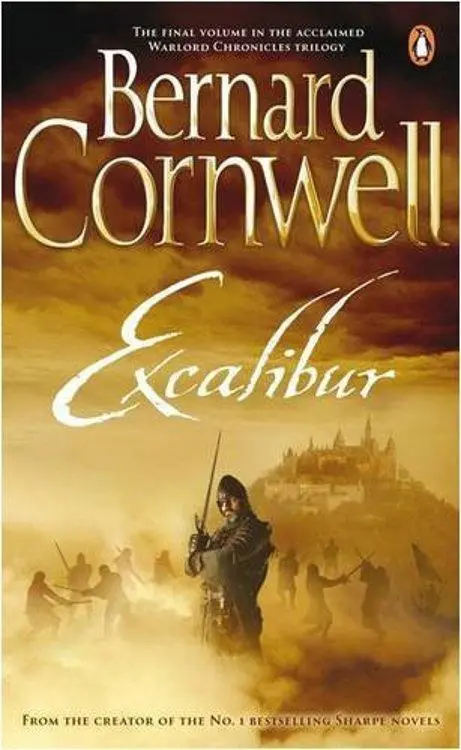
- Название:Excalibur
- Автор:
- Издательство:MacMillan Publishers
- Жанр:
- Год:1999
- ISBN:нет данных
- Рейтинг книги:4 / 5. Голосов: 2
-
Избранное:Добавить в избранное
- Отзывы:
-
Ваша оценка:
Excalibur: краткое содержание, описание и аннотация
Предлагаем к чтению аннотацию, описание, краткое содержание или предисловие (зависит от того, что написал сам автор книги «Excalibur»). Если вы не нашли необходимую информацию о книге — напишите в комментариях, мы постараемся отыскать её.
to Marion Zimmer Bradley's
, the legend of King Arthur has haunted and inspired generations of writers to reinvent the ancient story. In
and
, Bernard Cornwell demonstrated his astonishing ability to make the oft-told legend of King Arthur fresh and new for our time. Now, in this riveting final volume of the
, Cornwell tells the story of Arthur's desperate attempt to triumph over a ruined marriage and the Saxons' determination to destroy him.
Set against the backdrop of the Dark Ages, this brilliant saga continues as seen through the eyes of Derfel, an orphan brought up by Merlin and one of Arthur's warriors. In this book, the aging Arthur has been betrayed by, among others, his beloved Guinevere; but although he is alone and deeply saddened, he still embraces his dreams of a world in which civilization triumphs over brute force. Arthur and his warriors must face the dreaded Saxons — now allied with Arthur's betrayer Lancelot — for the throne of Britain.
This is the tale not only of a broken love remade but also of enemies more subtle than any Saxon spearman — of forces both earthly and unearthly that threaten everything Arthur stands for. When Merlin and Nimue embark on a dangerous quest to summon the Gods back to Britain, they unleash forces that will lead to a last desperate battle on the sands of Camlann, where it seems that Arthur must fail unless Merlin's final enchantment can avert the horror.
Peopled by princesses and bards, warriors and magicians, Excalibur is a story of love, war, loyalty, and betrayal, the unforgettable conclusion to a brilliant retelling of one of the most powerful legends of all time.
Excalibur — читать онлайн бесплатно полную книгу (весь текст) целиком
Ниже представлен текст книги, разбитый по страницам. Система сохранения места последней прочитанной страницы, позволяет с удобством читать онлайн бесплатно книгу «Excalibur», без необходимости каждый раз заново искать на чём Вы остановились. Поставьте закладку, и сможете в любой момент перейти на страницу, на которой закончили чтение.
Интервал:
Закладка:
But they can, and they do. And somewhere in Britain, in a dark place, Nimue had the Cauldron of Clyddno Eiddyn and was using it to stir our dreams into nightmare.
Balig landed us on a beach somewhere on the Dumnonian coastline. Taliesin offered me a cheerful farewell, then strode long-legged off into the dunes. ‘Do you know where you’re going?’ I called after him.
‘I will when I reach there, Lord,’ he called back, then disappeared. We pulled on our armour. I had not brought my finest gear, simply an old and serviceable breastplate and a battered helmet. I slung my shield on my back, picked up my spear, and followed Taliesin inland.
‘You know where we are, Lord?’ Eachern asked me.
‘Near enough,’ I said. In the rain ahead I could make out a range of hills. ‘We go south of those and we’ll reach Dun Caric.’
‘You want me to fly the banner, Lord?’ Eachern asked. Rather than my banner of the star we had brought Gwydre’s banner which showed Arthur’s bear entwined with Dumnonia’s dragon, but I decided against carrying it unfurled. A banner in the wind is a nuisance and, besides, eleven spearmen marching beneath a gaudy great flag would look ridiculous rather than impressive, and so I decided to wait until Issa’s men could reinforce my own small band before unrolling the flag on its long staff. We found a track in the dunes and followed it through a wood of small thorns and hazels to a tiny settlement of six hovels. The folk ran at the sight of us, leaving only an old woman who was too bent and crippled to move fast. She sank onto the ground and spat defiantly as we approached. ‘You’ll get nothing here,’ she said hoarsely, ‘we own nothing except dung-heaps. Dung-heaps and hunger, Lords, that’s all you’ll fetch from us.’
I crouched beside her. ‘We want nothing,’ I told her, ‘except news.’
‘News?’ The very word seemed strange to her.
‘Do you know who your King is?’ I asked her gently.
‘Uther, Lord,’ she said. ‘A big man, he is, Lord. Like a God!’
It was plain we would fetch no news from the hovel, or none that would make sense, and so we walked on, stopping only to eat some of the bread and dried meat that we carried in our pouches. I was in my own country, yet it felt curiously as though I walked an enemy land and I chided myself for giving too much credit to Taliesin’s vague warnings, yet still I kept to the hidden wooded paths and, as evening fell, I led my small company up through a beech wood to higher ground where we might have a sight of any other spearmen. We saw none, but, far to the south, an errant ray of the dying sun lanced through a cloud bank to touch Ynys Wydryn’s Tor green and bright.
We lit no fire. Instead we slept beneath the beech trees and in the morning woke cold and stiff. We walked east, staying under the leafless trees, while beneath us, in damp heavy fields, men ploughed stiff furrows, women sowed a crop and small children ran screaming to frighten the birds away from the precious seed. ‘I used to do that in Ireland,’ Eachern said. ‘Spent half my childhood frightening birds away.’
‘Nail a crow to the plough, that’ll do it,’ one of the other spearmen offered.
‘Nail crows to every tree near the field,’ another suggested.
‘Doesn’t stop them,’ a third man put in, ‘but it makes you feel better.’
We were following a narrow track between deep hedgerows. The leaves had not unfurled to hide the nests so magpies and jays were busy stealing eggs and they screeched in protest when we came close.
‘The folks will know we’re here, Lord,’ Eachern said, ‘they may not see us, but they’ll know. They’ll hear the jays.’
‘It won’t matter,’ I said. I was not even sure why I was taking such care to stay hidden, except that we were so few and, like most warriors, I yearned for the security of numbers and knew I would feel a great deal more comfortable once the rest of my men were around me. Till then we would hide ourselves as best we could, though at mid-morning our route took us out of the trees and down into the open fields that led to the Fosse Way. Buck hares danced in the meadows and skylarks sang above us. We saw no one, though doubtless the peasants saw us, and doubtless the news of our passing rippled swiftly through the countryside. Armed men were ever cause for alarm, and so I had some of my men carry their shields in front so that their insignia would reassure the local people we were friends. It was not until we had crossed the Roman road and were close to Dun Caric that I saw another human, and that was a woman who, when we were still too far away for her to see the stars on our shields, ran to the woods behind the village to hide herself among the trees. ‘Folks are nervous,’ I said to Eachern.
‘They’ve heard about Mordred dying,’ he said, spitting, ‘and they’re fearing what’ll happen next, but they should be happy the bastard’s dying.’ When Mordred was a child, Eachern had been one of his guards and the experience had given the Irish spearman a deep hatred for the King. I was fond of Eachern. He was not a clever man, but he was dogged, loyal and hard in battle. ‘They reckon there’ll be war, Lord,’ he said.
We waded the stream beneath Dun Caric, skirted the houses, and came to the steep path that led to the palisade about the small hill. Everything was very quiet. Not even the dogs were in the village street and, more worryingly, no spearmen guarded the palisade. ‘Issa’s not here,’ I said, touching Hywelbane’s hilt. Issa’s absence, by itself, was not unusual, for he spent much of his time in other parts of Dumnonia, but I doubted he would have left Dun Caric unguarded. I glanced at the village, but those doors were all shut tight. No smoke showed above the rooftops, not even from the smithy.
‘No dogs on the hill,’ Eachern said ominously. There was usually a pack of dogs about Dun Caric’s hall and by now some should have raced down the hill to greet us. Instead there were noisy ravens on the hall roof and more of the big birds calling from the palisade. One bird flew up out of the compound with a long, red, lumpy morsel trailing from its beak.
None of us spoke as we climbed the hill. The silence had been the first indication of horror, then the ravens, and halfway up the hill we caught the sour-sweet stench of death that catches at the back of the throat, and that smell, stronger than the silence and more eloquent than the ravens, warned us of what waited inside the open gate. Death waited, nothing but death. Dun Caric had become a place of death. The bodies of men and women were strewn throughout the compound and piled inside the hall. Forty-six bodies in all, and not one still possessed a head. The ground was blood-soaked. The hall had been plundered, every basket and chest upturned, and the stables were empty. Even the dogs had been killed, though they, at least, had been left with their heads. The only living things were the cats and the ravens, and they all fled from us.
I walked through the horror in a daze. It was only after a few moments that I realized there were only ten young men among the dead. They must have been the guards left by Issa, while the rest of the corpses were the families of his men. Pyrlig was there, poor Pyrlig who had stayed at Dun Caric because he knew he could not rival Taliesin, and now he lay dead, his white robe soaked in blood and his harpist’s hands deep scarred where he had tried to fend off the sword blows. Issa was not there, nor was Scarach, his wife, for there were no young women in that charnel house, neither were there any children. Those young women and children must have been taken away, either to be playthings or slaves, while the older folk, the babies and the guards had all been massacred, and then their heads had been taken as trophies. The slaughter was recent, for none of the bodies had started to bloat or rot. Flies crawled over the blood, but as yet there were no maggots wriggling in the gaping wounds left by the spears and swords.
Читать дальшеИнтервал:
Закладка:
Похожие книги на «Excalibur»
Представляем Вашему вниманию похожие книги на «Excalibur» списком для выбора. Мы отобрали схожую по названию и смыслу литературу в надежде предоставить читателям больше вариантов отыскать новые, интересные, ещё непрочитанные произведения.


Обсуждение, отзывы о книге «Excalibur» и просто собственные мнения читателей. Оставьте ваши комментарии, напишите, что Вы думаете о произведении, его смысле или главных героях. Укажите что конкретно понравилось, а что нет, и почему Вы так считаете.