Bernard Cornwell - The Winter King
Здесь есть возможность читать онлайн «Bernard Cornwell - The Winter King» весь текст электронной книги совершенно бесплатно (целиком полную версию без сокращений). В некоторых случаях можно слушать аудио, скачать через торрент в формате fb2 и присутствует краткое содержание. Год выпуска: 1997, Издательство: MacMillan Publishers, Жанр: Историческая проза, на английском языке. Описание произведения, (предисловие) а так же отзывы посетителей доступны на портале библиотеки ЛибКат.
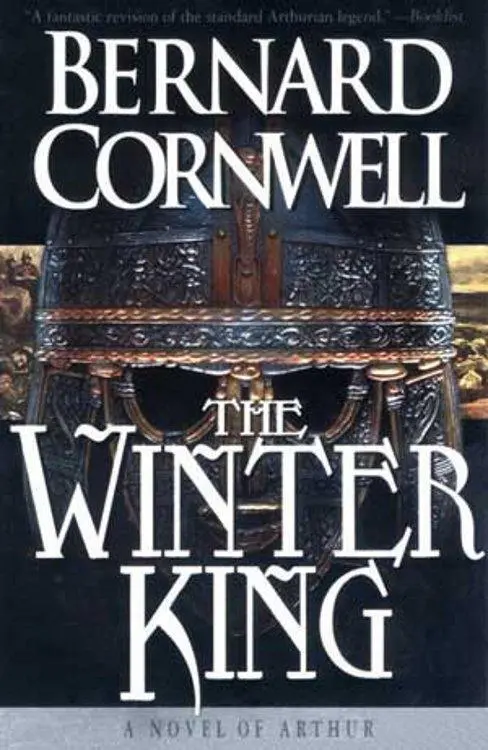
- Название:The Winter King
- Автор:
- Издательство:MacMillan Publishers
- Жанр:
- Год:1997
- ISBN:нет данных
- Рейтинг книги:4 / 5. Голосов: 1
-
Избранное:Добавить в избранное
- Отзывы:
-
Ваша оценка:
The Winter King: краткое содержание, описание и аннотация
Предлагаем к чтению аннотацию, описание, краткое содержание или предисловие (зависит от того, что написал сам автор книги «The Winter King»). Если вы не нашли необходимую информацию о книге — напишите в комментариях, мы постараемся отыскать её.
Fifth century Britain lies on the edge of darkness. Memories of Roman civilization are fading; the pagan Gods are retreating before the spread of Christianity; the Saxons are snapping and snarling at the borders. Only fragile bonds unite the unruly kingdoms of Britain against the invaders, bonds cemented by the vigour of the High King, Uther Pendragon. But the Pendragon is failing, and his heir is no strong leader but a child, born on a bitter winter night.
Only one man could keep Uther's throne safe,only he could hold the warring kingdoms together to face their true enemy, the Saxons. That man is Arthur: soldier, statesman, Merlin's protege, Uther's illegitimate son. But he has been banished, exiled by his own father to Brittany. Derfel, one of his spearmen, narrates the story of Arthur's return and of his quest for peace: embattled, bloody and, finally, triumphant.
The Winter King is a magnificent tale of the Dark Ages and the reality of war and political strife in a land where religion vied with magic for the souls of the people. It portrays Arthur the man rather than the legend, a military genius who, with a small band of warriors bound to him by loyalty and love, struggled to keep alive a flicker of civilization.
The Winter King — читать онлайн бесплатно полную книгу (весь текст) целиком
Ниже представлен текст книги, разбитый по страницам. Система сохранения места последней прочитанной страницы, позволяет с удобством читать онлайн бесплатно книгу «The Winter King», без необходимости каждый раз заново искать на чём Вы остановились. Поставьте закладку, и сможете в любой момент перейти на страницу, на которой закончили чтение.
Интервал:
Закладка:
“You see,” Arthur said to Bleiddig, 'why I cannot leave?" He gestured at the red and white scraps.
“An oath is an oath,” Bleiddig answered bluntly.
“If the Prince leaves Dumnonia,” Prince Gereint intervened, “Dumnonia falls.” Gereint was a heavy, dull-witted man, but loyal and honest. As Uther's nephew he had a claim on Dumnonia's throne, but he never made the claim and was always true to Arthur, his bastard cousin.
“Better that Dumnonia fall than Benoic,” Bleiddig said, and ignored the angry murmur that followed his words.
“I took an oath to defend Mordred,” Arthur pointed out.
“You took an oath to defend Benoic,” Bleiddig answered, shrugging away Arthur's objection. “Bring the child with you.”
“I must give Mordred his kingdom,” Arthur insisted. “If he leaves the kingdom loses its king and its heart. Mordred stays here.”
“And who threatens to take the kingdom from him?” Bleiddig demanded angrily. The Benoic chieftain was a big man, not unlike Owain and with much of Owain's brute force. “You!” He pointed scornfully at Arthur. “If you had married Ceinwyn there would be no war! If you had married Ceinwyn then not only Dumnonia, but Gwent and Powys would be sending troops to aid my King!” Men were shouting and swords were drawn, but Arthur bellowed for silence. A trickle of blood escaped from beneath his wound's scab and ran down his long, hollow cheek. “How long,” he asked Bleiddig,
'before Benoic falls?"
Bleiddig frowned. It was clear he could not guess the answer, but he suggested six months or maybe a year. The Franks, he said, had brought new armies into the east of his country and Ban could not fight them all. Ban's own army, led by his champion, Bors, was holding the northern border while the men Arthur had left behind, led by his cousin Culhwch, held the southern frontier. Arthur was staring at his map of red and white tiles. “Three months,” he said, 'and I will come. If I can!
Three months. But in the meanwhile, Bleiddig, I shall send you a war-band of good men." Bleiddig argued, protesting that Arthur's oath demanded Arthur's immediate presence in Armorica, but Arthur would not be budged. Three months, he said, or not at all, and Bleiddig had to accept the compromise.
Arthur gestured for me to walk with him in the colonnaded courtyard that lay next to the hall. There were vats in the small courtyard that stank like a latrine, but he appeared not to notice the stench. “God knows, Derfel,” he said, and I knew he was under strain for using the word “God', just as I noticed he used the singular Christian word though he immediately balanced the score, 'the Gods know I don't want to lose you, but I need to send someone who isn't afraid to break a shield-wall. I need to send you.”
"Lord Prince' I began.
“Don't call me prince,” he interrupted angrily. “I'm not a prince. And don't argue with me. I have everyone arguing with me. Everyone knows how to win this war except me. Melwas is screaming for men, Tewdric wants me in the north, Cei says he needs another hundred spears, and now Ban wants me! If he spent more money on his army and less on his poets he wouldn't be in trouble!”
“Poets?”
“Ynys Trebes is a haven of poets,” he said bitterly, referring to King Ban's island capital. “Poets! We need spearmen, not poets.” He stopped and leaned against a pillar. He looked more tired than I had ever seen him. “I can't achieve anything,” he said, 'until we stop fighting. If I could just talk to Cuneglas, face to face, there might be hope."
“Not while Gorfyddyd lives,” I said.
“Not while Gorfyddyd lives,” he agreed, then went silent and I knew he was thinking of Ceinwyn and Guinevere. Moonlight came through a gap in the colonnade's roof to touch his bony face with silver. He closed his eyes and I knew he was blaming himself for the war, but what was done could not be undone. A new peace would have to be made and there was only one man who could force that peace on Britain, and that was Arthur himself. He opened his eyes and grimaced. “What's the smell?” he asked, noticing it at last.
“They bleach cloth here, Lord,” I explained, and gestured toward the wooden vats that were filled with urine and washed chicken dung to produce the valuable white fabric like the cloaks Arthur himself favoured.
Arthur would usually have been encouraged at such evidence of industry in a decayed town like Durocobrivis, but that night he just shrugged away the smell and touched the trickle of fresh blood on his cheek. “One more scar,” he said ruefully. “I'll soon have as many as you, Derfel.”
“You should wear your helmet, Lord,” I said.
“I can't see right and left when I do,” he said dismissively. He pushed away from the pillar and gestured for me to walk with him round the arcade. “Now listen, Derfel. Fighting Franks is just like fighting Saxons. They're all German.;, and there's nothing special about the Franks except that they like to carry throwing spears as well as the usual weapons. So keep your head down when they first attack, but after that it's just shield-wall against shield-wall. They're hard fighters, but they drink too much so you can usually out-think them. That's why I'm sending you. You're young, but you can think which is more than most of our soldiers do. They just believe it's enough to get drunk and hack away, but no one will win wars that way.” He paused and tried to hide a yawn. “Forgive me. And for all I know, Derfel, Benoic isn't in danger at all. Ban is an emotional man' he used the description sourly 'and he panics easily, but if he loses Ynys Trebes then he'll break his heart and I'll have to live with that guilt too. You can trust Culhwch, he's good. Bors is capable.”
“But treacherous.” Sagramor spoke from the shadows beside the bleaching vats. He had come from the hall to watch over Arthur.
“Unfair,” said Arthur.
“He's treacherous,” Sagramor insisted in his harsh accent, 'because he's Lancelot's man.“ Arthur shrugged. ”Lancelot can be difficult,“ he admitted. ”He's Ban's heir and he likes to have things his own way, but then, so do I.“ He smiled and glanced at me. ”You can write, can't you?"
“Yes, Lord,” I said. We had walked on past Sagramor who stayed in the shadows, his eyes never leaving Arthur. Cats slunk past us, and bats wheeled next to the smoking gable of the big hall. I tried to imagine this stinking place filled with robed Romans and lit by oil-lamps, but it seemed an impossible idea.
“You must write and tell me what's happening,” Arthur said, 'so I don't have to rely on Ban's imagination. How's your woman?"
“My woman?” I was startled by the question and for a second I thought Arthur was referring to Canna, a Saxon slave girl who kept me company and who was teaching me her dialect that differed slightly from my mother's native Saxon, but then I realized Arthur had to mean Lunete. “I don't hear from her, Lord.”
“And you don't ask, eh?” He shot me an amused grin, then sighed. Lunete was with Guinevere who, in turn, had gone to distant Durnovaria to occupy Uther's old winter palace. Guinevere had not wanted to leave her pretty new palace near Caer Cadarn, but Arthur had insisted she go deeper into the country to be safer from enemy raiding parties. “Sansum tells me Guinevere and her ladies all worship Isis,” Arthur said.
“Who?” I asked.
“Exactly.” He smiled. “Isis is a foreign Goddess, Derfel, with her own mysteries; something to do with the moon, I think. At least that's what Sansum tells me. I don't think he knows either, but he still says I must stop the cult. He says the mysteries of Isis are unspeakable, but when I ask him what they are, he doesn't know. Or he won't say. You've heard nothing?”
Читать дальшеИнтервал:
Закладка:
Похожие книги на «The Winter King»
Представляем Вашему вниманию похожие книги на «The Winter King» списком для выбора. Мы отобрали схожую по названию и смыслу литературу в надежде предоставить читателям больше вариантов отыскать новые, интересные, ещё непрочитанные произведения.


Обсуждение, отзывы о книге «The Winter King» и просто собственные мнения читателей. Оставьте ваши комментарии, напишите, что Вы думаете о произведении, его смысле или главных героях. Укажите что конкретно понравилось, а что нет, и почему Вы так считаете.