Ben Elton - Two Brothers
Здесь есть возможность читать онлайн «Ben Elton - Two Brothers» весь текст электронной книги совершенно бесплатно (целиком полную версию без сокращений). В некоторых случаях можно слушать аудио, скачать через торрент в формате fb2 и присутствует краткое содержание. Город: London, Год выпуска: 2012, ISBN: 2012, Издательство: Transworld Publishers, Жанр: Историческая проза, на английском языке. Описание произведения, (предисловие) а так же отзывы посетителей доступны на портале библиотеки ЛибКат.
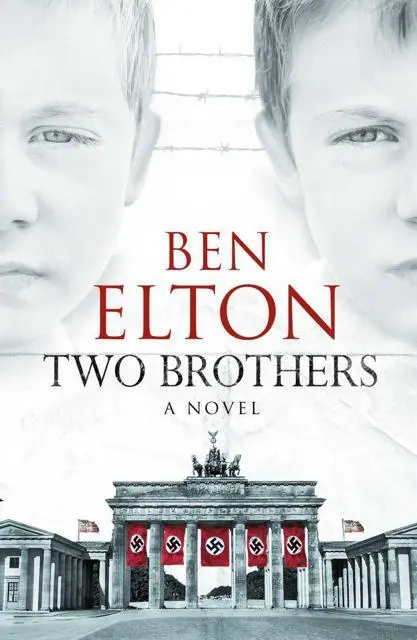
- Название:Two Brothers
- Автор:
- Издательство:Transworld Publishers
- Жанр:
- Год:2012
- Город:London
- ISBN:9780593062050
- Рейтинг книги:4 / 5. Голосов: 1
-
Избранное:Добавить в избранное
- Отзывы:
-
Ваша оценка:
Two Brothers: краткое содержание, описание и аннотация
Предлагаем к чтению аннотацию, описание, краткое содержание или предисловие (зависит от того, что написал сам автор книги «Two Brothers»). Если вы не нашли необходимую информацию о книге — напишите в комментариях, мы постараемся отыскать её.
Two Brothers BEN ELTON’s career as both performer and writer encompasses some of the most memorable and incisive comedy of the past twenty years. In addition to his hugely influential work as a stand-up comic, he is the writer of such TV hits as
and
. Most recently he has written the BBC series
on the subject of young parenthood. Elton has written three musicals,
and
and three West End plays. His internationally bestselling novels include *
,
,
,
and
. He wrote and directed the successful film
based on his novel
starring Hugh Laurie and Joely Richardson. About the Author
Two Brothers — читать онлайн бесплатно полную книгу (весь текст) целиком
Ниже представлен текст книги, разбитый по страницам. Система сохранения места последней прочитанной страницы, позволяет с удобством читать онлайн бесплатно книгу «Two Brothers», без необходимости каждый раз заново искать на чём Вы остановились. Поставьте закладку, и сможете в любой момент перейти на страницу, на которой закончили чтение.
Интервал:
Закладка:
It made Otto almost crazy with frustration. He could not make them hate him the way he hated them. In fact, he began to realize, they felt sorry for him. A fine lad, ruined by Jews. Anti-Semitism was the number one subject at the school, it informed every lesson whatever the subject, and Otto became a living, breathing mascot for the school’s creed. Brave, aggressive and headstrong because of his blood and misguided because of his upbringing.
Lying silently in his dormitory amongst boys with whom he refused to speak and with whom he fought every single day, Otto realized he must rethink his strategy. Clearly just fighting was not enough.
He almost smiled to think how Paulus would have laughed to hear him admit that.
He missed Paulus so much.
Paulus was the clever one, the thinker, the strategist. He would know the right way to behave. He would have a plan. He always did.
Thinking of Paulus reminded Otto of how wretchedly lonely he was. So lonely that he had occasionally even found himself considering making a friend or two amongst the other boys. They weren’t such a bad lot, country lads mainly, farmers’ sons and party kids. All bound together in common cause against the pathologically harsh discipline which the school clearly seemed to feel was the only way to educate future leaders. These Jungmannen , as they were called, were harassed constantly by often sadistic group leaders who were barely older than they were. This suffering of course formed a close bond in the dormitories and Otto would have liked very much to take some comfort in being part of the group. But he could not. Not ever. These same jolly boys chucking balls, laughing at farts, exchanging dirty postcards and comparing strap marks from the beatings they all regularly endured, these were the same boys who believed that his mother and the girl he loved were vermin.
He would not forget that just to make his life in this prison easier. He could not.
Nonetheless, as the days and weeks passed he found himself slowly compromising on his attitude towards his captors. His anger never subsided but he started trying to manage it. He could see that by behaving in such an openly combative manner he was really only hurting himself.
Besides which, he missed his parents and his brother so much that he resolved to try to behave at least well enough for them to allow him to go outside of the school occasionally. He knew that he could make no direct contact with his family but he longed at least to have news of them.
Desperately, gnawingly lonely as he was, he longed also for a friend. And so he set himself the task of earning a pass out. He kept on fighting, of course, but he began principally to do it within the rules, in boxing and military classes. He also began to give the Hitler salute, having perfected a way of giving it with two fingers very slightly crossed, which always made him feel closer to Paulus. And he began to make an effort on the playing field, which, along with fighting and soldiering, seemed to be the only area of achievement the staff were interested in. He even started to exchange the odd word or two with those hearty farmers’ sons who tried sometimes to engage him in conversation.
By the middle of the spring of 1936, Otto finally managed to get through a week without being disciplined for insubordination and he decided that the time had come to approach the principal in the hope of being allowed out of the school.
The principal had of course been delighted to note the change in Otto’s attitude, and slapped him on the back while Otto stood rigidly to attention before him.
‘Well now, boy,’ the principal said indulgently. ‘Of course, I should be happy to let you have an afternoon free each week as the other boys have. The only thing is how can I trust you not to go and visit those Jews you once called family?’
‘Because they are Jews, sir,’ Otto replied, ‘and I wear the uniform of a Napola Jungmann .’
The principal smiled but he was far from convinced.
‘You are saying that you are done with them? That you have no family feelings left?’
Otto might not have been as clever as Paulus but he knew enough not to overplay his lie.
‘No, sir. I still love my ex-mother and father because they were kind to me. However, I am a Jungmann of the Napola and I belong to the Führer. Therefore I cannot visit my ex-family because whatever I may feel for them personally they are still Jews.’
‘Well, who do you wish to visit then?’ the principal asked.
‘A girl, sir.’
‘Ahh!’ The big man laughed. ‘Now that I can believe. What girl?’
‘A fine German girl, sir. She is the daughter of my ex-mother’s ex-maid. She is a member of the BDM and her stepfather is in the Sturmabteilung .’
‘Now that sounds more like it!’ the principal said. ‘I’ll tell you what I’ll do. To start with you can invite her here. Sundays are visiting days when older boys may entertain family or a friend to tea. You can invite this girl. Sit down at once, boy, and write her an invitation. I’ll see that it is posted.’
And so the following Sunday Silke came.
She had scarcely been able to reply to the invitation fast enough. For once even she had the support of her stepfather, who had been hugely impressed when Silke received a letter from such a prestigious institution as a party academy.
When Otto first caught sight of Silke he nearly broke down and cried. He had had no word nor sight of anyone he loved in many months and when he saw his old friend smiling through the railings waiting to be admitted he was almost overcome. Then, when the moment came and the great iron gate was opened, they rushed to each other and hugged and hugged and actually jumped for joy in each other’s arms before they had even spoken a word. It was only the awareness of grinning faces around them that made Otto let go of Silke at all.
‘Hey watch out, miss,’ one of Otto’s dorm mates called out. ‘He normally punches before he speaks.’
‘Looks like now we know what makes him smile,’ another laughed.
The faces and the voices were friendly. Everyone was pleased to see the wild boy of the school hugging someone. Especially a pretty girl in a BDM uniform. For once Otto did not resent their intrusion — he was too happy to be back in contact with at least one part of the life he loved and had lost.
Together Otto and Silke walked and talked in the school grounds for the whole allotted two-hour visit; they missed tea but didn’t care. Silke had made a point of going to the Stengel apartment the night before so she was able to give Otto recent news of his family.
‘They’re all well,’ she said. ‘Things are a bit easier at the moment for them. What with the Olympics coming up, some of the restrictions on Jews have been lifted. Even the signs on the park benches have gone, so your dad can go and sit in the Märchenbrunnen on nice afternoons.’
‘How is my dad?’ Otto asked.
‘Oh he’s fine, absolutely fine,’ Silke replied, but the slight catch in her voice gave away the lie.
‘Silks,’ Otto said, ‘you’re my only friend now, you have to tell me the truth.’
‘OK, Wolfgang’s not so fine,’ Silke admitted. ‘He just seems to have lost hope. I think the problem is that there’s simply nothing for him to do . He just sits around really, which is really hard for your mum. I think she finds his kind of emptiness pretty depressing to be around. I mean she hasn’t said anything to me, but it’s obvious really. He used to be such fun and now he just sits there. Drinking when he can get it and smoking too, which is so stupid because it makes him cough till it looks like his head’s coming off. And of course since your Mum’s at home most of the time now they’re kind of bumping into each other a bit.’
Читать дальшеИнтервал:
Закладка:
Похожие книги на «Two Brothers»
Представляем Вашему вниманию похожие книги на «Two Brothers» списком для выбора. Мы отобрали схожую по названию и смыслу литературу в надежде предоставить читателям больше вариантов отыскать новые, интересные, ещё непрочитанные произведения.





Обсуждение, отзывы о книге «Two Brothers» и просто собственные мнения читателей. Оставьте ваши комментарии, напишите, что Вы думаете о произведении, его смысле или главных героях. Укажите что конкретно понравилось, а что нет, и почему Вы так считаете.