Ben Elton - Two Brothers
Здесь есть возможность читать онлайн «Ben Elton - Two Brothers» весь текст электронной книги совершенно бесплатно (целиком полную версию без сокращений). В некоторых случаях можно слушать аудио, скачать через торрент в формате fb2 и присутствует краткое содержание. Город: London, Год выпуска: 2012, ISBN: 2012, Издательство: Transworld Publishers, Жанр: Историческая проза, на английском языке. Описание произведения, (предисловие) а так же отзывы посетителей доступны на портале библиотеки ЛибКат.
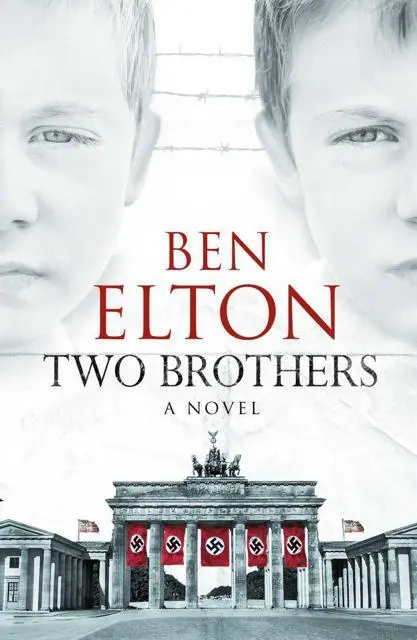
- Название:Two Brothers
- Автор:
- Издательство:Transworld Publishers
- Жанр:
- Год:2012
- Город:London
- ISBN:9780593062050
- Рейтинг книги:4 / 5. Голосов: 1
-
Избранное:Добавить в избранное
- Отзывы:
-
Ваша оценка:
Two Brothers: краткое содержание, описание и аннотация
Предлагаем к чтению аннотацию, описание, краткое содержание или предисловие (зависит от того, что написал сам автор книги «Two Brothers»). Если вы не нашли необходимую информацию о книге — напишите в комментариях, мы постараемся отыскать её.
Two Brothers BEN ELTON’s career as both performer and writer encompasses some of the most memorable and incisive comedy of the past twenty years. In addition to his hugely influential work as a stand-up comic, he is the writer of such TV hits as
and
. Most recently he has written the BBC series
on the subject of young parenthood. Elton has written three musicals,
and
and three West End plays. His internationally bestselling novels include *
,
,
,
and
. He wrote and directed the successful film
based on his novel
starring Hugh Laurie and Joely Richardson. About the Author
Two Brothers — читать онлайн бесплатно полную книгу (весь текст) целиком
Ниже представлен текст книги, разбитый по страницам. Система сохранения места последней прочитанной страницы, позволяет с удобством читать онлайн бесплатно книгу «Two Brothers», без необходимости каждый раз заново искать на чём Вы остановились. Поставьте закладку, и сможете в любой момент перейти на страницу, на которой закончили чтение.
Интервал:
Закладка:
‘You’d really like me to?’
‘I just said so, didn’t I?’
And so Stone began to talk.
Talking about things he never talked about. Sharing something of the weight of history and emotion that he kept shut up in the locked suitcase of his mind.
Perhaps it was the cigarettes that set him off.
Billie was smoking Gitanes, the same brand Dagmar used to get from her French pen pal. The same brand that he and she had smoked together on the night when he’d brought her the buttons from the SA man’s shirt and she had chosen him over his brother. Even the design of the packet was the same as it had been in the thirties.
‘We mugged those guys,’ Stone said, drinking deep on his beer. ‘I can’t say I regret it even now. I can see the bastard like it only happened this evening, right there, through the bottom of my beer glass. And I’d do it again too. When we jumped them they were strutting up the street like they owned it. Like they all strutted. Strutting and marching and stamping around like they’d done something brave and special by ganging up in their millions in order to persecute a few scared little individuals. That was what always annoyed me the most, the way they acted as if their “revolution” as they called it had been somehow heroic. Like they’d had some long, legendary struggle. Jesus, the Nazi Party was only as old as me. We were born on the same day. And heroic? The best they could come up with for a martyr was a pimp called Horst Wessel who got knifed over a girl three years before Hitler even came to power. They had all these festivals and celebrations, every week it seemed like, commemorating their “years of struggle” and their “martyrs”. They’d parade around with their “Blood Banners” going on about what a fight they’d had saving Germany. Jesus, when you actually added it up they’d lost about ten yobs in pub fights, that was it. But every Nazi walked round like he’d been a Spartan on the bridge when all they’d actually done was push Jewish grannies off the pavement.’
‘So you rolled dese guys,’ Billie asked.
‘That’s right, we rolled them. Cornered them in an alleyway, me and four other kids, and kicked the shit out of them. You’d have done the same if your dad had been half crippled in a concentration camp like mine was.’
‘Ha! Do’an give me dat! You wasn’t doin’ it fo’ your dad, you was doin’ it cos o’ dis girl.’
Stone smiled.
‘Well. Let’s say I did it for various reasons,’ he said.
‘But you didn’t kill dem?’
‘No. Not that time. I’d killed a man before though.’
‘What?’ Billie said, quite horrified. ‘Before you were fifteen?’
‘Me and my brother did it. In our apartment. I knocked the guy out and then Paulus suffocated him. I used that little statuette that’s in my flat. The one of my mother.’
Billie grimaced at the horror of it, but there was something else in Stone’s story that also made her think.
‘Paulus?’ Billie asked looking quizzically at Stone. ‘So that’s your brudder den?’
‘That’s right.’
‘But your name’s Paul?’
‘Yes,’ Stone agreed warily.
‘So you’re called Paul an’ your brudder was called Paulus?’
‘So it would seem.’
‘What the matter wit’ your momma? She only know one name?’
Stone gave a noncommittal shrug and took another swig of his beer.
‘Don’t you want to know why we killed the guy?’
‘I guess you must a’ had a pretty good reason.’
‘We killed him because he was about to rape our mum.’
‘I s’pose they don’t come much better than dat.’
Stone told the story. Surprising himself by taking pleasure in divulging information that had not even been sought. He, who for twenty years had made a habit of giving nothing away until forced to. He told Billie about killing Karlsruhen and about the buttons he’d cut off the SA man for Dagmar. About how triumphant she had been and how she’d kissed him and let him touch her.
‘Sounds like a dangerous girl to be in love with if you ask me,’ Billie observed.
‘She was excited,’ Stone replied defensively. ‘We’d drawn blood. Stood up and fought back. Don’t judge her — they made her lick pavements and they murdered her father.’
‘I ain’t judging her, Paul,’ Billie replied. ‘I don’t judge anyone.’
Then he told her the rest of the story of that night.
About how he’d arrived home to discover the truth about his adoption.
‘I just felt so completely alone. Deserted. They were my family, my whole life, and suddenly I was no longer a part of the single greatest element of their lives, the terrible danger they were in. I was alone. It was so strange. I’d decided so completely that I was a Jew, you see.’
‘And suddenly you weren’t?’
‘No.’
‘You told me you were.’
‘Yes. That’s what I’ve told people ever since I came to this country. But I’m not. Sorry about that.’
‘Don’ matter to me.’ Billie shrugged. ‘Jew or non-Jew is two exactly similar t’ings as far as I’m concerned.’
Stone drained his beer, took Billie’s glass and was about to go to the bar for another round. Billie put her hand on his arm to stop him.
‘What’s your real name, Paul? Just so I know.’
Stone smiled.
‘Otto,’ he replied. ‘My real name is Otto.’
Into Exile
Berlin, 1935
OTTO WAS TAKEN from his family by a female council official and a policeman. They informed him that as a ‘racially valuable’ individual he was to be housed with a decent Nazi family. They told him he must come immediately.
‘Bring no money nor any significant possessions,’ the council woman explained. ‘You are coming home to the Reich and the Reich will support you. You need nothing from these Jews.’
‘My family,’ Otto said.
‘You have been deceived,’ the woman replied. ‘The Jew will only look after his own. All else is trickery.’
Otto went meekly. He kissed Frieda briefly, ignoring the distaste on the face of the government woman and then shook Wolfgang and Paulus by the hand.
‘Please, ma’am,’ Frieda asked, ‘are we not even to know where Otto will live?’
‘That information is of no concern to you,’ the woman replied sharply. ‘Your parenthood of this boy is illegal under the law and you no longer have any rights or interest in him whatsoever. You are to have absolutely nothing to do with him from this moment forth. Come, Otto.’
‘He is our son!’ Frieda cried, finding it difficult to keep control. ‘He has lived in this same apartment for all of his fifteen years.’
‘That has been his misfortune,’ the woman said, ‘but his Jew nightmare is over. He is a German now.’
Otto went to the door without even glancing back. It had already been agreed between him and Paulus that he would show no regret or affection for fear of provoking the Gestapo.
As the door of their apartment closed behind Otto, Frieda literally sank to the floor. Her still lovely face, habitually lined with care. Now contorted with grief.
It occurred to Frieda that her heart had been broken in this same place before. Leaving a sadness so great and all-consuming that the empty space it made would remain empty all her days.
When had that been?
Of course she remembered. In the hospital, in 1920 when the old nurse had taken away the little shrivelled grey bundle. Then she had felt as she felt now.
And it had happened again. Once more she had lost a son, and for the second time Paulus had lost his twin.
Outside in the corridor Otto said nothing as he entered the familiar, creaking, clanking lift with the woman and policeman and descended to the ground floor. Still silent he walked with his captors out of the front door and into the well of the building.
Читать дальшеИнтервал:
Закладка:
Похожие книги на «Two Brothers»
Представляем Вашему вниманию похожие книги на «Two Brothers» списком для выбора. Мы отобрали схожую по названию и смыслу литературу в надежде предоставить читателям больше вариантов отыскать новые, интересные, ещё непрочитанные произведения.



Обсуждение, отзывы о книге «Two Brothers» и просто собственные мнения читателей. Оставьте ваши комментарии, напишите, что Вы думаете о произведении, его смысле или главных героях. Укажите что конкретно понравилось, а что нет, и почему Вы так считаете.