Ben Elton - Two Brothers
Здесь есть возможность читать онлайн «Ben Elton - Two Brothers» весь текст электронной книги совершенно бесплатно (целиком полную версию без сокращений). В некоторых случаях можно слушать аудио, скачать через торрент в формате fb2 и присутствует краткое содержание. Город: London, Год выпуска: 2012, ISBN: 2012, Издательство: Transworld Publishers, Жанр: Историческая проза, на английском языке. Описание произведения, (предисловие) а так же отзывы посетителей доступны на портале библиотеки ЛибКат.
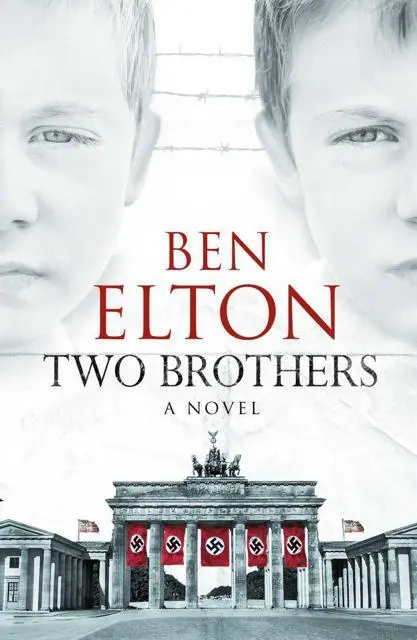
- Название:Two Brothers
- Автор:
- Издательство:Transworld Publishers
- Жанр:
- Год:2012
- Город:London
- ISBN:9780593062050
- Рейтинг книги:4 / 5. Голосов: 1
-
Избранное:Добавить в избранное
- Отзывы:
-
Ваша оценка:
Two Brothers: краткое содержание, описание и аннотация
Предлагаем к чтению аннотацию, описание, краткое содержание или предисловие (зависит от того, что написал сам автор книги «Two Brothers»). Если вы не нашли необходимую информацию о книге — напишите в комментариях, мы постараемся отыскать её.
Two Brothers BEN ELTON’s career as both performer and writer encompasses some of the most memorable and incisive comedy of the past twenty years. In addition to his hugely influential work as a stand-up comic, he is the writer of such TV hits as
and
. Most recently he has written the BBC series
on the subject of young parenthood. Elton has written three musicals,
and
and three West End plays. His internationally bestselling novels include *
,
,
,
and
. He wrote and directed the successful film
based on his novel
starring Hugh Laurie and Joely Richardson. About the Author
Two Brothers — читать онлайн бесплатно полную книгу (весь текст) целиком
Ниже представлен текст книги, разбитый по страницам. Система сохранения места последней прочитанной страницы, позволяет с удобством читать онлайн бесплатно книгу «Two Brothers», без необходимости каждый раз заново искать на чём Вы остановились. Поставьте закладку, и сможете в любой момент перейти на страницу, на которой закончили чтение.
Интервал:
Закладка:
‘Surprise surprise,’ Wolfgang remarked from his piano stool.
‘And then mixed circles for the Mischlinge . The idea is you put your great-grandparents in the various circles and that way you can work out whether you qualify to sit on park benches or not.’
‘And did you find anything out,’ Frieda asked, ‘about Otto’s family?’
‘Only on his mother’s side,’ Paulus said, ‘and then only their names and their home village. It’s in Saxony.’
‘I’m going to find them,’ Otto said firmly. ‘I’ll cycle — it’s only a hundred and twenty kilometres.’
When Silke heard about the trip she insisted immediately on going along for the ride. She had only just got back from her epic march to Nuremberg and having tasted the freedom of the open road and nights out camping under stars had no desire to return to the drudgery of life in her mother’s apartment where her stepfather treated her as an unpaid servant.
‘It’ll be easy to get off school,’ she said. ‘I’ll just say it’s BDM business. I am Youth and I belong to the Führer, don’t you know!’ she added, quoting party rhetoric with a wicked laugh. ‘I have a special place in his heart and in his plans so my teachers can go screw themselves! Ha ha! It’ll be a good thing to have me along in my uniform anyway, Otts. A lad on his own out there with a bike and backpack who’s not in the Hitler Youth is a dead set target. They’ve banned all the other youth clubs, even the Catholic bird-watchers. The country’s swarming with HJ and believe me there’s plenty of them looking for a fight. They go for any kid who isn’t in the gang. If you’re with me, it’ll just look like you’re in civvies.’
And so the very next morning Otto and Silke set out together with their sandwiches and apple juice, a blanket each, a little canvas tent and a few marks to buy food along the way.
The first part of the journey meant cycling all the way across Berlin from the south-east to the north-west, a dirty, sweaty business on what was a warm late September morning. Soon, however, they picked up the old Hamburg road and found themselves rolling happily along an almost empty country road which meandered its way through the glorious countryside of Brandenburg towards Saxony and would eventually lose itself in the beautiful Elbe valley, where they planned to camp that night.
It was a wonderful day bathed in perfect sunshine, and Otto found himself forgetting all his terror for the future as he revelled in the simple unfettered freedom of the open road.
‘Hitler weather’, people called it, and it was true that the summers since the Leader had seized power did seem to have been longer and more pleasant than those under the Weimar.
‘Bloody hot, eh, Otts!’ Silke said as she laboured at her pedals, leaning forward over the handlebar in order to lend more power to each pumping motion of her legs.
Good legs too, Otto could not stop himself from thinking, as he glanced across the dusty lane at his travelling companion. The skirts of the BDM uniform were fully calf-length but Silke had tucked the hem of hers up into her knickers to make it easier to ride. Her legs were thus fully displayed, and the flexing and unflexing of her muscles cast nice shadows across her tanned thighs and calves as she rode.
How strange, Otto mused, that scrappy little Silke should end up having nice legs. He rubbed the sweat from his eyes and took in the pleasant sight. Who would ever have thought it?
Firm, shapely legs. Girl’s legs. Not spectacular like Dagmar’s, but then no girl had legs like Dagmar’s. Hers were endless, slim and delicate, like some fabulous, human gazelle. Silke’s legs were not long at all and certainly not skinny. But nice nonetheless. Friendly and strong. No longer covered in grazes and sticking plasters either. Otto did not think he’d ever seen Silke’s knees before without the scabs and plasters and as often as not some dirty inky scribble. Now they were clear and smooth. The only evidence that remained of a thousand fights and falls were one or two little scars that stood white against the copper skin.
Amazing. Silke had been ‘one of the boys’ for so long that it was quite a shock to realize she’d ended up turning into a girl after all. She even had curves. When had that happened? Skinny little Silke with curves? They seemed simply to have arrived overnight.
‘Isn’t Silke growing up?’ Frieda had remarked recently. ‘I always thought she’d turn out pretty.’
And she had.
An old friend with a big smile and a disposition as sunny as the reflections that sparkled in the corn-blonde hair blowing in the breeze behind her as she panted over her handlebar.
Good old Silke.
Such a dear, old friend.
‘Poor Pauly, eh?’ Silke shouted. ‘Bet he wishes he was here.’
‘Yeah!’ Otto called back. ‘Sitting in school surrounded by the enemy studying for a job they won’t let him have. And he thinks he’s the clever one! Ha!’
Side by side they rode. Up and down hills, past streams, through fields and sweet-smelling forests. Stopping occasionally for draughts of apple juice.
Both of them knew that they would remember that wonderful day’s ride all their lives. Their spirits rising with every kilometre passed. With the scent of the forests and the freshly made hay and sweet meadow flowers, all wafted to them on a warm and gentle breeze through pure and pristine air.
‘It really is a lovely world,’ Silke said.
‘Yes it is,’ Otto agreed. ‘Shame about the people in it.’
He said this as yet another labourer in a field paused in his work to greet them as they passed, not with a wave or a simple ‘ Guten Tag ’ but with the ‘German’ salute and a loud ‘ Heil Hitler ’.
‘I almost resent the sun for shining on them,’ Otto went on. ‘It makes everything look so wonderful, even them with their stupid outstretched arms.’
‘Well, of course there never was any sun before Hitler,’ Silke joked.
It was the time of the September Solstice. A pagan festival beloved of the Nazis. Every village they passed through was bedecked with flowers and swastikas. Every little green or square was filled with dancers.
Girls in traditional country dress with garlands in their hair. Boys stamping about in HJ uniforms with wooden rifles on their shoulders. Marching bands playing and children’s choirs singing songs.
Songs Otto recognized as he cycled past returning the friendly waves of the singers. The same songs that were sung at his school, at assemblies and during music lessons.
Das Judenblut vom Messer spritzt, geht’s uns nochmal so gut .
‘The Jews’ blood spurting from the knife makes us feel especially good.’
All day they cycled, alternately delighted to be free and in the countryside and depressed to be so continuously confronted with evidence of the Nazi occupation of it. Village after village had a banner strung across the road at its entrance saying ‘No Jews’ and ‘Jew Beware’.
And then there were the shouts.
‘Death to Jews,’ peasants called out cheerfully as Otto and Silke passed. Just as if they were shouting, ‘Good morning! Good luck! Enjoy your ride.’
Time and again they cycled past marching groups of boys and girls with happy, smiling faces, calling down death on their fellow man. The countryside was alive with them. Off to the rivers and forests intent on developing the ‘steel hard’ bodies that Hitler had demanded of ‘his youth’.
That night, exhausted, they made camp together in a little copse of trees beside a stream. Or a small river, as Otto insisted it should be ranked, having pronounced it as one from the map.
They didn’t bother pitching the tent because the night was warm and there was no chance of rain. It was too warm even for a fire, which Otto thought was a great shame but Silke said was fortunate.
Читать дальшеИнтервал:
Закладка:
Похожие книги на «Two Brothers»
Представляем Вашему вниманию похожие книги на «Two Brothers» списком для выбора. Мы отобрали схожую по названию и смыслу литературу в надежде предоставить читателям больше вариантов отыскать новые, интересные, ещё непрочитанные произведения.






Обсуждение, отзывы о книге «Two Brothers» и просто собственные мнения читателей. Оставьте ваши комментарии, напишите, что Вы думаете о произведении, его смысле или главных героях. Укажите что конкретно понравилось, а что нет, и почему Вы так считаете.