Ben Elton - Two Brothers
Здесь есть возможность читать онлайн «Ben Elton - Two Brothers» весь текст электронной книги совершенно бесплатно (целиком полную версию без сокращений). В некоторых случаях можно слушать аудио, скачать через торрент в формате fb2 и присутствует краткое содержание. Город: London, Год выпуска: 2012, ISBN: 2012, Издательство: Transworld Publishers, Жанр: Историческая проза, на английском языке. Описание произведения, (предисловие) а так же отзывы посетителей доступны на портале библиотеки ЛибКат.
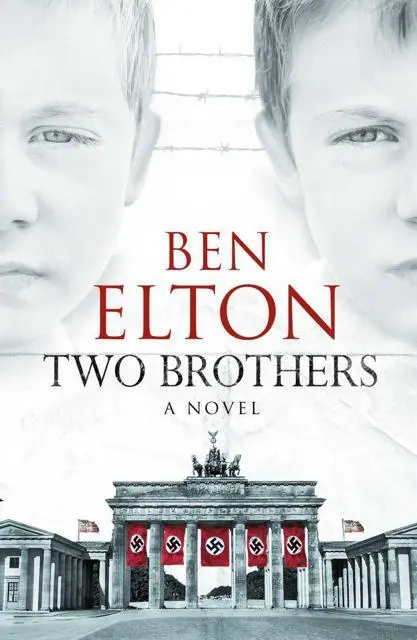
- Название:Two Brothers
- Автор:
- Издательство:Transworld Publishers
- Жанр:
- Год:2012
- Город:London
- ISBN:9780593062050
- Рейтинг книги:4 / 5. Голосов: 1
-
Избранное:Добавить в избранное
- Отзывы:
-
Ваша оценка:
Two Brothers: краткое содержание, описание и аннотация
Предлагаем к чтению аннотацию, описание, краткое содержание или предисловие (зависит от того, что написал сам автор книги «Two Brothers»). Если вы не нашли необходимую информацию о книге — напишите в комментариях, мы постараемся отыскать её.
Two Brothers BEN ELTON’s career as both performer and writer encompasses some of the most memorable and incisive comedy of the past twenty years. In addition to his hugely influential work as a stand-up comic, he is the writer of such TV hits as
and
. Most recently he has written the BBC series
on the subject of young parenthood. Elton has written three musicals,
and
and three West End plays. His internationally bestselling novels include *
,
,
,
and
. He wrote and directed the successful film
based on his novel
starring Hugh Laurie and Joely Richardson. About the Author
Two Brothers — читать онлайн бесплатно полную книгу (весь текст) целиком
Ниже представлен текст книги, разбитый по страницам. Система сохранения места последней прочитанной страницы, позволяет с удобством читать онлайн бесплатно книгу «Two Brothers», без необходимости каждый раз заново искать на чём Вы остановились. Поставьте закладку, и сможете в любой момент перейти на страницу, на которой закончили чтение.
Интервал:
Закладка:
‘Sit down, Otto Stengel,’ the master ordered.
Otto did not sit down, but instead stood foursquare with his hands on his hips.
‘I have something to say,’ he announced.
‘Then say it at break-time. Sit down and open your books.’
‘I’ll say it now.’
Paulus tugged at Otto’s blazer.
‘Otts, sit down ,’ he hissed. ‘ Please .’
But Paulus knew he could not stop Otto. Whatever his brother wanted to do he would do and damn the consequences. The killing of Karlsruhen (about which they rarely spoke but often thought) had of course affected both boys deeply but in opposite ways. For Paulus the memory of that desperate, horrifying action and its aftermath had made him even more careful, more calculating. Determined always to have a plan, to take the path of least resistance towards the most beneficial result. It was not that he lacked passion; he hated the enemy no less than Otto and felt every humiliation just as deeply. But he also understood that pride and hot-headedness were not only the enemy of survival but also the enemy of revenge.
‘The trick to beating them,’ he often told his brother, ‘is not to try and kill them but to stop them killing us.’
Otto, on the other hand, had drawn an angry strength from their victory over their mother’s attacker. His family had been attacked and they had successfully defended themselves. That was the lesson. If he had been reckless before he was more so now. He had killed one. He had tasted their blood. He knew that if you fought them you could hurt them.
The brutal imprisonment of their father had also affected the boys differently. Paulus tried very hard not to think about it, because when he did he was so overcome by fear and misery that he could scarcely function at all. He knew that the best and only way he could support his father was by helping his mother. By keeping going. Working hard at school and hard at the practical task of day-to-day survival.
Otto instead dwelt constantly on his father’s plight and it constantly enraged him. Filling him with an overwhelming fury that made him fearless.
And so now, empowered by the blood on his hands and the misery of his father, Otto faced down his teacher and his classmates.
‘This,’ Otto said, making a sweeping gesture to the seven Jewish seats, ‘is an Aryan-free zone! You are all prohibited from entering it since no Jewish boy should be forced to associate with you. This order,’ Otto barked, in impersonation of the man in the photograph that hung on the wall, ‘is my unalterable will !’
The stunned silence that followed such shocking insolence lasted perhaps two seconds. Just long enough for Paulus to manoeuvre his chair so that his back was to the wall.
Then mayhem ensued.
It is true that some of the ‘German’ boys found Otto’s protest funny and had laughed, one or two even banged their desklids. But a sufficient number were outraged and formed an instant squad of retribution. Eight boys in all leapt to their feet and piled on to Otto. Even with such weighted odds the attackers didn’t have it all their own way. Otto was solid muscle and due to his boxing lessons knew how to use it. Also the space was limited and obstructed by desks so the full force of the attackers could not be brought to bear. The first two boys were knocked down before the others were able to close on Otto and drag him to the floor. Meanwhile Paulus had leapt to his feet and was attempting to fend off other boys who had made their way around the desks in order to attack the twins from the flank. Paulus knew of course that there was no way of his keeping out of the fight. Since kindergarten everyone in the school had recognized that the Stengel boys came as a pair.
It took the master and two more teachers from next-door classrooms to break up the mêlée and then only by wading in and flailing about themselves wildly with their canes. When some order had been restored Otto was hauled to the front of the class, where he stood, wiping blood from his face and staring down his attackers through swollen eyes with fierce belligerence.
‘You will attend the headmaster’s office immediately, Stengel,’ the master shouted, ‘where I have no doubt you will be beaten and then expelled.’
‘Too late,’ Otto spat back through his bloody lips, ‘I quit! Otto erwacht !’ he shouted in imitation of the Germany Awake slogan so beloved of the Nazis. ‘You stole my father! You’re not keeping me.’ And with that Otto walked out of the classroom, never to return.
The master turned to Paulus, his lip trembling with fury at this Jewish affront.
‘Well, Paulus Stengel?’ he said. ‘Have you anything to add?’
‘No, sir, absolutely not, sir!’ Paulus replied, snapping to attention. ‘I am very happy to sit in whichever seat the school chooses in its generosity to allow me, sir! Also I apologize unreservedly for my brother’s disgraceful display. He is stupid and hot-headed but he will learn his place, I swear, and until then I beg that you forgive him his foolishness.’
‘Well then, Jew,’ the master said, pleased as ever to be grovelled to, ‘you may return to your books.’
Beached Dolphin
Berlin, 1935
SHORTLY AFTER THE edict was issued segregating school classrooms, Jews were banned from using public swimming pools.
This was a particularly cruel blow for Dagmar Fischer. Swimming had always been central to her life, and since her father’s death she had taken refuge in the isolation and anonymity of the water more and more. The beautiful public pool at Charlottenburg and the vast swimming lake at Wannsee had become her sanctuary. Here she found peace and solace. Churning through the cool water at race-winning speeds she could for a moment blot out the agony of her father’s arrest and murder. Diving, dipping and scissor-kicking in elegant precise balletic display for no one but herself, she could briefly wash the taste of the Ku’damm pavement from her memory.
‘In a way I’m glad that Papa isn’t here to see us banned from pools,’ she said to the Stengel boys, fighting back tears as ever when thinking of her murdered father. ‘He taught me to swim almost before I could walk. I was two, we were at Lake Como in Italy. He used to call me Dagmar the Dolphin. He was so proud of me.’
Dagmar was far and away the best swimmer in her school. A true athlete, slim and strong, and as she grew into adolescence her coaches had felt that she had real potential.
‘When they announced that the Olympics would be coming to Berlin, Papa and I actually danced together! We did, you know. I know it seems funny to think of, he was normally so stern and formal. But that day he grabbed me and we danced. He already had me winning gold for Germany! Of course that was before the Nazis. Now I’m not even allowed to train, let alone compete. What do they think? That somehow a bit of my Jewishness will dissolve in the water and get up their precious pure German noses?’
Then the tears came properly and the boys looked at each other helplessly as they always did when Dagmar cried.
‘They should be so lucky,’ Otto growled. ‘Don’t forget, Dags, they’re only doing this because they know we’re so much better than them. It’s why they hate us.’
‘That is so stupid !’ Paulus gasped in frustration. ‘Just listen to yourself. They think they’re the bloody master race, we think we’re the chosen people. Fuck the lot of them, I say. I’m me. That’s all. Just me.’
‘Yeah and you’re a twat,’ Otto replied.
He was communicating in breathless grunts while doing sit-ups on Dagmar’s pink fluffy rug. Otto rarely let any moment pass in physical repose; he was always exercising. Training for the battles to come.
Читать дальшеИнтервал:
Закладка:
Похожие книги на «Two Brothers»
Представляем Вашему вниманию похожие книги на «Two Brothers» списком для выбора. Мы отобрали схожую по названию и смыслу литературу в надежде предоставить читателям больше вариантов отыскать новые, интересные, ещё непрочитанные произведения.







Обсуждение, отзывы о книге «Two Brothers» и просто собственные мнения читателей. Оставьте ваши комментарии, напишите, что Вы думаете о произведении, его смысле или главных героях. Укажите что конкретно понравилось, а что нет, и почему Вы так считаете.