Ben Elton - Two Brothers
Здесь есть возможность читать онлайн «Ben Elton - Two Brothers» весь текст электронной книги совершенно бесплатно (целиком полную версию без сокращений). В некоторых случаях можно слушать аудио, скачать через торрент в формате fb2 и присутствует краткое содержание. Город: London, Год выпуска: 2012, ISBN: 2012, Издательство: Transworld Publishers, Жанр: Историческая проза, на английском языке. Описание произведения, (предисловие) а так же отзывы посетителей доступны на портале библиотеки ЛибКат.
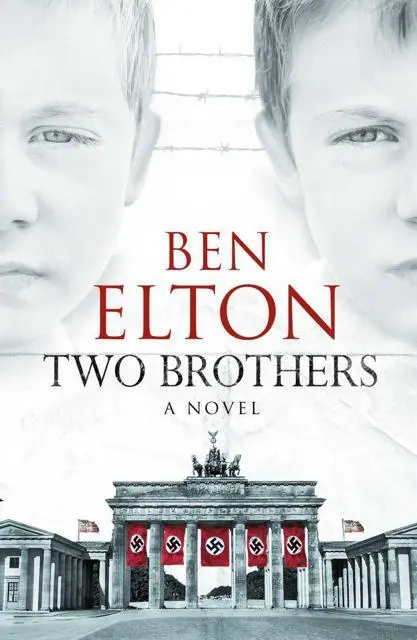
- Название:Two Brothers
- Автор:
- Издательство:Transworld Publishers
- Жанр:
- Год:2012
- Город:London
- ISBN:9780593062050
- Рейтинг книги:4 / 5. Голосов: 1
-
Избранное:Добавить в избранное
- Отзывы:
-
Ваша оценка:
Two Brothers: краткое содержание, описание и аннотация
Предлагаем к чтению аннотацию, описание, краткое содержание или предисловие (зависит от того, что написал сам автор книги «Two Brothers»). Если вы не нашли необходимую информацию о книге — напишите в комментариях, мы постараемся отыскать её.
Two Brothers BEN ELTON’s career as both performer and writer encompasses some of the most memorable and incisive comedy of the past twenty years. In addition to his hugely influential work as a stand-up comic, he is the writer of such TV hits as
and
. Most recently he has written the BBC series
on the subject of young parenthood. Elton has written three musicals,
and
and three West End plays. His internationally bestselling novels include *
,
,
,
and
. He wrote and directed the successful film
based on his novel
starring Hugh Laurie and Joely Richardson. About the Author
Two Brothers — читать онлайн бесплатно полную книгу (весь текст) целиком
Ниже представлен текст книги, разбитый по страницам. Система сохранения места последней прочитанной страницы, позволяет с удобством читать онлайн бесплатно книгу «Two Brothers», без необходимости каждый раз заново искать на чём Вы остановились. Поставьте закладку, и сможете в любой момент перейти на страницу, на которой закончили чтение.
Интервал:
Закладка:
‘Where are you off to?’ Wolfgang said. ‘Somewhere nice?’
‘Munich! Heart of the movement, my friend! Home of big bellies and small minds. Thank God I’m just passing through. Off to Bad Wiessee, a charming little spa resort. Have you been?’
‘No. I’ve never had a holiday, as it happens. We had our kids too young, never had the time, never had the money.’
‘And of course when we were young Berlin was a holiday. Why would one have gone anywhere else?’
‘That’s true.’
A wistful shared moment hung between them. Then Helmut drained his wineglass and his Cognac and called for the bill.
‘Anyway, you certainly aren’t missing much on this trip. Bad Wiessee itself is beautiful but the company won’t be. Hey ho! Duty beckons, all work and no play makes Chief of Staff SA Röhm a dull boy and I must go and line up his playmates.’
As they parted Helmut took Wolfgang’s hand.
‘Don’t forget,’ he said, ‘I can help you. I’m SA and we can do what we like. Pretty soon there won’t be an army, or a police, or even a government in Germany, just us, the SA. We are the party, and we are the nation. Even Adolf is scared of Röhm, you know. Well, who wouldn’t be? Three million troops? The SA is the biggest army in Europe and it answers to Queen Ernst, not King Adolf.’
‘I’m grateful, Helmut. Thank you.’
They emerged from the restaurant and parted, Helmut in a black Mercedes that had been waiting for him, Wolfgang to make his way home on foot.
As he did so his thoughts were far away and long ago. Back in the Berlin of 1923, at a bar, talking theatre and art with an intoxicating girl.
He didn’t love Katharina any more. He had never loved her in the truest sense. He loved Frieda and Frieda alone, Katharina had been a crush, an infatuation. But a beautiful and sincere one nonetheless, based as much on a meeting of minds as it had been on her sexual allure, and his heart ached to think of her in such abject misery. If he had ever loved another woman it would certainly have been beautiful, thrilling Katharina.
All those nights talking art and theatre. All that style. That captivating beauty.
And now.
Wolfgang had seen the faces of those ravaged by that cruel disease.
Forcing such images from his mind he focused once more on the beautiful nineteen-year-old with the severest shining black bobbed hair he had ever seen. The smoky stare. The purple lips. Chattering about Erwin Piscator and Bertolt Brecht. Stealing Lucky after Lucky from the packet on the bar between them.
Lost as he was in 1923, Wolfgang wasn’t concentrating on the present.
Had he been, he might perhaps have noticed the large black van parked opposite their apartment building. He might have seen the little gang of kids standing nearby, as if waiting for something to happen, throwing glances his way and giggling. He might have sensed the nervous excitement with which the concierge grunted her guten Abend , her manner even ruder and more abrupt than usual, her door closing quickly as he passed.
But preoccupied and half drunk, the first inkling Wolfgang had that something was wrong was when the creaking, clanking old lift began to settle as it arrived at his floor. That was when he noticed through the metal diamonds of the cage that the front door to their apartment was wide open.
That was certainly unusual.
Then a moment later as he was pulling back the concertinaed door and stepping out, Wolfgang heard Paulus’s voice shouting out. Shouting out a warning. ‘Run, Dad, run!’
But it was too late.
He turned but they were already all around him, reaching hold and dragging him into his own apartment, where Frieda was standing in silent terror, her arms around her sons.
There were half a dozen men present, one in plain clothes, the others dressed in a uniform that Wolfgang had only seen in news reels. A terrifying, all black affair, on the caps of which was a skull and crossbones.
One of the black-clad figures was holding the print that for ten years had hung above Wolfgang’s piano. The one by Georg Grosz depicting an army medical team from 1918 passing a skeleton fit for active service.
The man holding the print had put his leather-gloved fist through it, glass and all. The jagged shards lay broken at his feet.
‘You admire this decadent?’ the man said with a superior sneer.
Decadent? Even in that moment of dawning horror Wolfgang’s mind recoiled at the strange outrage of a thug who, having invaded a private home, ripped a picture from the wall and smashed it with his fist, then had the effrontery to call the artist decadent.
‘Yes,’ was all Wolfgang could think of in reply. Knowing very well that from this point of complete disaster onwards what he said was irrelevant anyway. They had come for him, that was all. He did not know why, but no one ever did. He had lost enough friends over the previous year to know that once these people had you in their sights there was no hope…
Another officer spoke up. He had hold of Wolfgang’s beloved trumpet.
‘You play nigger music?’ the man asked.
The same casual sneer. These people genuinely seemed to feel that they were the civilized ones.
‘Well… I did play jazz… but now I…’
The plainclothed officer spoke up. Obviously a Gestapo man, dressed as ever in the inevitable gabardine coat and Homburg which every German, even the most fervent Nazi, had come to dread.
‘We have received intelligence that you are a dangerous subversive. A dangerous Jewish subversive. You will come with us.’
‘Dangerous? I play music.’
‘Nigger music.’
‘How is that dangerous?’
‘It is morally corrupting. Germany protects itself from decadent and inferior culture. You will come now.’
Frieda cried out in desperate protest.
‘But, sir, officer, I’ve explained!’ she pleaded. ‘It must be a mistake, he’s just a poor musician. A harmless nobody. I am a doctor, I’m known in the neighbourhood, many Aryans of my acquaintance can vouch that my husband is of no consequence. The local Lutheran minister, he will speak for us, I know it… Please, let me call him!’
‘Stengel,’ the plainclothed figure commanded, pointing at Wolfgang, ‘come quietly or we will subdue you. I presume you would not wish your children to see that.’
Wolfgang glanced across at his family.
Frieda scrabbling in her address book for the pastor’s number.
Otto looking ferocious, ready to kill… His hand playing with something in his pocket.
Paulus glancing about, his eyes darting from one black-clad figure to another, trying to think of something, anything.
Wolfgang knew that the longer he drew this out, the more chance there was of his boys doing something very stupid. Particularly Otto.
‘Very well,’ he said. ‘I will come. Boys, be calm. For Mum’s sake. Be calm.’
‘No! Take me!’ Otto shouted. ‘I’m the subversive. Whoever called you must have meant me! Look, I’ve got a—’
Otto’s hand was emerging from his pocket but Paulus, seeing what Otto intended to do, stepped forward, holding Otto’s arm and positioning himself in front of his brother. ‘Wait,’ he said, trying to smile, ‘I’ve got it! I know what this is about. There’s been a mix up. Your informant must have meant those other Stengels! The Communist ones. They live on — oh, where is it? — that’s right, Boxhagener Strasse! We’re always getting mixed up with them. If you just…’
It was a good effort but the home-invaders weren’t listening. The Gestapo man barked a command and two of the black-clad figures took hold of Wolfgang. Frieda screamed in terror, leaping forward and holding on to him, struggling in the grasp of his tormentors.
Читать дальшеИнтервал:
Закладка:
Похожие книги на «Two Brothers»
Представляем Вашему вниманию похожие книги на «Two Brothers» списком для выбора. Мы отобрали схожую по названию и смыслу литературу в надежде предоставить читателям больше вариантов отыскать новые, интересные, ещё непрочитанные произведения.








Обсуждение, отзывы о книге «Two Brothers» и просто собственные мнения читателей. Оставьте ваши комментарии, напишите, что Вы думаете о произведении, его смысле или главных героях. Укажите что конкретно понравилось, а что нет, и почему Вы так считаете.