Gail Godwin - Flora
Здесь есть возможность читать онлайн «Gail Godwin - Flora» весь текст электронной книги совершенно бесплатно (целиком полную версию без сокращений). В некоторых случаях можно слушать аудио, скачать через торрент в формате fb2 и присутствует краткое содержание. Город: New York, Год выпуска: 2013, ISBN: 2013, Издательство: Bloomsbury USA, Жанр: Историческая проза, ya, на английском языке. Описание произведения, (предисловие) а так же отзывы посетителей доступны на портале библиотеки ЛибКат.
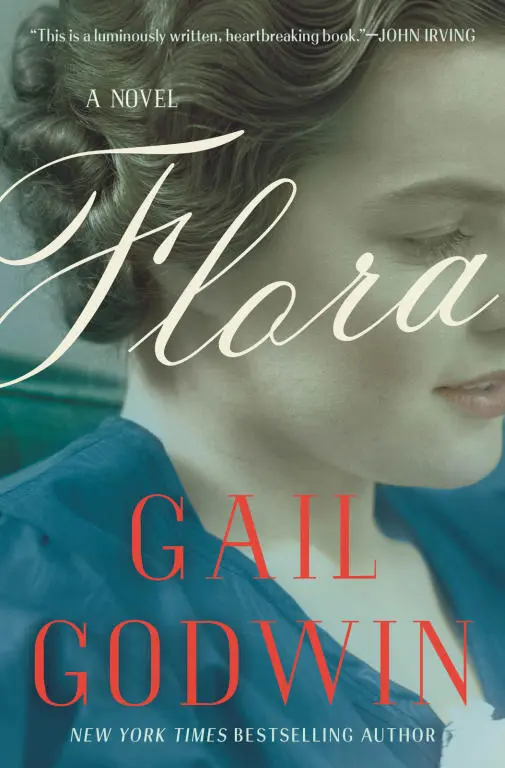
- Название:Flora
- Автор:
- Издательство:Bloomsbury USA
- Жанр:
- Год:2013
- Город:New York
- ISBN:978-1-62040-121-7
- Рейтинг книги:4 / 5. Голосов: 1
-
Избранное:Добавить в избранное
- Отзывы:
-
Ваша оценка:
Flora: краткое содержание, описание и аннотация
Предлагаем к чтению аннотацию, описание, краткое содержание или предисловие (зависит от того, что написал сам автор книги «Flora»). Если вы не нашли необходимую информацию о книге — напишите в комментариях, мы постараемся отыскать её.
This darkly beautiful novel about a child and a caretaker in isolation evokes shades of
and also harks back to Godwin’s memorable novel of growing up,
With its house on top of a mountain and a child who may be a bomb that will one day go off,
tells a story of love, regret, and the things we can’t undo. It will stay with readers long after the last page is turned.
Flora — читать онлайн бесплатно полную книгу (весь текст) целиком
Ниже представлен текст книги, разбитый по страницам. Система сохранения места последней прочитанной страницы, позволяет с удобством читать онлайн бесплатно книгу «Flora», без необходимости каждый раз заново искать на чём Вы остановились. Поставьте закладку, и сможете в любой момент перейти на страницу, на которой закончили чтение.
Интервал:
Закладка:
“I’d go over each item with a damp cloth before you lay it out on the bed,” Mrs. Jones had suggested before leaving. “If there’s things you’re not sure what to do with, we can look those over when I come next week.”
The sorting-out part took longer than I expected. There were things I knew I shouldn’t throw out, even though I wanted them out of the room. There were some puzzling objects that I wanted to look at some more before I consigned them to the trash. And there were a few things that might be of use to Finn: the extension cord and the sealed pack of cards, and the buck-eyes for good luck—I could tell him about the local legends if he didn’t know them. But he definitely wouldn’t want someone’s disgusting old shaving brush or a flask with no top, or even if it had a top because he was on the dry. Each survivor of the trash I carefully wiped down before placing it on the bed. (Would Finn like to have his bed moved back to the window?)
When at last I surveyed my final collection on the bed, I ferociously regretted the loss of Annie Rickets.
(“Oh, boy, let’s get to work. There are different ways we could do this, Helen. We could each take one patient at a time and pick out items for them and then deduce their secrets from their items, or we could go item by item and decide who it belonged to, and then—No, that’s much too infantile for us: my first idea is better. I’ll go first if you let me start with the Willing Fanny. The sleeping mask is definitely hers, and probably the cigarette holder, and she has to have the perfume atomizer, unless one of the male patients was a fairy, and also the smelling salts, and I think she should have the crusted spoon—a ladylike slurp of opium for the long, boring afternoon ahead at Shangri-la. Oh, sorry, I’m taking too many? Okay, you can have the opium spoon back. But I have to insist that syringe is hers, because it’s not the kind you use for enemas, it’s what women use when they need to shoot water and Lysol up inside them. My mammy has one and she says it has kept us from being a family of ten. That date book could be a man’s or a woman’s, so I won’t be greedy. But I’ll bet anything those nb ’s stand for either ‘no blood’ or ‘no booze.’ The ‘no booze’ is if they were on the wagon. The other could be either someone who’s missed her period or, more boringly, a former tubercular who’s counting his good days. Breaking off like that could mean they fell off the wagon or got her period or didn’t get it, or, in the case of the tubercular, the blood came back and he expired.”)
Flora was standing in the doorway. “Supper is ready when you are, honey. Goodness! What is all that?”
“Junk from the drawers in here.”
She approached the bed. “It’s not all junk. That’s a perfectly good extension cord, and, look, what a sweet little painted dish—”
“I know . I’m sorting it out . I just don’t want it in those drawers, in a big clump , where it’s been laying useless for years—”
“Oh! That’s our calling card tray!”
“Whose calling card tray?”
“The one we sent to Lisbeth for a wedding present. Where did you find this, Helen?”
“I told you. In those drawers.”
“Just… lying with all the junk?” She scooped it up and cradled it in her palms.
“No, it had lots of paper around it.”
“What kind of paper?”
“Just the brown paper things get mailed in. And there was some tissue paper, too. It was all scrunched up together.”
“Where is it? Did you throw it away?”
“Yes, but it’s still in the trash basket over there.”
Already she was at the basket. “Oh, God, here it is!” Now she was pulling apart the brown paper from the tissue. Such a frenzy over some old wrapping paper. “Oh, I don’t believe this! The card’s still in here!”
“I didn’t see any card.”
“Here it is. Oh, my daddy’s own sweet handwriting.” The tears were at the ready. “All of us signed it. See?”
She proudly showed me the signatures on the card: a younger Flora’s, the bold scrawls of the men, and, familiar to me from her letters to Flora, the proper slant of Juliet Parker.
“It is sterling silver,” said Flora. “Juliet picked it out, but we all contributed. But why did Lisbeth stuff it away with all that junk? Still in its paper! I wonder if she even saw the card.”
“Who says it was her? It was probably someone else after she died. They saw it out on a table and said, ‘Oh, what is this for?’ and then put it in the drawer.”
“No,” said Flora, cradling the little tray like a wounded animal. “It wasn’t ever out on any table. When I stayed here that week after the funeral I looked everywhere. I understand now. I was a fool not to see it before. Lisbeth hated it. She was ashamed of it. Just another piece of Alabama trash.”
“That is just ridiculous,” I said (though suspecting she might have a point). “You really need to have more faith in yourself, Flora. And if you don’t have it, you at least have to act like you do.”
“That is exactly what your grandmother would have said,” marveled Flora, regarding me with fond respect.
“What is a yellowhammer anyway?”
“Why, it’s our state bird. It’s the sweetest little woodpecker with these bright yellow underwings. Juliet has three yellowhammer boxes in our backyard. My daddy made the boxes for her. They have to be made just so. When the babies fledge, our whole backyard is aflutter with yellow wings.”
As we went down to supper, I had to congratulate myself for deflecting Flora from her trash talk and staving off those ready tears. There had not been a single tear shed. I felt like a proud parent who, after hard work, sees her child growing into sociability and self-control.
XXII.
It was the last Sunday in July. Then there would be next Sunday, and two days after that, August seventh, would be my birthday. My father had not written or phoned since he was having his sandwich and pickle out at that lake. I chose to interpret his silence as meaning that he planned to surprise me by simply showing up on my birthday.
Today was a sultry, overcast Sunday like the Sunday Flora and I had taken the taxi to church and heard the awful news about Brian. And then Father McFall had driven us home and we hadn’t been down the mountain since.
But at least it wasn’t raining, which meant that Finn would be coming to fix the gutter in the afternoon.
Lately I had been composing scenes where my father and Finn would meet, maybe as soon as my birthday. I made myself do it two ways. First I had to imagine my father finding something in Finn to scorn, and then, before I could allow myself to go on, I had to figure out what that thing would be. Finn’s orange spikes had grown out into an acceptable head of hair, he looked less like a wraithlike outsider since he had gotten some sun weeding the old lady’s garden; and the only time he had been really silly was when he had danced for joy at the bottom of the crater, and nobody had seen that but me. Finn was friendly, but not “familiar,” which my father couldn’t stand in people, and he spoke well, even with his funny will we ’s and a-tall, a-tall ’s. He showed no signs of having been “a mentaler,” the type of person who would escape from a hospital and wrap himself naked around a tree trunk in order to exchange himself for a dead friend.
Having gone through the negatives and discounted them one by one, I could then move on to the Finn who would catch my father’s interest, charm him, and eventually earn his respect. This was a much pleasanter proposition, and I approached it so well that I kept getting excited and losing my place and having to start over. The consummation point I worked toward in these scenes ended with the two of them (with myself present, of course) in animated dialogue, each at his best: my father witty and slightly world-weary but without the sarcasm and Finn sweet and caring in his masculine way, without any hints of mental problems. And then Finn would say something, maybe about me, and my father would say, “Look here, why don’t you join forces with us in this crumbling old pile? We’ve got lots of empty rooms if you don’t mind a few ghostly encumbrances .” “Ah, if you mean the Recoverers,” Finn would say, “Helen has told me about them and I wouldn’t mind them a-tall, a-tall. I’d be honored, Mr. Anstruther.” “Please,” my father would say, “call me Harry.” And then they’d toast it with cocktails that I would mix. Maybe just one for Finn, if he was still on the dry. But you needed a cocktail for a toast.
Читать дальшеИнтервал:
Закладка:
Похожие книги на «Flora»
Представляем Вашему вниманию похожие книги на «Flora» списком для выбора. Мы отобрали схожую по названию и смыслу литературу в надежде предоставить читателям больше вариантов отыскать новые, интересные, ещё непрочитанные произведения.





Обсуждение, отзывы о книге «Flora» и просто собственные мнения читателей. Оставьте ваши комментарии, напишите, что Вы думаете о произведении, его смысле или главных героях. Укажите что конкретно понравилось, а что нет, и почему Вы так считаете.