Gail Godwin - Flora
Здесь есть возможность читать онлайн «Gail Godwin - Flora» весь текст электронной книги совершенно бесплатно (целиком полную версию без сокращений). В некоторых случаях можно слушать аудио, скачать через торрент в формате fb2 и присутствует краткое содержание. Город: New York, Год выпуска: 2013, ISBN: 2013, Издательство: Bloomsbury USA, Жанр: Историческая проза, ya, на английском языке. Описание произведения, (предисловие) а так же отзывы посетителей доступны на портале библиотеки ЛибКат.
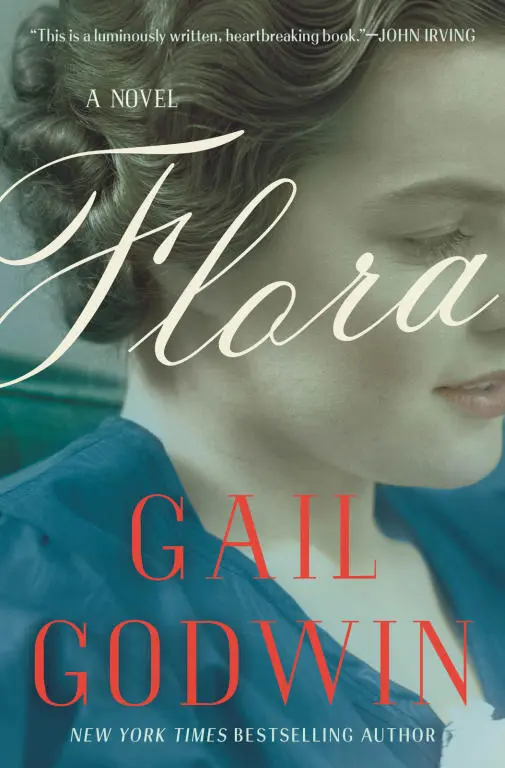
- Название:Flora
- Автор:
- Издательство:Bloomsbury USA
- Жанр:
- Год:2013
- Город:New York
- ISBN:978-1-62040-121-7
- Рейтинг книги:4 / 5. Голосов: 1
-
Избранное:Добавить в избранное
- Отзывы:
-
Ваша оценка:
Flora: краткое содержание, описание и аннотация
Предлагаем к чтению аннотацию, описание, краткое содержание или предисловие (зависит от того, что написал сам автор книги «Flora»). Если вы не нашли необходимую информацию о книге — напишите в комментариях, мы постараемся отыскать её.
This darkly beautiful novel about a child and a caretaker in isolation evokes shades of
and also harks back to Godwin’s memorable novel of growing up,
With its house on top of a mountain and a child who may be a bomb that will one day go off,
tells a story of love, regret, and the things we can’t undo. It will stay with readers long after the last page is turned.
Flora — читать онлайн бесплатно полную книгу (весь текст) целиком
Ниже представлен текст книги, разбитый по страницам. Система сохранения места последней прочитанной страницы, позволяет с удобством читать онлайн бесплатно книгу «Flora», без необходимости каждый раз заново искать на чём Вы остановились. Поставьте закладку, и сможете в любой момент перейти на страницу, на которой закончили чтение.
Интервал:
Закладка:
“Oh, Helen, please tell me you haven’t been too bored this summer.”
“Not too bored,” I conceded.
May 21, 1944
Dear Flora,
How sweet of you to remember me with a Mother’s Day card. This is the first chance I have had to sit at my desk in relative quiet and answer your letter tucked inside it. Goodness, child! I hope I am up to all your faith in me.
Helen is spending Sunday with a favorite friend. She went home from church with him. And Harry is dashing around getting ready to drive over the mountain to Tennessee for a summer job. He’s going to manage a construction crew for some top-priority war work at Oak Ridge. It’s called the Manhattan Project and Harry says it’s amazing how the minute you drop the name to the Ration Board they are all over themselves to shower you with permits for anything you want. It was one of those word-of-mouth opportunities that came about through our rector. The chaplain out at the Episcopal Academy had signed on, and he told Father McFall (our rector) that they were desperately looking for responsible people used to exercising authority who didn’t have to work during the summer months. I haven’t seen my son so excited for years. He can’t wait to leave.
Now, Flora, where to start? You say you have no faith in yourself and you are afraid when you go out into the world people will “find you out.” What are you afraid they’ll find out? That you have no faith in yourself? Well, think what you’d be like if you did have faith in yourself and then act as though you are this person. The way she presents herself. The way she walks, enters a room, what she says—and what she does not say. I cannot stress the latter part enough. “Spoken word is slave; unspoken is master,” as the old adage goes. Just keep in mind that people do not read minds. They judge by what they see and hear, and you are a well-favored young woman with a modest, unaffected voice. Just let those two things work for you. You will be surprised how far they’ll carry you. Hold yourself like someone who sets value on her person and remember that a simple, courteous response will get you through practically anything. You don’t need to be witty (some people just aren’t gifted that way) or tell private things about yourself or your family.
You warm this old heart the way you lavish praise on me, but I am basically just a country girl without much education who has tried to keep her dignity and make the most of the cards dealt her. As I sit at this handsome desk my son restored for me and look around me on this quiet afternoon (and yet the world is at war) in our safe house on top of this mountain, I am astonished that things have turned out for me as well as they have. And my wish for you, Flora, is that when you reach my age you will be able to say the same—and much more!
Yours truly, Honora AnstrutherXIX.
Dear Rachel,
You cannot imagine what a horrible
Dear Rachel,
How is the pool?
Dear Rachel,
Little did I know that the week with you would be the best
Dear Rachel,
I certainly hope your summer has been better than mine
How could writing a letter be such torture? I had expected that sitting at my grandmother’s desk and using her writing materials would work some kind of spell and out would flow the words I needed to mend my fences with the Huffs. But so far I had crumpled four sheets of Nonie’s good stationery and I couldn’t even throw them in the wastebasket because Mrs. Jones would discover them and think less of me. I knew the effect I wanted my letter to have (to soothe Rachel’s hurt pride, to reestablish me in Mrs. Huff’s graces so she wouldn’t stand on street corners saying bad things about me), but after what seemed like hours I was no nearer my goal than these four infantile, though correctly spelled, openings.
Rachel was a horrible speller.
The trouble was… What was the trouble? I didn’t really care about the Huffs all that much, but needed them to like and admire me. Was there something left out of my moral makeup, or did I just require more social lessons in how to act as if I cared? I could see Flora, for instance, scrawling a heartfelt letter that would redeem her with the Huffs. But, then, Flora wouldn’t need to be redeemed because she would have written a thank-you note in the first place. No, wait a minute! Didn’t Flora neglect to write Nonie after spending a whole week in our house after my mother’s funeral? (“we have been worrying and wondering ever since you left. We never heard from you”)
Oh, it was not easy when you had lost the person who had taught you how to act. I took a fifth sheet of stationery from Nonie’s box and tried to hear what she would advise if she were in the room.
Think what it would be like if you did care about them, darling, and then write the letter. Be simple and modest and don’t complain. Don’t make excuses for the delay, it only reminds them of the delay. The letter doesn’t have to be long. In fact, it’s better if it’s not long. That way they will be better able to read into it what they need.
Dear Rachel,
I hope you are having a good summer. I had a really nice time at your house. Please tell your mother hello for me and thank her for her hospitality. See you back at school. I really can’t wait.
Your friend,
Helen
Oh, hell. I had used really twice. Which would be worse? To waste another sheet of Nonie’s good paper or to have Mrs. Huff think my writing style was childish?
Flora was upstairs, working on her lesson plans for her real class in Alabama. This morning in our fifth grade she had assigned the children to be different parts of speech and get together in small groups and form sentences. It was something our English teacher had done with our class, but I let Flora think it was my idea. She said I was brilliant and then her usual thing about how she hoped she didn’t have anybody as smart as me in her real class or she wouldn’t know what to do. I thought it was all right to take credit for the parts of speech idea since I had run myself ragged being everyone in all the groups, from Suzanne the Noun and Brick the Verb to “Milderd” the Preposition and Jock the Interjection.
Deciding that childishness might work in my favor in this particular letter, I addressed a matching envelope to Miss Rachel Huff, put a three-cent Victory stamp on it, and headed down what Finn called our holy terror of a driveway to be in time for the postman. I pictured Rachel scuffling down her driveway, kicking up as much white gravel as she could, and finding my letter in their box. She would rip it open the brutal way she opened her presents, scan it with a shrug, and take it back to the house to show her mother. “Well, well, better late than never,” Lorena Huff would say. She would read it over several times, cheered by my childish really s. I wasn’t that superior to her Rachel, after all. “You know, Rachel, maybe we’ve been too hard on Helen. The poor child can’t be having a good summer. You can tell from all she doesn’t say. You notice she doesn’t mention that excitable cousin, and you can tell she misses our house and the pool.”
It wasn’t lunchtime yet, so I went to sit in Nonie’s car and go on with my story of how it would be when Finn came to live with us. Any branch of the story could lead to satisfying little branchlets. Finn’s driving lessons could turn into the first time he lets me drive to school and how everyone sees me with him in the passenger seat, or it could take us on a trip around town where I point out significant landmarks of my history. (“That house over there was my grandfather’s first lodge for the Recoverers, but you have to keep in mind that this was a better part of town back then and things looked much nicer…”)
Читать дальшеИнтервал:
Закладка:
Похожие книги на «Flora»
Представляем Вашему вниманию похожие книги на «Flora» списком для выбора. Мы отобрали схожую по названию и смыслу литературу в надежде предоставить читателям больше вариантов отыскать новые, интересные, ещё непрочитанные произведения.









Обсуждение, отзывы о книге «Flora» и просто собственные мнения читателей. Оставьте ваши комментарии, напишите, что Вы думаете о произведении, его смысле или главных героях. Укажите что конкретно понравилось, а что нет, и почему Вы так считаете.