Gail Godwin - Flora
Здесь есть возможность читать онлайн «Gail Godwin - Flora» весь текст электронной книги совершенно бесплатно (целиком полную версию без сокращений). В некоторых случаях можно слушать аудио, скачать через торрент в формате fb2 и присутствует краткое содержание. Город: New York, Год выпуска: 2013, ISBN: 2013, Издательство: Bloomsbury USA, Жанр: Историческая проза, ya, на английском языке. Описание произведения, (предисловие) а так же отзывы посетителей доступны на портале библиотеки ЛибКат.
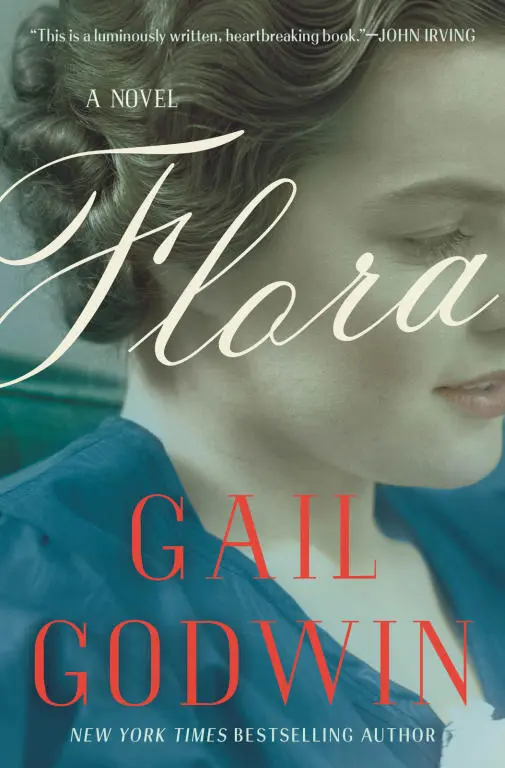
- Название:Flora
- Автор:
- Издательство:Bloomsbury USA
- Жанр:
- Год:2013
- Город:New York
- ISBN:978-1-62040-121-7
- Рейтинг книги:4 / 5. Голосов: 1
-
Избранное:Добавить в избранное
- Отзывы:
-
Ваша оценка:
Flora: краткое содержание, описание и аннотация
Предлагаем к чтению аннотацию, описание, краткое содержание или предисловие (зависит от того, что написал сам автор книги «Flora»). Если вы не нашли необходимую информацию о книге — напишите в комментариях, мы постараемся отыскать её.
This darkly beautiful novel about a child and a caretaker in isolation evokes shades of
and also harks back to Godwin’s memorable novel of growing up,
With its house on top of a mountain and a child who may be a bomb that will one day go off,
tells a story of love, regret, and the things we can’t undo. It will stay with readers long after the last page is turned.
Flora — читать онлайн бесплатно полную книгу (весь текст) целиком
Ниже представлен текст книги, разбитый по страницам. Система сохранения места последней прочитанной страницы, позволяет с удобством читать онлайн бесплатно книгу «Flora», без необходимости каждый раз заново искать на чём Вы остановились. Поставьте закладку, и сможете в любой момент перейти на страницу, на которой закончили чтение.
Интервал:
Закладка:
If Nonie had listened to the program about the little girl, she would have enjoyed the scariness as much as anyone, but she would have seen into other aspects that were just as scary.
“Don’t you wonder, Helen,” she might have mused, if she had been lying next to me, “what would have happened if the little girl had turned down the mannequins’ offer? After all, they didn’t force her, they didn’t just high-handedly turn her into one of themselves, did they? They gave her a choice and she chose to go back with them to a place where you can never get lost or feel abandoned again. Does such a place exist, do you think? And if it doesn’t exist, what options did she have other than to stop being human?”
FLORA’S BOX OFclothes, sent by the ever-faithful Juliet Parker, arrived. As I watched her unpack her summer wardrobe with little yips of recognition, I felt she was filling our house with more inferior stuff from Alabama. When the garments were all laid out on her bed in the Willow Fanning room, I realized that I had already seen her most presentable things: the suit she was wearing when she stepped off the train, the blue dress she had worn at Nonie’s funeral, and even the few changes of clothes she had allowed herself in the luggage crammed with the Alabama foodstuffs so I would have “proper meals” for the first weekend.
Then the contents of the box had to be ironed, with Flora’s commentaries.
“This skirt came from an old dress of your mother’s, Helen. I loved that dress on her. She gave it to me when she got tired of it, she always got tired of her favorite things, but when I got old enough to wear it my bustline was way bigger than hers, so Juliet cut off the top and made it into a skirt. Now, this skirt I made myself. It isn’t very successful, but I think it will be fine just around the house, don’t you?”
“Where else are we going to be but just around the house?”
Though nobody was forcing me to hang around for Flora’s ironing and chattering, I felt a perverse compulsion to watch the room become adulterated with her belongings. I had always known this front upstairs room in its uninhabited state, kept bare of anyone’s personal clutter, except for that of the occasional overnight guest. Who knew what possessions had surrounded the perfidious Willow Fanning, what flimsy or “not very successful” garments had to be whisked away from what surfaces before my sixteen-year-old father could recline upon them and continue falling in love with a woman twice his age? Nonie’s stories of those last days of Anstruther’s Lodge had been grim narratives of denouement and summing up; there was no place in them for asides about what anybody wore.
(“So there we all were, going on with our routines, in the summer of 1916. Your father was and always will be the age of the century. I was the majordomo of the operation, as by then we could afford a cook and a cleaning woman for our patients, which we called the Recoverers. In Doctor Cam’s first establishment we could take up to ten Recoverers, but when we moved up here to one thousand Sunset Drive we never had more than four; we didn’t need to by then, they were so well paying. They had graduated from whatever sanatorium they’d come here for in the first place, which is to say they were officially mended in lungs or mind or destructive habits, but weren’t yet ready or willing to go back to where they came from. Some of them ended up staying for years.
“A majordomo? Well, she’s kind of a combined butler and housekeeper. She organizes the household, sees what needs attending to or repaired and finds the proper person to do it, though I always kept the accounts myself and ordered the food and picked up people at the train station. Your grandfather never learned to drive an automobile, which I always thought was a shame; he looked so elegant driving a horse and buggy.
“He had struck up a friendship with one of the longer-staying Recoverers, Hyman Highsmith—we called him High—who had briefly studied medicine in Vienna before he was called home to Georgia to run his family’s button factory. He and Doctor Cam were roughly the same age and they were fascinated by this new field called ‘psychiatry.’ High ordered every book on the subject he could find, regardless of price, and whenever time permitted your grandfather would go away with him to lectures and seminars.
“When your father ran off with Willow Fanning, who had been with us a year and a half by then, your grandfather and High had gone by train to New York to hear someone who had been hypnotized and cured by Freud. I was left with one other guest, a sweet recovering inebriate named Starling Peake, and the cook, and Beryl Jones. But by the time your grandfather and I brought Harry home from the hospital after his polio, Starling and the cook had fled because of the polio, and then your grandfather had his stroke and that was the end of Anstruther’s Lodge and the Recoverers. Only Beryl Jones stayed on, bless her. Let’s see, her Rosemary would have been five at the time. Poor little Rosemary. Poor all of us, really.”)
Flora was ironing barefooted. Her habit of going without shoes in the house I found somewhat obscene because her feet were childishly shapeless and uncared-for. I thought of Nonie’s visits to her chiropodist to have her long, narrow feet soaked and sanded and the corns on the knobbly joints shaved away and her almond-shaped toenails blunt-cut and buffed to a high pink sheen, though nobody was going to see them but us. I would wait in the reception room, leafing through the latest issues of ladies’ magazines with their mailing labels addressed to the chiropodist’s office. If there were other women waiting I surreptitiously examined their shoes and, on lucky occasions, their feet, some of which were beautiful and others grotesque. I would share my findings with Nonie as we drove home, and in turn she would report what the chiropodist had said about her feet. He once told her she had “haughty toenails,” which had made her laugh, but I could tell she was pleased.
Flora’s toenails were the opposite of haughty. They turned up like they were making too much effort to be friendly. This led me to wonder about my mother’s feet, which I had no memory of ever seeing. I was sure they had been different from Flora’s, just as her “bustline” had been different.
After the ironing board was put away and the motley assortment of Alabama clothes hung in the closet, it was time for Flora’s two predictable questions: “What do you think you could eat for supper?” (as though cajoling a languishing invalid with a picky appetite) and then, when that had been decided, her infuriating follow-up: “So, Helen, what are your plans for the day?”
“How can a person have plans when there’s nothing to do?”
“What did you do before?”
“Before what ?”
“Well, before I was here.”
It was just amazing how she walked into these traps over and over again.
“Before you were here I was at Rachel Huff’s and they had a pool. And before that, I was still in school. And before that… ” I paused before delivering my coup de grâce—“my grandmother was still here.”
Flora seemed about to bestow her gift of tears, but then actually said something new. “You’ve had such a strange childhood. I keep forgetting. You were with her so much. She was like your best friend. Tell me what kind of things the two of you did together.”
Now it was my turn to feel my eyes tear up. “We drove around, we went to movies, we went to her doctors, we shopped.”
“How about when you were here in the house?”
“We talked. Or she would go to her room and replenish herself and I would read or do homework. And then when she was rested we would talk some more.”
Читать дальшеИнтервал:
Закладка:
Похожие книги на «Flora»
Представляем Вашему вниманию похожие книги на «Flora» списком для выбора. Мы отобрали схожую по названию и смыслу литературу в надежде предоставить читателям больше вариантов отыскать новые, интересные, ещё непрочитанные произведения.











Обсуждение, отзывы о книге «Flora» и просто собственные мнения читателей. Оставьте ваши комментарии, напишите, что Вы думаете о произведении, его смысле или главных героях. Укажите что конкретно понравилось, а что нет, и почему Вы так считаете.