Gail Godwin - Flora
Здесь есть возможность читать онлайн «Gail Godwin - Flora» весь текст электронной книги совершенно бесплатно (целиком полную версию без сокращений). В некоторых случаях можно слушать аудио, скачать через торрент в формате fb2 и присутствует краткое содержание. Город: New York, Год выпуска: 2013, ISBN: 2013, Издательство: Bloomsbury USA, Жанр: Историческая проза, ya, на английском языке. Описание произведения, (предисловие) а так же отзывы посетителей доступны на портале библиотеки ЛибКат.
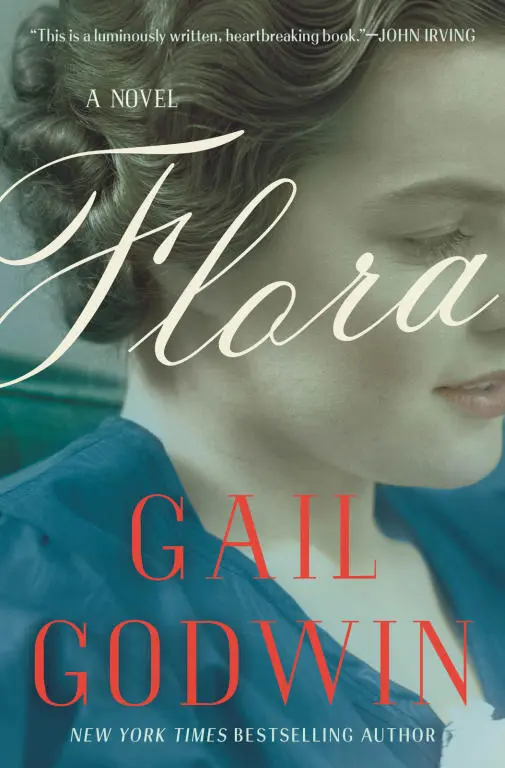
- Название:Flora
- Автор:
- Издательство:Bloomsbury USA
- Жанр:
- Год:2013
- Город:New York
- ISBN:978-1-62040-121-7
- Рейтинг книги:4 / 5. Голосов: 1
-
Избранное:Добавить в избранное
- Отзывы:
-
Ваша оценка:
Flora: краткое содержание, описание и аннотация
Предлагаем к чтению аннотацию, описание, краткое содержание или предисловие (зависит от того, что написал сам автор книги «Flora»). Если вы не нашли необходимую информацию о книге — напишите в комментариях, мы постараемся отыскать её.
This darkly beautiful novel about a child and a caretaker in isolation evokes shades of
and also harks back to Godwin’s memorable novel of growing up,
With its house on top of a mountain and a child who may be a bomb that will one day go off,
tells a story of love, regret, and the things we can’t undo. It will stay with readers long after the last page is turned.
Flora — читать онлайн бесплатно полную книгу (весь текст) целиком
Ниже представлен текст книги, разбитый по страницам. Система сохранения места последней прочитанной страницы, позволяет с удобством читать онлайн бесплатно книгу «Flora», без необходимости каждый раз заново искать на чём Вы остановились. Поставьте закладку, и сможете в любой момент перейти на страницу, на которой закончили чтение.
Интервал:
Закладка:
We moved on to suppers. Yes, Flora said happily, she could do meat loaf and cube steak and macaroni and cheese. And she was sure she could make creamed chipped beef if she knew what kind of beef you used. Had my grandmother kept a box of recipes?
“No, it was all in her head. She cooked for her father until he married again.”
“Yes, the awful stepmother. That’s when she packed her bag and ran away and a handsome doctor stopped his carriage and said, ‘Young lady, can I take you somewhere?’”
“No, he said, ‘Can I carry you somewhere?’ And it wasn’t a carriage, it was a cabriolet.”
In all those letters, it would have been natural for Nonie to have related parts of her history to Flora, but that didn’t keep me from wishing she hadn’t. How many people could repeat accurately the things they were told? Look at that game, Gossip, where the sentence whispered into the first ear is unrecognizable when it reaches the last. People didn’t listen. Or they heard what they wanted to hear. Or changed it to make a better story.
“My grandfather was from South Carolina,” I explained to Flora, “and they say ‘carry’ down there instead of ‘take,’ when offering a ride. And he was thirty years older. She saw him as elegant, not handsome.”
Flora took these corrections with good grace. “If my fifth or sixth graders are as smart as you, honey, I will have my work cut out for me.”
I was teaching Flora how to play advanced jacks when my father phoned from Oak Ridge.
“Not much happening here on a Sunday night. Harker and I walked down to where they’re building some more houses for workers with families. Harker is my roommate. I’d say it was like being back at college, except Harker wouldn’t have been at college. But he suits me. He’s a master welder, deaf as a post, and laughs at everything I say. What have you girls got to report?”
“Brian Beale and a little girl have come down with polio. She’s in an iron lung and he may be a cripple for life.”
I had flung down this dramatic offering to get the attention of the parent I had not spoken to since he left me with the Huffs, but I soon regretted it.
“Where is Flora?” he asked.
“On the floor. We were playing jacks.”
“Let me speak to her.”
After she had imparted the information he wanted (the lake, the hospital, the little girl, Father McFall says we’ll have to take it a step at a time with Brian), she was reduced to monosyllabic yips in response to my father’s instructions. Then she passed the receiver back to me.
“Okay, Helen, here’s the deal,” he said curtly. “You’re staying on top of that mountain. I’ve been where I forbid you to go. Are you listening to me?”
“Yes, sir.”
“As of right now you’re quarantined. Worse things than having to stay at home can happen to little girls. Like iron lungs, or death, or shriveled legs. I was luckier than most with the leg. At sixteen I had my full growth. You are only ten—okay, going on eleven—and I forbid you to risk becoming a woman with the shrunken limbs of a child. Flora has her orders, and I depend on you to help her carry them out. Do I make myself clear?”
“Yes, sir.”
Flora went straight to pieces after talking to my father. She was indulging in the kind of panic adults were supposed to hide so as not to worry children. She stumbled around blindly, tripping over our abandoned jacks, wailing a litany of her many failings, which I tried not to hear word for word because it was too upsetting: she should never have taken this job, she was not good enough, smart enough, she could never fulfill my father’s expectations, she should never have agreed to take care of me.
How could I put her together again? What would Nonie do? First she would make you sit down. She would say something soothing and reasonable, though always retaining her edge of authority, and convince you that the crisis, whatever it was, could be managed. I told Flora we should go sit on the sofa in the living room so she could relay my father’s instructions while they were still fresh in her mind. He had said he depended on me to help her carry them out, but to do that I was going to need a list of what we were supposed to do and not do. While everything was still fresh in her mind.
We sank together onto the faded yellow silk cushions that held so many associations of “talks” it was like sitting down on my past, and I coaxed my father’s injunctions out of Flora. We were not to go into the shops, not even the ones in our immediate neighborhood, or take the bus to town to go to the movies or to any place where people gathered, not even to church. I was not to go to my friends’ houses or have them to mine, and I was not to visit Brian in the hospital.
“We might as well curl up and die!” I would have screamed if there had been a guaranteed adult there to talk me down. But Flora was the one who needed to be talked down, and it was gratifying to see the influence I could wield on a person twice my age. My father had gone overboard because of his own history, I explained, but he would come around, she would see, next time he called he would loosen the restrictions; meantime we had to keep him calm so he could do his job and bring home some much needed funds at the end of the summer. As she could see from the state of the place, we could use some repair money. The pay was fabulous at Oak Ridge, especially when it was someone valuable like my father who was used to keeping order and knew about blueprints and building things. I told her if he chose to work there year-round he’d get double his salary as high school principal. And then, saving my clincher for last—or so I thought—I revealed to her that my father himself had been a victim of polio.
At this Flora perked up. “Oh, yes, Mrs. Anstruther wrote about it in the letters. Suddenly she had the two of them to care for, the doctor with his stroke and her son with polio and everyone else running out on them. But she rose to it, your grandmother did. She cooked the meals and cared for her dying husband and massaged Harry’s legs. Your mother called your father’s limp endearing in the note she sent with the wedding announcement.”
“You must mean the engagement announcement,” I corrected.
“No, honey. We didn’t even know she was dating someone till we got the wedding announcement with her note. And then I’m afraid we thought—well, never mind what we thought—but later on, Daddy figured that Lisbeth hadn’t asked us because we wouldn’t have done credit to her. Lisbeth was very proud—well, she had every right to be, she was so superior.”
Thanks to my efforts Flora had regained charge of herself. Now I was the one floundering among misgivings. I couldn’t have said exactly what in her version of things unsettled me. I knew my parents had been married quietly in our church because, as Nonie said, Lisbeth didn’t want to put her uncles to the expense of an Alabama wedding. There was an elegant reception afterward at our house, after which my father and mother took a short wedding trip to Blowing Rock in Nonie’s car, which was brand-new then, and returned to their school jobs the following week.
I also knew what Flora had stopped herself from saying, having been apprised by Nonie of the facts of life through her resourceful use of the “Social Hygiene for Girls” pamphlet that had brought my father and mother together. She doled out supplements to this story as I grew into an age to handle them: what exactly the pamphlet had said, which parts had struck Nonie and my father as amusing or outdated when they read it aloud to each other over cocktails. (“It was a sad little production, full of unintended slipups. One I particularly remember was the misprint impotent when important was meant. And parts of it were insulting. It claimed that though a few well-brought-up young women were trained to safeguard their morals by the age of sixteen, most were not. I bristled at that. What was ‘well-brought-up’ but a code for privileged? I don’t claim to be more than a farmer’s daughter, but I was perfectly capable of safeguarding my morals at age sixteen.”)
Читать дальшеИнтервал:
Закладка:
Похожие книги на «Flora»
Представляем Вашему вниманию похожие книги на «Flora» списком для выбора. Мы отобрали схожую по названию и смыслу литературу в надежде предоставить читателям больше вариантов отыскать новые, интересные, ещё непрочитанные произведения.







Обсуждение, отзывы о книге «Flora» и просто собственные мнения читателей. Оставьте ваши комментарии, напишите, что Вы думаете о произведении, его смысле или главных героях. Укажите что конкретно понравилось, а что нет, и почему Вы так считаете.