Eleanor Catton - The Luminaries
Здесь есть возможность читать онлайн «Eleanor Catton - The Luminaries» весь текст электронной книги совершенно бесплатно (целиком полную версию без сокращений). В некоторых случаях можно слушать аудио, скачать через торрент в формате fb2 и присутствует краткое содержание. Год выпуска: 2013, ISBN: 2013, Издательство: Granta Publications, Жанр: Историческая проза, Современная проза, на английском языке. Описание произведения, (предисловие) а так же отзывы посетителей доступны на портале библиотеки ЛибКат.
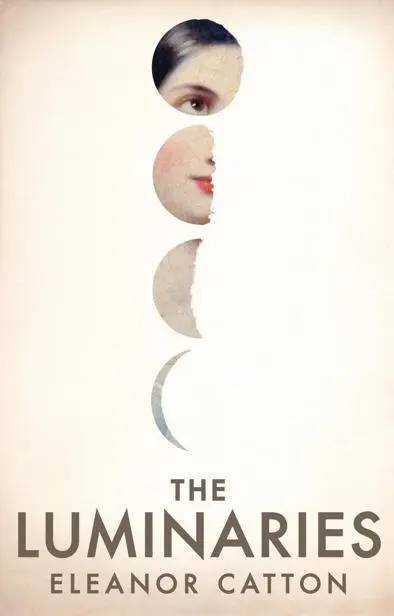
- Название:The Luminaries
- Автор:
- Издательство:Granta Publications
- Жанр:
- Год:2013
- ISBN:9781847085931
- Рейтинг книги:5 / 5. Голосов: 1
-
Избранное:Добавить в избранное
- Отзывы:
-
Ваша оценка:
The Luminaries: краткое содержание, описание и аннотация
Предлагаем к чтению аннотацию, описание, краткое содержание или предисловие (зависит от того, что написал сам автор книги «The Luminaries»). Если вы не нашли необходимую информацию о книге — напишите в комментариях, мы постараемся отыскать её.
The Luminaries — читать онлайн бесплатно полную книгу (весь текст) целиком
Ниже представлен текст книги, разбитый по страницам. Система сохранения места последней прочитанной страницы, позволяет с удобством читать онлайн бесплатно книгу «The Luminaries», без необходимости каждый раз заново искать на чём Вы остановились. Поставьте закладку, и сможете в любой момент перейти на страницу, на которой закончили чтение.
Интервал:
Закладка:
‘I had not met her personally before the afternoon of the twentieth of March, when I called on her at the Wayfarer’s Fortune. Since that day, however, she has been in my custody at the Police Camp gaol-house, and I have seen her every day.’
‘Have you had opportunity, over this period, to observe her and converse with her?’
‘Ample opportunity.’
‘Can you describe the general impression you have formed of her character?’
‘My impression is favourable,’ said Devlin. ‘Of course she has been exploited, and of course her past is chequered, but it takes a great deal of courage to reform one’s character, and I am gratified by the efforts she has made. She has thrown off her dependency, for a start; and she is determined never to sell her body again. For those things, I commend her.’
‘What is your opinion of her mental state?’
‘Oh, she is perfectly sane,’ said Devlin, blinking. ‘I have no doubt about that.’
‘Thank you, Reverend,’ Moody said, and then, to the justice, ‘Thank you, sir.’
Next came the expert testimonies from Dr. Gillies; a Dr. Sanders, called down from Kumara to deliver a second medical opinion upon Anna’s mental state; and a Mr. Walsham, police inspector from the Greymouth Police.
The plaintiff, George Shepard, was the last to be called.
As Moody had expected, Shepard dwelled long upon Anna Wetherell’s poor character, citing her opium dependency, her unsavoury profession, and her former suicide attempt as proof of her ignominy. He detailed the ways in which her behaviour had wasted police resources and offended the standards of moral decency, and recommended strongly that she be committed to the newly built asylum at Seaview. But Moody had planned his defence well: following the revelation about Ah Sook, and Devlin’s testimony, Shepard’s admonitions came off as rancorous, even petty. Moody congratulated himself, silently, for raising the issue of Anna’s lunacy before the plaintiff had a chance.
When at last Broham sat down, the justice peered down at the barristers’ bench, and said, ‘Your witness, Mr. Moody.’
‘Thank you, sir,’ said Moody. He turned to the gaoler. ‘Governor Shepard. To your eye, is the signature of Emery Staines upon this deed of gift a demonstrable forgery?’
Shepard lifted his chin. ‘I’d call it a near enough replica.’
‘Pardon me, sir—why “near enough”?’
Shepard looked annoyed. ‘It is a good replica,’ he amended.
‘Might one call it an exact replica of Mr. Staines’s signature?’
‘That’s for the experts to say,’ said Shepard, shrugging. ‘I am not an expert in specialised fraud.’
‘Governor Shepard,’ said Moody. ‘Have you been able to detect any difference whatsoever between this signature and other documents signed by Mr. Staines, of which the Reserve Bank has an extensive and verifiable supply?’
‘No, I have not,’ said Shepard.
‘Upon what evidence do you base your claim that the signature is, in fact, a forgery?’
‘I had seen the deed in question in February, and at that point, it was unsigned,’ said Shepard. ‘Miss Wetherell brought the same document into the courthouse on the afternoon of the twentieth of March, and it was signed. There are only two explanations. Either she forged the signature herself, which I believe to be the case, or she was in collusion with Mr. Staines during his period of absence—and in that case, she has perjured in a court of law.’
‘In fact there is a third explanation,’ Moody said. ‘If indeed that signature is a forgery, as you so vehemently attest it is, then somebody other than Anna might have signed it. Somebody who knew that document was in the chaplain’s possession, and who desired very much—for whatever reason—to see Miss Wetherell indicted.’
Shepard’s expression was cold. ‘I resent your implication, Mr. Moody.’
Moody reached into his wallet and produced a small slip of paper. ‘I have here,’ he said, ‘a promissory note dated June of last year, submitted by Mr. Richard Mannering, which bears Miss Wetherell’s own mark. Do you notice anything about Miss Wetherell’s signature, Governor?’
Shepard examined the note. ‘She signed with an X,’ he said at last.
‘Precisely: she signed with an X,’ Moody said. ‘If Miss Wetherell can’t even sign her own name, Governor Shepard, what on earth makes you think that she can produce a perfect replica of someone else’s?’
All eyes were on Shepard. He was still looking at the promissory note.
‘Thank you, sir,’ said Moody to the justice. ‘I have no further questions.’
‘All right, Mr. Moody,’ said the justice, in a voice that might have conveyed either amusement or disapproval. ‘You may step down.’
VENUS IS A MORNING STAR
In which a temptation presents itself, under a guise.
Once the Fortunate Wind reached her mooring at Port Chalmers, and the gangways were lowered to the docks, Anna was obliged to join the women’s queue, in order to be inspected by the medical officials. From the quarantine shelter she went on to the customhouse, to have her entry papers stamped and approved. After these interviews were completed, she was directed to the depot, to see about picking up her trunk (it was a very small one, barely larger than a hatbox; she could almost hold it beneath one arm) and there she met with a further delay, her trunk having been loaded onto another lady’s carriage by mistake. By the time this error was corrected, and her luggage recovered, it was well past noon. Emerging from the depot at last, Anna looked about hopefully for the golden-haired boy who had so delighted her upon the deck that morning, but she saw nobody she recognised: her fellow passengers had long since dispersed into the crush of the city. She set her trunk down on the quay, and took a moment to straighten her gloves.
‘Excuse me, miss,’ came a voice, approaching, and Anna turned: the speaker was a copper-haired woman, plump and smooth-complexioned; she was very finely dressed in a gown of green brocade. ‘Excuse me,’ she said again, ‘but are you by any chance newly arrived in town?’
‘Yes, ma’am,’ said Anna. ‘I arrived just now—this morning.’
‘On which vessel, please?’
‘The Fortunate Wind , ma’am.’
‘Yes,’ said the woman, ‘yes: well, in that case perhaps you can help me. I’m waiting for a young woman named Elizabeth Mackay. She’s around your age, plain, slim, dressed like a governess, travelling alone …’
‘I’m afraid I haven’t seen her,’ said Anna.
‘She will be nineteen this August,’ the woman went on. ‘She’s my cousin’s cousin; I’ve never met her before, but by all accounts she is very well kept, and moderately pretty. Elizabeth Mackay is her name. You haven’t seen her?’
‘I’m very sorry, ma’am.’
‘What was the name of your ship—the Fortunate Wind ?’
‘That’s right.’
‘Where did you board?’
‘Port Jackson.’
‘Yes,’ said the woman. ‘That was it. The Fortunate Wind , coming from Sydney.’
‘I’m sorry to say that there were no young ladies aboard the Fortunate Wind , ma’am,’ said Anna, squinting a little. ‘There was a Mrs. Paterson, travelling with her husband, and a Mrs. Mader, and a Mrs. Yewers, and a Mrs. Cooke—but they’re all on the wiser side of forty, I would say. There was no one who might have passed for nineteen.’
‘Oh dear,’ said the woman, biting her lip. ‘Dear, dear, dear.’
‘Is there a problem, ma’am?’
‘Oh,’ the woman said, reaching out to press Anna’s hand, ‘what a lamb you are, to ask. You see, I run a boarding house for girls here in Dunedin. I received a letter from Miss Mackay some weeks ago, introducing herself, paying her board in advance, and promising that she would be arriving today! Here.’ The woman produced a crumpled letter. ‘You can see: she makes no mistake about the date.’
Читать дальшеИнтервал:
Закладка:
Похожие книги на «The Luminaries»
Представляем Вашему вниманию похожие книги на «The Luminaries» списком для выбора. Мы отобрали схожую по названию и смыслу литературу в надежде предоставить читателям больше вариантов отыскать новые, интересные, ещё непрочитанные произведения.







Обсуждение, отзывы о книге «The Luminaries» и просто собственные мнения читателей. Оставьте ваши комментарии, напишите, что Вы думаете о произведении, его смысле или главных героях. Укажите что конкретно понравилось, а что нет, и почему Вы так считаете.