Eleanor Catton - The Luminaries
Здесь есть возможность читать онлайн «Eleanor Catton - The Luminaries» весь текст электронной книги совершенно бесплатно (целиком полную версию без сокращений). В некоторых случаях можно слушать аудио, скачать через торрент в формате fb2 и присутствует краткое содержание. Год выпуска: 2013, ISBN: 2013, Издательство: Granta Publications, Жанр: Историческая проза, Современная проза, на английском языке. Описание произведения, (предисловие) а так же отзывы посетителей доступны на портале библиотеки ЛибКат.
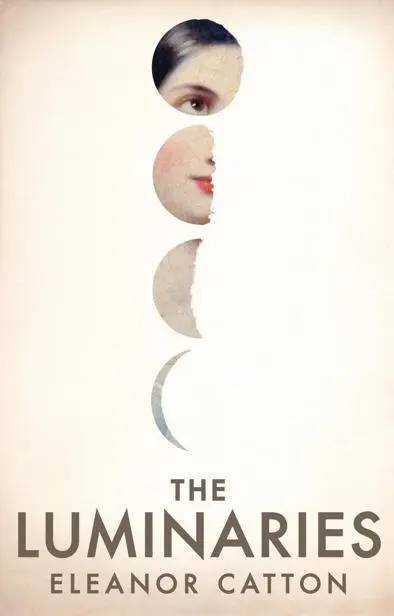
- Название:The Luminaries
- Автор:
- Издательство:Granta Publications
- Жанр:
- Год:2013
- ISBN:9781847085931
- Рейтинг книги:5 / 5. Голосов: 1
-
Избранное:Добавить в избранное
- Отзывы:
-
Ваша оценка:
The Luminaries: краткое содержание, описание и аннотация
Предлагаем к чтению аннотацию, описание, краткое содержание или предисловие (зависит от того, что написал сам автор книги «The Luminaries»). Если вы не нашли необходимую информацию о книге — напишите в комментариях, мы постараемся отыскать её.
The Luminaries — читать онлайн бесплатно полную книгу (весь текст) целиком
Ниже представлен текст книги, разбитый по страницам. Система сохранения места последней прочитанной страницы, позволяет с удобством читать онлайн бесплатно книгу «The Luminaries», без необходимости каждый раз заново искать на чём Вы остановились. Поставьте закладку, и сможете в любой момент перейти на страницу, на которой закончили чтение.
Интервал:
Закладка:
‘What happened next?’ said Broham, when Staines did not go on.
‘I went under, of course,’ said Staines. ‘It was heavenly.’
Broham looked annoyed. ‘And after that?’
‘Well, I had a pretty decent go at her pipe, and then I lay down on her bed, and slept for a bit—or dreamed; it wasn’t sleep exactly. When I came up again, the lamp was cold, and the bowl of the pipe was empty, and Anna was gone. I’m ashamed to say I didn’t even spare her a thought. All I wanted was another taste. It was such a thirst, you see: from the first sip, I was enchanted. I knew I couldn’t rest until I tried the drug again.’
‘All this from your very first taste,’ said Broham, sceptically.
‘Yes,’ said Staines.
‘What did you do?’
‘I made for the den in Chinatown at once. It was early—just past dawn. I saw no one on the road at all.’
‘How long did you remain in Kaniere Chinatown?’
‘I think a fortnight—but it’s hard to recall exactly; each day blurred into the next. Ah Sook was ever so kind to me. He took me in, fed me, made sure I never ate too much. He kept tally of my debts on a little chalkboard.’
‘Did you see anyone else, over this period?’
‘No,’ said Staines, ‘but really, I can’t remember much at all.’
‘What is the next thing you remember?’
‘I woke up one day and Ah Sook was not there. I became very upset. He had taken his opium with him—he always did, when he left the den—and I turned the place over, looking for it, becoming more and more desperate. And then I remembered Miss Wetherell’s supply.
‘I set off for Hokitika at once—in a frenzy. It was raining very heavily that morning, and there were not many people about, and I made it to Hokitika without seeing anyone I knew. I entered the Gridiron by the rear door, and ascended the servants’ staircase at the back. I waited until Anna went down to luncheon, and then I slipped into her room, and found the resin, and all her apparatus, in her drawer. But then I got trapped—someone struck up a conversation in the hallway, just outside the door—and I couldn’t leave. And then Anna came back from lunch, and I heard her coming, and I panicked again, so I hid behind the drapes.’
‘The drapes?’
‘Yes,’ said Staines. ‘That’s where I was hiding, when I took the bullet from Anna’s gun.’
Broham’s face was growing red. ‘How long did you remain hidden behind the drapes?’
‘Hours,’ said Staines. ‘If I were to guess, I’d say from about twelve until about three. But that is an estimation.’
‘Did Miss Wetherell know that you were in her room on that day?’
‘No.’
‘What about Mr. Gascoigne—or Mr. Pritchard?’
‘No,’ said Staines again. ‘I kept very quiet, and stood very still. I’m certain that none of them knew that I was there.’
Fellowes was whispering intently in Harrington’s ear.
‘What happened when you were shot?’ said Broham.
‘I kept quiet,’ said Staines again.
‘You kept quiet?’
‘Yes.’
‘Mr. Staines,’ said Broham, in a voice that pretended to scold him. ‘Do you mean to tell this courtroom that you were shot, quite without warning and at a very close range, and you did not cry out, or move, or make any noise at all that might have alerted any one of the three witnesses to your presence?’
‘Yes,’ said Staines.
‘How on earth did you not cry out?’
‘I didn’t want to give up the resin,’ said Staines.
Broham studied him; in the ensuing pause, Harrington passed him a piece of paper, which Broham scanned briefly, then looked up, and said, ‘Do you think it possible, Mr. Staines, that Miss Wetherell might have known that you were present, upon the afternoon of the twenty-seventh of January, and that she might have fired her pistol deliberately in the direction of the drapes with the express purpose of causing you harm?’
‘No,’ said Staines. ‘I do not think it possible.’
The courtroom had become very still.
‘Why not?’
‘Because I trust her,’ said Staines.
‘I am asking if you think it possible,’ said Broham, ‘not if you think it probable.’
‘I understand the question. My answer is unchanged.’
‘What induced you to place your trust in Miss Wetherell?’
‘Trust cannot be induced ,’ he burst out. ‘It can only be given—and given freely! How am I possibly to answer that?’
‘I will simplify my question,’ the lawyer said. ‘Why do you trust Miss Wetherell?’
‘I trust her because I love her,’ said Staines.
‘And how did you come to love her?’
‘By trusting her, of course!’
‘You make a circular defence.’
‘Yes,’ the boy cried, ‘because I must! True feeling is always circular—either circular, or paradoxical—simply because its cause and its expression are two halves of the very same thing! Love cannot be reduced to a catalogue of reasons why, and a catalogue of reasons cannot be put together into love. Any man who disagrees with me has never been in love—not truly.’
A perfect silence followed this remark. From the far corner of the courtroom there came a low whistle, and, in response to it, smothered laughter.
Broham was plainly irritated. ‘You will forgive me for remarking, Mr. Staines, that it is rather unusual to steal opiates from the person one professes to love.’
‘I know it’s very bad,’ Staines said. ‘I’m very ashamed of what I did.’
‘Can anyone confirm your movements over the past two months?’
‘Ah Sook can vouch for me.’
‘Mr. Sook is deceased. Anyone else?’
Staines thought for a moment, and then shook his head. ‘I can’t think of anybody else.’
‘I have no further questions,’ said Broham, curtly. ‘Thank you, Mr. Justice.’
‘Your witness, Mr. Moody,’ said the justice.
Moody thanked him also. He spent a moment putting his notes in order, and waiting for the whispering in the room to subside, before he said, ‘You have testified that your opinion of Mr. Carver is a poor one, Mr. Staines. What caused this poor opinion?’
‘He assaulted Anna,’ said Staines. ‘He beat her—in cold blood—and she was carrying a child. The child was killed.’
The courtroom was quiet at once.
‘When did this assault take place?’ said Moody.
‘On the afternoon of the eleventh of October, last year.’
‘The eleventh of October,’ Moody echoed. ‘Did you bear witness to this assault?’
‘No, I did not.’
‘How did you learn of its occurrence?’
‘From Mr. Löwenthal, later that afternoon. He was the one who found her in the road—all battered and bloody. He can vouch for her condition when he found her.’
‘What was your business with Mr. Löwenthal that afternoon?’
‘An unrelated matter,’ said Staines. ‘I called on him because I wanted to put a notice in the paper.’
‘Regarding—?’
‘The purchase of a crate of Long Toms.’
‘When you heard the news that Miss Wetherell had been assaulted,’ said Moody, ‘were you surprised?’
‘No,’ said Staines. ‘I already knew Carver was a beast—and already I regretted our association ten times over. He’d offered to be my sponsor when I first arrived in Dunedin—that was how I met him, you see, when I was just off the boat, that very day. I didn’t suspect anything foul. I was very green. We shook hands in good faith, and that was that, but it wasn’t long before I started hearing things about him—and about Mrs. Carver too: they work as a team, of course. When I heard what they did to Mr. Wells, I was horrified. I’ve gone into business with a perfect swindler, I thought.’
Читать дальшеИнтервал:
Закладка:
Похожие книги на «The Luminaries»
Представляем Вашему вниманию похожие книги на «The Luminaries» списком для выбора. Мы отобрали схожую по названию и смыслу литературу в надежде предоставить читателям больше вариантов отыскать новые, интересные, ещё непрочитанные произведения.







Обсуждение, отзывы о книге «The Luminaries» и просто собственные мнения читателей. Оставьте ваши комментарии, напишите, что Вы думаете о произведении, его смысле или главных героях. Укажите что конкретно понравилось, а что нет, и почему Вы так считаете.