Eleanor Catton - The Luminaries
Здесь есть возможность читать онлайн «Eleanor Catton - The Luminaries» весь текст электронной книги совершенно бесплатно (целиком полную версию без сокращений). В некоторых случаях можно слушать аудио, скачать через торрент в формате fb2 и присутствует краткое содержание. Год выпуска: 2013, ISBN: 2013, Издательство: Granta Publications, Жанр: Историческая проза, Современная проза, на английском языке. Описание произведения, (предисловие) а так же отзывы посетителей доступны на портале библиотеки ЛибКат.
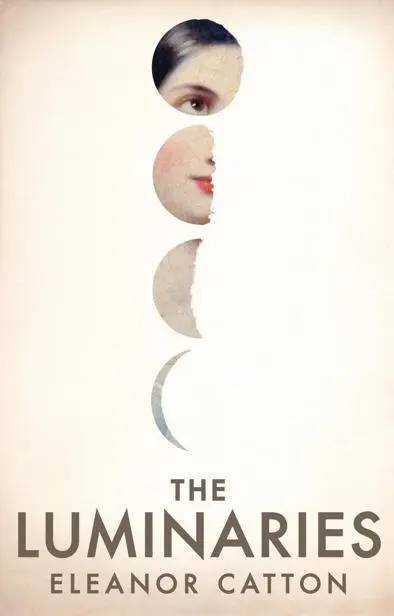
- Название:The Luminaries
- Автор:
- Издательство:Granta Publications
- Жанр:
- Год:2013
- ISBN:9781847085931
- Рейтинг книги:5 / 5. Голосов: 1
-
Избранное:Добавить в избранное
- Отзывы:
-
Ваша оценка:
The Luminaries: краткое содержание, описание и аннотация
Предлагаем к чтению аннотацию, описание, краткое содержание или предисловие (зависит от того, что написал сам автор книги «The Luminaries»). Если вы не нашли необходимую информацию о книге — напишите в комментариях, мы постараемся отыскать её.
The Luminaries — читать онлайн бесплатно полную книгу (весь текст) целиком
Ниже представлен текст книги, разбитый по страницам. Система сохранения места последней прочитанной страницы, позволяет с удобством читать онлайн бесплатно книгу «The Luminaries», без необходимости каждый раз заново искать на чём Вы остановились. Поставьте закладку, и сможете в любой момент перейти на страницу, на которой закончили чтение.
Интервал:
Закладка:
Moody sat, his heart thumping. He looked up at the justice, hoping for some token of affirmation, but Justice Kemp was bent over his ledger, taking notes. Broham was looking down the bench at Moody, a very nasty expression on his face. Fellowes, sitting next to him, leaned over to whisper something in his ear, and after a moment he smiled, and whispered something back.
‘Thank you, Mr. Moody,’ the justice said at last, underlining what he had written with a flourish, and putting down his pen. ‘The defendant will now rise. Mr. Broham, you have the floor.’
Broham stood, and thanked the justice a second time.
‘Miss Wetherell,’ he said, turning to her. ‘Until the night of the fourteenth of January, how did you make your living?’
‘Mr. Broham!’ snapped the justice at once. ‘What did I just say? Miss Wetherell is a member of the old profession. Let that suffice.’
‘Yes, sir,’ said Broham. He began again. ‘Miss Wetherell. On the night of the fourteenth of January you made a decision regarding your former employment, is that correct?’
‘Yes.’
‘What was it?’
‘I quit.’
‘What do you mean when you say that you “quit”?’
‘I quit whoring.’
The justice sighed. ‘Continue,’ he said, with a tone of resignation.
‘Did you take up alternative employment at once?’ Broham said, moving on.
‘Not at once,’ Anna said. ‘But when Mrs. Wells arrived in town she took me in at the Wayfarer’s Fortune. I started learning the Tarot, and astral charts, with the idea that I might assist her in telling fortunes. I thought I might earn a living as her assistant.’
‘At the time that you quit your former employment, did you have this future purpose in mind?’
‘No,’ said Anna. ‘I didn’t know that Mrs. Wells was coming before she arrived.’
‘In the period before Mrs. Wells arrived in Hokitika, how then did you expect that you would support yourself?’
‘I didn’t have a plan,’ Anna said.
‘No plan at all?’
‘No, sir.’
‘You did not have a nest egg, perhaps? Or another form of surety?’
‘No, sir.’
‘In that case, you made a radical step,’ said Broham, pleasantly.
‘Mr. Broham!’ snapped the justice.
‘Yes, sir?’
‘Make your point.’
‘Certainly. This deed of gift’—Broham produced it—‘names you, Miss Wetherell, as the lucky inheritor of two thousand pounds. It is dated October eleventh of last year. The donor, Mr. Emery Staines, disappeared without a trace upon the fourteenth of January—the very same day that you, as the fortunate recipient of this extraordinary sum, decided to quit walking the streets and mend your ways, a decision made without provocation, and without a plan for the future. Now—’
‘I object,’ said Moody, rising. ‘Mr. Broham has not established that Miss Wetherell had no provocation to change her circumstances of employment.’
The justice allowed this, and Broham, looking peeved, was obliged to put the question to Anna: ‘Did you have provocation, Miss Wetherell, in making the decision to cease prostituting yourself?’
‘Yes,’ said Anna. She looked at Moody again. He nodded slightly, encouraging her to speak. She drew a breath, and said, ‘I fell in love. With Mr. Staines. The night of the fourteenth of January was the first night we spent together, and—well, I didn’t want to keep whoring after that.’
Broham was frowning. ‘That was the very same night you were arrested for attempted suicide, was it not?’
‘Yes,’ Anna said. ‘I thought he didn’t love me—that he couldn’t love me—and I couldn’t bear it—and I did a terrible thing.’
‘Do you then admit you made an attempt upon your own life, that night?’
‘I meant to go under,’ said Anna, ‘but I never set out to do myself real harm.’
‘When you were tried for the crime of attempted suicide—in this very courtroom—you refused to enter a plea. Why have you changed your tune in this regard?’
This was a question that Moody and Anna had not rehearsed, and for a moment he felt anxious that she would falter; but she responded calmly, and with the truth. ‘At that time Mr. Staines was still missing,’ she said. ‘I thought he might have gone upriver, or into the gorge, in which case he’d be reading the Hokitika papers for news. I didn’t want to say anything that he might read, and think less of me.’
Broham coughed into the back of his knuckles, dryly. ‘Please describe what happened on the evening of the fourteenth of January,’ he said, ‘in sequence, and in your own words.’
She nodded. ‘I met Mr. Staines at the Dust and Nugget around seven. We had a drink together, and then he escorted me back to his residence on Revell-street. At about ten o’clock I went back to the Gridiron and lit my pipe. I was feeling strange, as I’ve said, and I took a little more than usual. I suppose I must have left the Gridiron while I was still under, because the next thing I remember is waking up in gaol.’
‘What do you mean when you say that you were feeling strange?’
‘Oh,’ she said, ‘just that I was melancholy—and very happy—and disconsolate, all mixed up. I can’t describe it exactly.’
‘At some point that same night, Mr. Staines disappeared,’ Broham said. ‘Do you know where he went?’
‘No,’ Anna said. ‘Last I saw him was at his residence on Revell-street. He was asleep. He must have disappeared sometime after I left him.’
‘Sometime after ten o’clock, in other words.’
‘Yes,’ said Anna. ‘I waited for him to come back—and he didn’t—and the days kept passing, with no sign of him. When Mrs. Wells offered me board at the Wayfarer, I thought it best to take it. Just for the meantime. Everyone was saying that he was surely dead.’
‘Did you see Mr. Staines at any point between the fourteenth of January and the twentieth of March?’
‘No, sir.’
‘Did you have any correspondence with him?’
‘No, sir.’
‘Where do you think he went, during that period?’
Anna opened her mouth to reply, and Moody, rising quickly, said, ‘I object: the defendant cannot be forced to speculate.’
Again the justice allowed the objection, and Broham was invited to continue.
‘When Mr. Staines was recovered, on the afternoon of the twentieth of March, there was a bullet in his shoulder,’ he said. ‘At the time of your rendezvous on the fourteenth of January, was Mr. Staines injured?’
‘No,’ said Anna.
‘Did he become injured, that evening?’
‘Not that I know of,’ said Anna. ‘Last I saw him, he was fine. He was sleeping.’
Broham picked up a muff pistol from the barristers’ desk. ‘Do you recognise this firearm, Miss Wetherell?’
‘Yes,’ said Anna, squinting at it. ‘That’s mine.’
‘Do you carry this weapon on your person?’
‘I used to, when I was working. I kept it in the front of my dress.’
‘Were you carrying it on the night of the fourteenth of January?’
‘No: I left it at the Gridiron. Under my pillow.’
‘But you were working on the night of the fourteenth of January, were you not?’
‘I was with Mr. Staines,’ Anna said.
‘That was not my question,’ Broham said. ‘Were you working on the night of the fourteenth of January?’
‘Yes,’ Anna said.
‘And yet—as you allege—you left your pistol at home.’
‘Yes.’
‘Why?’
‘I didn’t think I’d need it,’ Anna said.
‘But this was an aberration: ordinarily it would have been on your person.’
‘Yes.’
‘Can anyone vouch for the pistol’s whereabouts that evening?’
Читать дальшеИнтервал:
Закладка:
Похожие книги на «The Luminaries»
Представляем Вашему вниманию похожие книги на «The Luminaries» списком для выбора. Мы отобрали схожую по названию и смыслу литературу в надежде предоставить читателям больше вариантов отыскать новые, интересные, ещё непрочитанные произведения.






Обсуждение, отзывы о книге «The Luminaries» и просто собственные мнения читателей. Оставьте ваши комментарии, напишите, что Вы думаете о произведении, его смысле или главных героях. Укажите что конкретно понравилось, а что нет, и почему Вы так считаете.