Eleanor Catton - The Luminaries
Здесь есть возможность читать онлайн «Eleanor Catton - The Luminaries» весь текст электронной книги совершенно бесплатно (целиком полную версию без сокращений). В некоторых случаях можно слушать аудио, скачать через торрент в формате fb2 и присутствует краткое содержание. Год выпуска: 2013, ISBN: 2013, Издательство: Granta Publications, Жанр: Историческая проза, Современная проза, на английском языке. Описание произведения, (предисловие) а так же отзывы посетителей доступны на портале библиотеки ЛибКат.
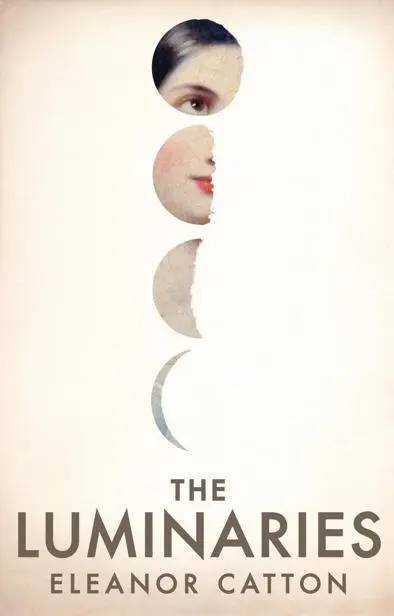
- Название:The Luminaries
- Автор:
- Издательство:Granta Publications
- Жанр:
- Год:2013
- ISBN:9781847085931
- Рейтинг книги:5 / 5. Голосов: 1
-
Избранное:Добавить в избранное
- Отзывы:
-
Ваша оценка:
The Luminaries: краткое содержание, описание и аннотация
Предлагаем к чтению аннотацию, описание, краткое содержание или предисловие (зависит от того, что написал сам автор книги «The Luminaries»). Если вы не нашли необходимую информацию о книге — напишите в комментариях, мы постараемся отыскать её.
The Luminaries — читать онлайн бесплатно полную книгу (весь текст) целиком
Ниже представлен текст книги, разбитый по страницам. Система сохранения места последней прочитанной страницы, позволяет с удобством читать онлайн бесплатно книгу «The Luminaries», без необходимости каждый раз заново искать на чём Вы остановились. Поставьте закладку, и сможете в любой момент перейти на страницу, на которой закончили чтение.
Интервал:
Закладка:
It was therefore with a very well-concealed ignorance that Moody played interlocutor to Gascoigne, and Clinch, and Mannering, and Pritchard, and all the others, when they spoke of Anna Wetherell, and the esteem in which they held her, as a whore. Moody’s well-timed murmurs of ‘naturally’ and ‘of course’ and ‘exactly so’, combined with a general rigidity of posture whenever Anna’s name was mentioned, implied to these men merely that Moody was made uncomfortable by the more candid truths of human nature, and that he preferred, like most men of exalted social rank, to keep his earthly business to himself. We observe that one of the great attributes of discretion is that it can mask ignorance of all the most common and lowly varieties, and Walter Moody was nothing if not excessively discreet. The truth was that he had never spoken two words together to a woman of Anna Wetherell’s profession or experience, and would hardly know how to address her—or upon what subject—should the chance arise.
‘And of course,’ he said now, ‘we ought to be cheered by the fact that Miss Wetherell’s trunk did not follow her to the Wayfarer’s Fortune.’
‘Did it not?’ said Gascoigne, in surprise.
‘No. The lead-lined dresses remain at the Gridiron, along with her pipe, and her opium lamp, and other miscellaneous items; she never sent for them.’
‘And Mr. Clinch has not raised the issue?’
‘No,’ said Moody. ‘It is cheering, I think: whatever role Miss Wetherell played in Mr. Staines’s disappearance, and whatever role she is to play in the ridiculous séance this evening, we can at least be fairly certain that she has not confided in Mrs. Wells absolutely. I take heart in that.’
He looked about for the waiter, for Gascoigne had finished eating, and he wished to settle his account as soon as possible, so that he might return to the Crown, and unpack his trunk at long last.
‘You are anxious to depart,’ Gascoigne observed, wiping his mouth with his table napkin.
‘Forgive my rudeness,’ Moody said. ‘I am not tired of your company—but I am rather anxious to be reunited with my possessions. I have not changed my jacket in some weeks, and I do not yet know the degree to which my trunk survived the storm. It is possible that all my clothes and documents were ruined.’
‘What are we waiting for? Let us go, at once,’ said Gascoigne, for whom this explanation was not only entirely reasonable, but also something of a relief. Gascoigne feared very much that his own society was tiring, and he was made very anxious whenever a man he respected showed boredom in his company. He insisted upon settling the cheque himself, shooing away Moody in the manner of an indulgent governess; once this was done, the two friends stepped out into the noisy rush of Revell-street, where a party of diggers was swarming cheerfully past. Behind them came a shout from a surveyor on horseback, reining in, and above them, the solitary bell in the Wesleyan chapel, which was striking the hour, once, twice. Raising their voices above this noise—the creaking wheels of a gig, the snap of canvas, laughter, hammering, the shrill voice of a woman calling to a man—the two friends bid one another good afternoon, and shook hands very warmly as they parted ways.
THE LESSER MALEFIC
In which certain key facts are disputed; Francis Carver is discourteous; and Löwenthal is provoked to speak his mind.
It was Löwenthal’s practice, when a letter of inflammatory accusation was delivered to the West Coast Times , to contact all parties concerned before the paper went to press. He judged it right to give fair warning to any man about to be lambasted, for the court of public opinion in Hokitika was a court of severe adjudication, and a reputation could be ruined overnight; to every man so threatened, he extended the invitation to pen a reply.
Alistair Lauderback’s long-winded and rather haphazard address on the subject of Governor Shepard’s professional dereliction was no exception to this rule, and upon reading it through, Löwenthal sat down at once to make a copy of the document. The copy he would set into type; the original he would take to the Police Camp, to show to the gaoler himself—for Shepard would certainly wish to defend himself upon several counts, and it was still early enough in the day that his reply could be included, as a response to Lauderback’s, in the Monday edition of the Times .
Löwenthal was frowning as he set out his writing implements. He knew that the information about Shepard’s private investment could only have been leaked by one of the twelve men of the Crown, which meant that someone—sadly—had broken his vow of silence. As far as Löwenthal knew, the only man who had any kind of acquaintance with Alistair Lauderback was his friend, Thomas Balfour. It was with a heavy heart that the newspaperman pulled out a fresh sheet of paper, unscrewed the cap on his inkwell, and dipped his nib. Tom , he thought, with admonition, Tom . He shook his head, and sighed.
Löwenthal was copying out Lauderback’s final paragraph when he was roused by the sound of the bell. Immediately he stood, laid his pen upon his blotter, and walked through to the shop, his face already relaxing into a smile of welcome—which froze, ever so slightly, when he saw who was standing in the doorway.
The incomer wore a long grey coat with velvet-faced lapels and turned velvet cuffs; the coat was made of a tight weave of some shiny, sealskin-like variety that turned an oily colour when he moved. His cravat was piled high at his throat, and the lapels of his shawl-collared waistcoat were turned up at the sides, lending an added bulk to his shoulders, and an added thickness to his neck. There was a heavy quality to his features, as though they had been hewn from some kind of mineral: something elemental and coarsely grained that would not polish, and that weighed a great deal. His mouth was wide, and his nose flattened; his brow protruded squarely. Upon his left cheek was a thin scar, silvery in colour, which curved from the outer corner of his eye down to his jaw.
Löwenthal’s hesitation was only momentary. In the next instant he was bustling forward, wiping his hands on his apron, and smiling very broadly; when his hands were clean, he extended both his palms to his guest, and said, ‘Mr. Wells! How good to see you again. Welcome back to Hokitika.’
Francis Carver narrowed his eyes, but did not take the bait. ‘I want to place an advertisement,’ he said. He did not step into the bounds of the other man’s reach; he remained by the door, keeping eight feet of distance between them.
‘Certainly, certainly,’ said Löwenthal. ‘And may I say: I am both honoured and gratified that you have sought my paper’s services a second time. I should have been very sorry to lose any man’s custom through an error of my own.’
Again Carver said nothing. He had not removed his hat, and made no move to do so.
But the newspaperman was not intimidated by Carver’s insolence. Smiling very brightly, he said, ‘But let us not talk of former days, Mr. Wells; let us talk of today! You must tell me what I can do for you.’
A flash of irritation darkened Carver’s face at last. ‘Carver,’ he corrected. ‘My name’s not Wells.’
Satisfied, Löwenthal folded his hands. The first two fingers of his right hand were stained very darkly with ink, which created a curiously striped effect when he laced his fingers together—as though his two hands belonged to two different creatures, one black, the other fawn.
‘Perhaps my memory is faulty,’ he said, ‘but I feel I do recall you very vividly. You were here nearly a year ago, were you not? You had a birth certificate. You placed an advertisement about a missing shipping crate—for which you were offering some kind of a reward. There was some confusion regarding your name, I remember. I made a mistake in the printing—omitting your middle name—and you returned the following morning, to identify the error. I believe your birth certificate was made out as Crosbie Francis Wells. But please—have I mistaken you for another man?’
Читать дальшеИнтервал:
Закладка:
Похожие книги на «The Luminaries»
Представляем Вашему вниманию похожие книги на «The Luminaries» списком для выбора. Мы отобрали схожую по названию и смыслу литературу в надежде предоставить читателям больше вариантов отыскать новые, интересные, ещё непрочитанные произведения.





Обсуждение, отзывы о книге «The Luminaries» и просто собственные мнения читателей. Оставьте ваши комментарии, напишите, что Вы думаете о произведении, его смысле или главных героях. Укажите что конкретно понравилось, а что нет, и почему Вы так считаете.