Eleanor Catton - The Luminaries
Здесь есть возможность читать онлайн «Eleanor Catton - The Luminaries» весь текст электронной книги совершенно бесплатно (целиком полную версию без сокращений). В некоторых случаях можно слушать аудио, скачать через торрент в формате fb2 и присутствует краткое содержание. Год выпуска: 2013, ISBN: 2013, Издательство: Granta Publications, Жанр: Историческая проза, Современная проза, на английском языке. Описание произведения, (предисловие) а так же отзывы посетителей доступны на портале библиотеки ЛибКат.
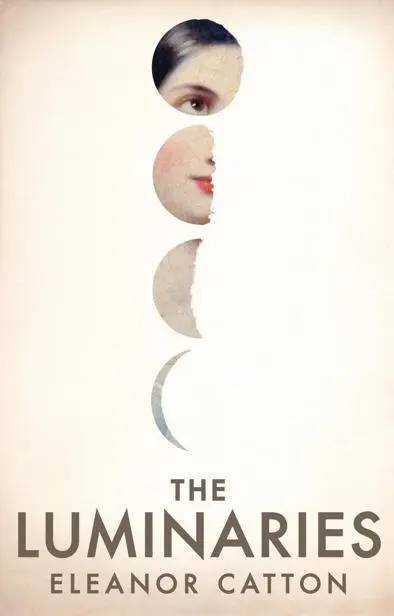
- Название:The Luminaries
- Автор:
- Издательство:Granta Publications
- Жанр:
- Год:2013
- ISBN:9781847085931
- Рейтинг книги:5 / 5. Голосов: 1
-
Избранное:Добавить в избранное
- Отзывы:
-
Ваша оценка:
The Luminaries: краткое содержание, описание и аннотация
Предлагаем к чтению аннотацию, описание, краткое содержание или предисловие (зависит от того, что написал сам автор книги «The Luminaries»). Если вы не нашли необходимую информацию о книге — напишите в комментариях, мы постараемся отыскать её.
The Luminaries — читать онлайн бесплатно полную книгу (весь текст) целиком
Ниже представлен текст книги, разбитый по страницам. Система сохранения места последней прочитанной страницы, позволяет с удобством читать онлайн бесплатно книгу «The Luminaries», без необходимости каждый раз заново искать на чём Вы остановились. Поставьте закладку, и сможете в любой момент перейти на страницу, на которой закончили чтение.
Интервал:
Закладка:
Ah Sook had only understood part of what was discussed in the smoking room of the Crown Hotel three weeks prior. In his confusions he had received no aid from his compatriot, for Ah Quee’s English was even more severely limited than his own, and none from the remaining men of the Crown, whose collective patience was worn very thin by any request for clarification from Chinese men. Balfour’s narration had been much too swift and poetically accented to be readily understood by a foreign ear, and both Ah Sook and Ah Quee had left the assembly at the Crown with only a partial understanding of all that had been discussed.
The crucial points of ignorance were these. Ah Sook did not know that Anna Wetherell had quit her lodgings at the Gridiron Hotel, and had taken up instead with Lydia Wells. He also did not know that Francis Carver was the master of the ship Godspeed , the craft that had foundered on the Hokitika bar. When the assembly at the Crown broke up, soon after midnight, Ah Sook had not followed the other men to the Hokitika spit to look over the wreck: shipping misadventures did not interest him, and he did not like to be on the Hokitika streets after dark. He had returned, instead, to Kaniere, where he had remained ever since. As a consequence, he still believed that Francis Carver had departed nearly a month ago for Canton, and would not be due back in Hokitika for some time. Thomas Balfour, who had quite forgotten imparting this piece of misinformation to Ah Sook in the first place, had not thought to disabuse him.
By the time the bells rang out half past three, Ah Sook was mounting the steps to the veranda of the Gridiron Hotel. At the front desk, he requested an audience with Anna Wetherell, pronouncing her name with both gravity and satisfaction, as though the meeting had been scheduled many months in advance. He produced a shilling, to show that he was willing to pay for the privilege of the whore’s conversation, and then bowed very deeply, as a gesture of respect. He remembered Edgar Clinch from the secret council, and had judged him, then, to be a decent and reasonable man.
Clinch, however, only shook his head. He gestured, repeatedly, towards the newly washed Wayfarer’s Fortune, on Revell-street’s opposite side, and spoke a flurry of words; when Ah Sook did not understand, Clinch brought him outside by the elbow, pointed at the hotel opposite, and explained, more slowly, that Anna now took her lodging there. Eventually Ah Sook spied a thrust of movement in the front window of the former hotel, and perceived that the figure behind the glass was Anna; satisfied, he bowed to Clinch a second time, retrieved his shilling from the other man’s palm, and pocketed it. He then crossed the thoroughfare, mounted the steps to the Wayfarer’s veranda, and rapped smartly upon the door.
Anna must have been in the foyer, for she answered the door within seconds. She appeared, as was her habit of late, in the distracted posture of a lady’s maid, full of annoyance and disapproval, keeping one hand upon the doorframe, so as to be ready to close the door at once. (Over the past three weeks she had received a great many callers: wistful diggers, for the most part, who missed her presence at the Dust and Nugget in the evenings. They begged to buy her a glass of champagne, or brandy, or small beer, and to ‘shoot the bull’ at one of the brightly lit saloons along Revell-street—but their pleading had no effect: Anna only shook her head, and shut the door.) When she saw who was on the threshold, however, she pulled the door open wide, and made an exclamation of surprise.
Ah Sook was surprised also; for a moment he simply stared. After so many weeks of recalling her shape to his mind—here she was! Was she truly so altered? Or was his memory so imperfect, that she seemed, standing in the doorway, to be a wholly different woman than the one with whom he had passed so many luxurious afternoons, with the cold light of winter falling slantwise through the square of the window, and the smoke winding about their bodies, in coils? Her dress was a new one: black, and cut very severely. But this was not merely a new dress, Ah Sook thought. This was a different woman altogether.
She was sober. Her cheeks held a new lustre, and her eyes were brighter, larger, and more alert. The syrupy quality to her movements was gone—and gone, too, was the slightly dreamy gauze that had always overlaid her features, like a veil of lawn. Gone was the vague half-smile, the trembling corner of her mouth, the awed confusion—as though she were privy, always, to some small bewilderment that no one else could see. In the next moment Ah Sook’s astonishment had given way to bitterness. So it was true. Anna had rid herself of opium’s dragon. She had cured herself—when he had tried for over a decade to do the same, remaining, always, that shapeless creature’s slave.
Anna made a little snatching motion with her hand, as though wishing to steady herself upon the frame of the door. In a whisper she said, ‘But you can’t come in—you can’t come in, Ah Sook.’
Ah Sook waited a moment before he made his bow, for he trusted his own first impressions, and he wished to make this impression last. She was much thinner than he remembered: he could see the bones of her wrist quite plainly, and her cheeks were sunken in.
‘Good afternoon,’ he said.
‘What do you want?’ Anna whispered. ‘Yes—good afternoon. You know I’m not taking opium any more. Did you know that?’
He peered at her.
‘Three weeks,’ she added, as if to persuade him. ‘I haven’t had a pipe in three weeks.’
‘How?’ said Ah Sook.
She shook her head. ‘You have to understand it: I’m not the same as I was.’
‘Why you come no more to Kaniere?’ Ah Sook said. He did not know how to say that he missed her; that each afternoon before her arrival he used to arrange the cushions on the daybed just so, and tidy his belongings, and make sure his clothes were neat and his pigtail tied; that as he watched her sleep he had often been near-choked with joy; that he had sometimes reached out his hand and let it hover within an inch of her breast, as though he could feel the softness of her skin in that smoky space between his flesh and hers; that sometimes after she took her pipe he would wait some time before taking his own, so that he could watch her, and fix her image in his mind, to remember.
‘I can’t come to see you any more,’ Anna said. ‘You mustn’t be here. I can’t come.’
Ah Sook studied her sadly. ‘No more smoke?’
‘No more,’ Anna said. ‘No more smoke, and no more Kaniere.’
‘Why?’
‘I can’t explain it—not here. I’ve stopped, Ah Sook. I’ve stopped it altogether.’
‘No more money?’ said Ah Sook, trying to understand. He knew that Anna had laboured under an enormous debt. She owed a great deal of money to Dick Mannering, and the debt mounted every day. Perhaps she could no longer afford the drug. Or perhaps she could no longer afford the time to make the journey, to take it.
‘It’s not money,’ Anna said.
Just then a female voice called out Anna’s name, from deep in the well of the house, and asked, in a tone of impatient condescension, to know the name and business of the caller at the door.
Anna turned her chin to the side but did not move her eyes from Ah Sook’s face. ‘It’s just a chink I used to know,’ she called. ‘It’s nothing.’
‘Well, what does he want?’
‘Nothing,’ Anna called again. ‘He’s only trying to sell me something.’
There was a silence.
‘I bring to you—here?’ said Ah Sook. He cupped his hands together and proffered them to her, indicating that he was willing to deliver the resin himself.
‘No,’ Anna whispered. ‘No, you can’t do that. It’s no use. I just—the thing is—I can’t feel it any more.’
Читать дальшеИнтервал:
Закладка:
Похожие книги на «The Luminaries»
Представляем Вашему вниманию похожие книги на «The Luminaries» списком для выбора. Мы отобрали схожую по названию и смыслу литературу в надежде предоставить читателям больше вариантов отыскать новые, интересные, ещё непрочитанные произведения.




Обсуждение, отзывы о книге «The Luminaries» и просто собственные мнения читателей. Оставьте ваши комментарии, напишите, что Вы думаете о произведении, его смысле или главных героях. Укажите что конкретно понравилось, а что нет, и почему Вы так считаете.