Eleanor Catton - The Luminaries
Здесь есть возможность читать онлайн «Eleanor Catton - The Luminaries» весь текст электронной книги совершенно бесплатно (целиком полную версию без сокращений). В некоторых случаях можно слушать аудио, скачать через торрент в формате fb2 и присутствует краткое содержание. Год выпуска: 2013, ISBN: 2013, Издательство: Granta Publications, Жанр: Историческая проза, Современная проза, на английском языке. Описание произведения, (предисловие) а так же отзывы посетителей доступны на портале библиотеки ЛибКат.
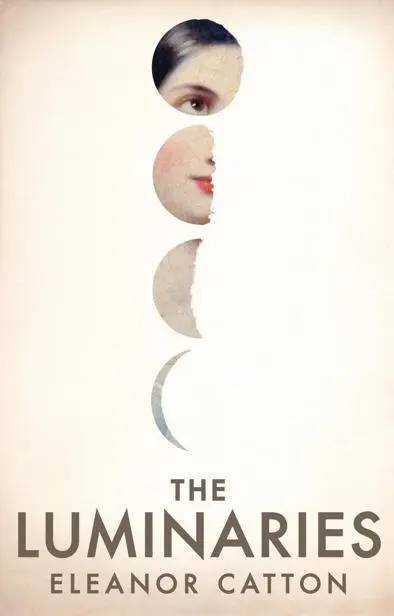
- Название:The Luminaries
- Автор:
- Издательство:Granta Publications
- Жанр:
- Год:2013
- ISBN:9781847085931
- Рейтинг книги:5 / 5. Голосов: 1
-
Избранное:Добавить в избранное
- Отзывы:
-
Ваша оценка:
The Luminaries: краткое содержание, описание и аннотация
Предлагаем к чтению аннотацию, описание, краткое содержание или предисловие (зависит от того, что написал сам автор книги «The Luminaries»). Если вы не нашли необходимую информацию о книге — напишите в комментариях, мы постараемся отыскать её.
The Luminaries — читать онлайн бесплатно полную книгу (весь текст) целиком
Ниже представлен текст книги, разбитый по страницам. Система сохранения места последней прочитанной страницы, позволяет с удобством читать онлайн бесплатно книгу «The Luminaries», без необходимости каждый раз заново искать на чём Вы остановились. Поставьте закладку, и сможете в любой момент перейти на страницу, на которой закончили чтение.
Интервал:
Закладка:
‘Well, her apprenticeship has been extraordinarily short,’ Moody said, with some acidity. ‘It makes one rather doubt the quality of the training—or the quality of the subject.’
Gascoigne grinned at this. ‘Is a whore’s praxis not the original arcana?’ he said. ‘Perhaps she has been in training all her life.’
Moody was always embarrassed by conversation of this kind. ‘Her former praxis is arcane, in the proper sense of the word,’ he conceded, drawing himself up, ‘but the female arts are natural; they cannot be compared to the conjuration of the dead.’
‘Oh, I am sure that the tricks of both professions are more or less the same,’ Gascoigne said. ‘A whore is the very mistress of persuasion, just as a sibyl must be persuasive, if she is to be believed … and you must not forget that beauty and conviction are always persuasive, whatever the context in which they appear. Why, the shape of Anna’s fortunes is not so very greatly changed. You may as well keep calling her Magdalena!’
‘Mary Magdalene was no clairvoyant,’ Moody said stiffly.
‘No,’ Gascoigne agreed, still grinning, ‘but she was the first to come upon the open tomb. She was the one to swear that the stone had been rolled away. It bears mention, that the news of the ascension first came as a woman’s oath—and that at first the oath was disbelieved.’
‘Well, tonight Anna Wetherell will make her oath upon another man’s tomb,’ Moody said. ‘And we will not be there to disbelieve it.’ He twitched his knife and fork still straighter, wishing that the waiter would come and clear his plate away.
‘We have the party beforehand to look forward to,’ said Gascoigne, but the cheer had gone from his voice. He too had been excessively disappointed by his exclusion from the widow’s impending communion with the dead. The exclusion rankled him rather more bitterly than it did Moody, for he felt, as the first friend Lydia Wells had made in Hokitika, that a place ought properly to have been reserved for him. But Lydia Wells had not once paid a call upon him, since the afternoon of the 27th of January, and nor had she once received him, even for tea.
Moody had not yet met either woman formally. He had glimpsed them hanging drapes in the front windows of the former hotel, silhouetted darkly, like paper dolls against the glass. Perceiving them, he felt a rather strange thrill of longing—unusual for him, for it was not his habit to envy the relations that women conduct with other women, nor really, to think about them with any great interest at all. But as he walked past the shadowed frontage of the Wayfarer’s Fortune and saw their bodies shifting behind the contorting pane he wished very much that he could hear what they were saying. He wished to know what caused Anna to redden, and bite her lip, and move the heel of her hand to her cheekbone, as if to test it for heat; he wished to know what caused Lydia to smile, and dust her hands, and turn away—leaving Anna with her arms full of fabric, and her dress-front stuck all over with pins.
‘I think that you are right to doubt Anna’s part in all this—or at least, to wonder at it,’ Gascoigne went on. ‘I got the impression, when I first spoke to her about Staines, that she held the boy in rather high esteem; I even fancied that she might care for him. And now by all appearances she is seeking to profit from his death!’
‘We cannot be certain of the degree of Miss Wetherell’s complicity,’ Moody said. ‘It depends entirely upon her knowledge of the fortune hidden in the gowns—and therefore, of Mr. Lauderback’s blackmail.’
‘There has been no mention of the orange gown—from any quarter,’ said Gascoigne. ‘One would think Mrs. Wells might have been more active in its recovery, had Anna told her that it was stowed beneath my bed.’
‘Presumably Miss Wetherell believes the gold was paid out to Mr. Mannering, as she instructed.’
‘Yes—presumably,’ Gascoigne said, ‘but wouldn’t you suppose that in that case, Mrs. Wells would pay a call upon Mannering, to see about recovering it? There’s no want of love between them : she and Mannering are old friends from gambling days. No: I think it far more possible that Mrs. Wells remains entirely ignorant about the orange gown— and about all the others.’
‘Hm,’ said Moody.
‘Mannering won’t touch it,’ Gascoigne said, ‘for fear of what will happen down the line—and I’m certainly not going to take it to the bank. So there it stays. Under my bed.’
‘Have you had it valued?’
‘Yes, though unofficially: Mr. Frost came by to look it over. Somewhere in the neighbourhood of a hundred and twenty pounds, he thought.’
‘Well, I hope for Miss Wetherell’s sake that she has not confided in Mrs. Wells,’ Moody said. ‘I dread to think how Mrs. Wells might respond to such a revelation, behind closed doors. She would only blame Anna for the loss of the fortune—I am sure of it.’
Suddenly Gascoigne put down his fork. ‘I’ve just had a thought,’ he said. ‘The money in the dresses became the money in the cottage. So if the widow’s appeal goes through, and she receives the fortune as her inheritance, she’ll get it all back—less the money in the orange gown, of course. She’ll end up where she started, after all.’
‘In my experience people are rarely contented to end up where they started,’ Moody said. ‘If my impression of Lydia Wells is accurate, I think that she will feel very bitter about Anna’s having been in possession of those dresses, no matter what Anna’s intentions might have been, and no matter what the outcome.’
‘But we’re fairly certain that Anna did not even know about the gold she was carrying—at least, not until very recently.’
‘Mr. Gascoigne,’ Moody said, holding up his hand, ‘despite my youth, I possess a certain store of wisdom about the fairer sex, and I can tell you categorically that women do not like it when other women wear their clothes without their asking.’
Gascoigne laughed. Cheered by this joke, he applied himself to finishing his luncheon with a renewed energy, and a good humour.
The truth of Moody’s observation notwithstanding, it must be owned that his store of wisdom, as he had termed it, could be called empirical only in that it had been formed upon the close observation of his late mother, his stepmother, and his two maternal aunts: to put it plainly, Moody had never taken a lover, and did not know a great deal about women, save for how to address them properly, and how to dote upon them as a nephew and as a son. It was not despite the natural partialities of youth that the compass of Moody’s worldly experience was scarcely larger than a keyhole, through which he had perceived, metaphorically speaking, only glimpses of the shadowed chamber of adulthood that lay beyond. In fact he had met with ample opportunity to widen this aperture, and indeed, to unlock the door altogether, and pass through it, into that most private and solitary of rooms … but he had declined these opportunities with quite the same discomfort and stiff propriety with which he fielded Gascoigne’s rhetorical teases now.
When he was one-and-twenty a late night of carousing in London had led him, by the usual methods and channels, to a lamp lit courtyard not far from Smithfield Market. This courtyard, by the authority of Moody’s college chums, was frequented by the most fashionable of whores—so identifiable for their red Garibaldi jackets, brass-buttoned, that were the height of Parisian fashion at the time, and alarming to English ladies for that reason. Although the military style of their jackets gave the women a deliberate and brazen look, they pretended at shyness, turning away so they might look at the men over the rounded curve of their shoulders, and feint, and titter, and point their toes. Moody, watching them, felt suddenly sad. He could not help but think of his father—for how many times, over the years of Moody’s youth, had he come across the man in some dark corner of the house, to perceive, upon his father’s lap, a perfect stranger? She would be gasping unnaturally, or squealing like a pig, or speaking in a high-pitched voice that was not her own, and she would leave behind her, always, that same greasy musk: the smell of the theatre. Moody’s college chums were pooling their sovereigns and cutting straws to draw for the first pick; silently, he withdrew from the courtyard, hailed a hansom, and retired to bed. It was a point of pride for him, thereafter, that he would not do as his father had done; that he would not fall prey to his father’s vices; that he would be the better man. And yet how easy it might have been—to contribute his sovereign, and select his straw, and choose one of the red-shirted ladies to follow into the cobbled alcove on the dark side of the church! His college chums supposed him to have set his sights upon a clerical vocation. They were surprised, some years later, when Moody enrolled at Inner Temple, and began to study for the Bar.
Читать дальшеИнтервал:
Закладка:
Похожие книги на «The Luminaries»
Представляем Вашему вниманию похожие книги на «The Luminaries» списком для выбора. Мы отобрали схожую по названию и смыслу литературу в надежде предоставить читателям больше вариантов отыскать новые, интересные, ещё непрочитанные произведения.









Обсуждение, отзывы о книге «The Luminaries» и просто собственные мнения читателей. Оставьте ваши комментарии, напишите, что Вы думаете о произведении, его смысле или главных героях. Укажите что конкретно понравилось, а что нет, и почему Вы так считаете.