Stewart Binns - Crusade
Здесь есть возможность читать онлайн «Stewart Binns - Crusade» весь текст электронной книги совершенно бесплатно (целиком полную версию без сокращений). В некоторых случаях можно слушать аудио, скачать через торрент в формате fb2 и присутствует краткое содержание. Город: London, Год выпуска: 2012, ISBN: 2012, Издательство: Penguin Books, Жанр: Историческая проза, на английском языке. Описание произведения, (предисловие) а так же отзывы посетителей доступны на портале библиотеки ЛибКат.
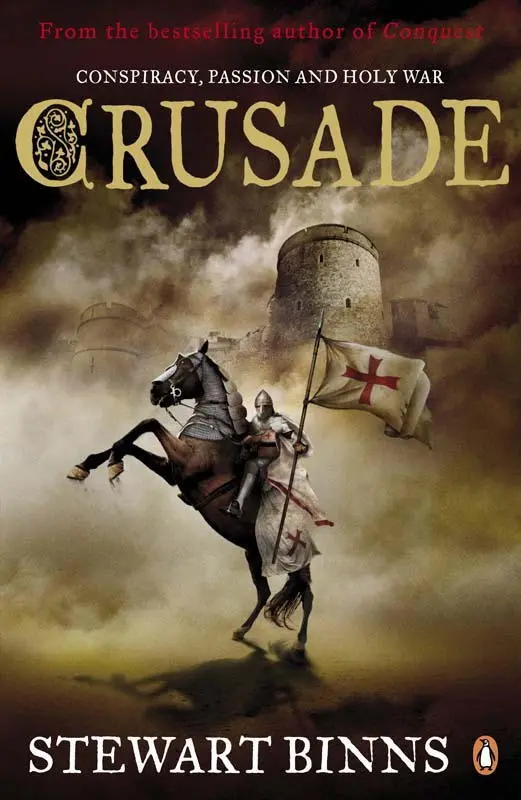
- Название:Crusade
- Автор:
- Издательство:Penguin Books
- Жанр:
- Год:2012
- Город:London
- ISBN:978-0-241-95758-5
- Рейтинг книги:3 / 5. Голосов: 1
-
Избранное:Добавить в избранное
- Отзывы:
-
Ваша оценка:
Crusade: краткое содержание, описание и аннотация
Предлагаем к чтению аннотацию, описание, краткое содержание или предисловие (зависит от того, что написал сам автор книги «Crusade»). Если вы не нашли необходимую информацию о книге — напишите в комментариях, мы постараемся отыскать её.
In the face of chaos and death, Edgar and his allies form a secret brotherhood, pledging to fight for justice and freedom wherever they are denied. But soon they are called to fight for an even greater cause: the plight of the Holy Land. Embarking on the epic First Crusade to recapture Jerusalem, together they will participate in some of the cruellest battles the world has ever known, the savage Siege of Antioch and the brutal Fall of Jerusalem, and together they will fight to the death.
Crusade — читать онлайн бесплатно полную книгу (весь текст) целиком
Ниже представлен текст книги, разбитый по страницам. Система сохранения места последней прочитанной страницы, позволяет с удобством читать онлайн бесплатно книгу «Crusade», без необходимости каждый раз заново искать на чём Вы остановились. Поставьте закладку, и сможете в любой момент перейти на страницу, на которой закончили чтение.
Интервал:
Закладка:
The King had been true to his word and ordered that the keystone of the central arch of the crypt be positioned exactly where St Etheldreda’s tomb had stood. He had been tempted to destroy the tomb, but relented on advice from Simeon and his clerics. To Estrith’s great relief, the tomb had been moved down into the crypt when it was finished a year ago.
Abbot Simeon had died and King Rufus had not appointed a replacement, so we sought the help of Gyrth, acting Abbot, who happened to be English, to gain access to the crypt. We swore him to secrecy about our visit, and he agreed to grant us access to the crypt at the end of the working day.
He met us after evening prayers, and gave me the sad news that Wolnatius, the survivor of Ely whom I had met on my previous visit, had died a few years ago. As far as Gyrth knew, he had been the last survivor of the siege still alive.
As the monks of Ely made their way back to their cells after prayers, we lit torches and made our way to the crypt. Striding across the huge flagstones of the nave, I was amused to think about the price the quarry in Northamptonshire had received in payment for the stone: 8,000 barrels of Ely’s finest produce – eels!
As we descended to the crypt, we all felt apprehensive. What we were about to do would forge an unbreakable covenant between us – one which we knew, in due course, would almost certainly reveal our true destinies. Not only that, but we were going to take the vow in a place that held so much meaning and symbolism.
The din of the hordes of workmen had stopped and the gentle plainchant of the monks had drifted away, but the silence was only fleeting as a raw easterly wind began to whistle through the fragmentary skeleton of the cathedral and our footfalls boomed around the vast space. Our breath turned to mist in the cold night air and the echoes made us whisper to one another.
Sweyn led the way. He was the first to lift his lantern to reveal the low, vaulted ceiling of the crypt and the colossal round columns that supported their counterparts in the nave. The space was bare, except for St Etheldreda’s tomb, standing proudly in the middle. Estrith recognized it immediately, and we all stood back to allow her to reflect on those chilling moments when her life and that of her sister had been spared by the intervention of a mysterious burst of sunlight.
Estrith went over to the tomb. It was just as it had been described to me. The plain stone sarcophagus was topped by a finely dressed slab, unadorned save for the outline of the saint’s form chased into it and, carved in relief, standing proud of it, her hands in prayer. We stood in silence, deep beneath the nave, the echoes gone, the wind now barely audible.
It is strange how something as plain as a block of stone can strike fear into the hearts of even the most resolute of men. Cold and unyielding, and piled high with others of its kind, it creates an eerie presence that seems to possess a life of its own. The stones of the crypt reverberated, as if they could speak, and gave birth to dark corners and gloomy shadows which concealed secrets and mysteries.
Estrith ended the unnerving silence by pulling a rosary from a small purse on her belt.
‘Nobody noticed me take this when we were dragged from the chapel all those years ago. I have kept it ever since. As we don’t have the Talisman to wear, I thought we should each wear this rosary as we take the oath.’
Made of striking pearls and rubies, the beads culminated in a delicate silver cross on which was chased the figure of the crucified Christ. Estrith placed it around our necks in turn. We then each placed our left hand on St Etheldreda’s hands and clasped our right hand to our chest in the Roman salute of the Brotherhood of Ely, taking it in turns to recite the words which would become the guiding light of the rest of our days.
Robert was the last to take the oath. He had remembered the words perfectly and recited them with meaning, reaffirming a vow that had been intended to persuade his father to be a fair and just king. Had he been a better king, after Ely? Some say he did become a more sympathetic ruler; others say his tyranny never abated. Regardless of that, his firstborn and successor as Duke of Normandy had taken a new oath, affirming everything that the Brotherhood had fought for. Their suffering and death had not been in vain.
We placed our weapons on the tomb, formed ourselves into a circle around it and held hands as Estrith prayed for us.
‘Blessed martyr, protect this small band of sinners and help us to be courageous in everything we do. We will strive to bring honour to your name and live up to the example of those who showed us the way. In the name of God Almighty. Amen.’
And so, our small group of brothers-in-arms had become a true brotherhood. Not only that, we had sanctified our bond in the exact place where Hereward’s brotherhood had been formed. We all felt elated to be able to inherit the legacy of all that had been hoped for at Ely, but we were also daunted that with swearing the oath came so much responsibility – both as brethren and as individuals.
We made haste to Normandy, where Robert had to finance, recruit and prepare a new army for an expedition the like of which had not been attempted since the days of the legions of Rome.
Robert garnered his resources over the first few months of 1096 in concert with many others from as far afield as Germany, Christian Spain and southern Italy to put together the host of avenging Christians that the Pope had called for. We heard the news of each new contingent and listened to the ever more hateful rhetoric with growing anxiety.
Besides Robert of Normandy and Raymond of Toulouse, the men who provided the majority of the Crusade’s money and manpower were some of the richest men in Europe: Godfrey of Bouillon, the second son of Count Eustace of Boulogne, who mortgaged all his estates to pay for his adventure; Count Robert of Flanders who, like Raymond of Toulouse, was driven by religious fanaticism; Stephen, Count of Blois, who was bullied into going by his domineering wife to atone for his many sins; and Baldwin of Boulogne, Godfrey’s brother, who was motivated by simple greed and had every intention of staying in the Holy Land to create his own Christian fiefdom.
The formidable Bohemond of Taranto, the eldest son of Robert Guiscard, also ‘took the cross’ to the Holy Land, as it came to be known – through the practice adopted by the Crusaders of sewing a cross on to their surcoats, or painting it on to their shields. A man who stood a head taller than any of his contemporaries, he was as fierce as he was tall and had spent his life fighting Byzantines and Muslims in southern Italy and the Adriatic.
Bohemond also brought a large group of Norman knights from Calabria, Apulia and Sicily, battle-hardened men used to fighting Arab armies. Among them was another giant, Tancred of Hauteville – only twenty years old and fluent in Arabic, he had already made a reputation for himself as a ferocious warrior.
There was one other leader of the Crusade, whose army of peasants, thieves and vagabonds left Europe long before the knights and professional soldiers. Peter the Hermit, a short, skinny ascetic with long, unkempt hair, was not fond of washing himself or his meagre clothes, walked barefoot, drank only wine and ate only fish. Despite his repulsive appearance and odd habits, he was a remarkable orator who inspired large crowds, which followed him around as if he were a messiah. By May of 1096, his multitude, over 20,000 strong, was on its way to Constantinople. The horde had almost no money, few weapons and little idea where the Holy Land was, but they had a blind faith compelling them to go – men and women, young and old, from all over Europe.
When Peter the Hermit’s followers reached Germany, their anti-Muslim hatred found another, much easier target – the other ‘infidels’, the placid and inconspicuous Jews who had lived at peace in Europe for centuries. Like a contagion, as the Crusaders passed through the towns and cities of central Europe, their fanaticism spread to the local population, inciting them to slaughter their Jewish neighbours and fellow citizens in their thousands.
Читать дальшеИнтервал:
Закладка:
Похожие книги на «Crusade»
Представляем Вашему вниманию похожие книги на «Crusade» списком для выбора. Мы отобрали схожую по названию и смыслу литературу в надежде предоставить читателям больше вариантов отыскать новые, интересные, ещё непрочитанные произведения.



Обсуждение, отзывы о книге «Crusade» и просто собственные мнения читателей. Оставьте ваши комментарии, напишите, что Вы думаете о произведении, его смысле или главных героях. Укажите что конкретно понравилось, а что нет, и почему Вы так считаете.