Vladimir Bartol - Alamut
Здесь есть возможность читать онлайн «Vladimir Bartol - Alamut» весь текст электронной книги совершенно бесплатно (целиком полную версию без сокращений). В некоторых случаях можно слушать аудио, скачать через торрент в формате fb2 и присутствует краткое содержание. Город: Berkeley, Год выпуска: 2012, ISBN: 2012, Издательство: North Atlantic Books, Жанр: Историческая проза, на английском языке. Описание произведения, (предисловие) а так же отзывы посетителей доступны на портале библиотеки ЛибКат.
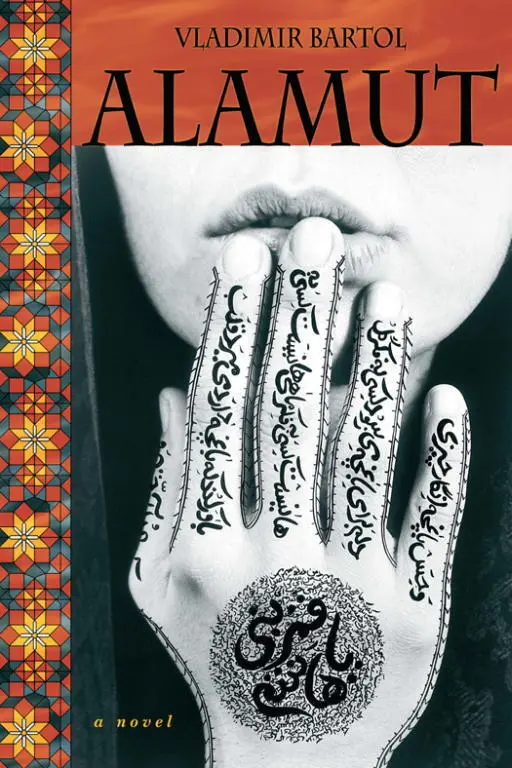
- Название:Alamut
- Автор:
- Издательство:North Atlantic Books
- Жанр:
- Год:2012
- Город:Berkeley
- ISBN:9781583946954
- Рейтинг книги:2.8 / 5. Голосов: 5
-
Избранное:Добавить в избранное
- Отзывы:
-
Ваша оценка:
Alamut: краткое содержание, описание и аннотация
Предлагаем к чтению аннотацию, описание, краткое содержание или предисловие (зависит от того, что написал сам автор книги «Alamut»). Если вы не нашли необходимую информацию о книге — напишите в комментариях, мы постараемся отыскать её.
Alamut — читать онлайн бесплатно полную книгу (весь текст) целиком
Ниже представлен текст книги, разбитый по страницам. Система сохранения места последней прочитанной страницы, позволяет с удобством читать онлайн бесплатно книгу «Alamut», без необходимости каждый раз заново искать на чём Вы остановились. Поставьте закладку, и сможете в любой момент перейти на страницу, на которой закончили чтение.
Интервал:
Закладка:
“O Allah!” he said to himself. “Sayyiduna was right. I can already hear the murmur of paradise around me.”
The master of ceremonies had to call his name twice before he heard and came through the entrance, where a soldier had drawn the curtain aside. He caught sight of a splendid old man sitting among his pillows. Everything about him bespoke benevolent majesty. Ibn Tahir had the impression he had said something to him, but the voice seemed to be coming from a great distance away.
He bowed deeply. When he stood back up, everything around him was changed. “The pavilion in paradise!” he exclaimed to himself.
“Calm down, my boy,” a deep male voice said. “So you come to me from al-Ghazali?”
Now he saw the grand vizier before him again, smiling at him kindly to put him at ease, since he took his strange behavior to be mere awkwardness.
Ibn Tahir instantly became clear about everything. The effect of the pellet , he thought.
“Yes, I come from al-Ghazali, Your Excellency, with this letter.”
He held the letter out toward the old man, while calmly drawing the sharpened writing instrument out of it. He did this so naturally that none of those present was aware of the action.
The vizier unsealed the envelope and unfolded the letter.
“What is my learned friend up to in Baghdad?” he asked.
Ibn Tahir suddenly leaned forward and shoved the dagger into his throat beneath the chin. The vizier was so startled that for the first few moments he didn’t feel any pain. He just opened his eyes up wide. Then he scanned the only line of the letter one more time and grasped everything. He called for help.
Ibn Tahir remained standing there, as though body and soul had been paralyzed. The objects in the room merged with mirages. He remembered Miriam and wanted to be with her. His limbs felt heavy with fatigue. More than anything, he would have liked to lie down and let the drug do its work. But the men had already wrestled him to the ground. Others rushed into the room and attacked him. Instinctively he began to defend himself. He thrashed around and bit whatever he could reach. They beat him with their fists and their weapons, kicked him, and tore the clothes off of him.
Suddenly he recalled that it had actually been his intention to die after completing his assignment. He became quite still and waited for the fatal blow. He glimpsed Miriam’s beautiful face through the blood that was streaming over his eyes.
The vizier’s weakened voice reached him.
“Don’t kill him! Take him alive!”
The kicking and slugging stopped. Now he could feel them cinching up knots around his hands and feet. The blood poured down his face so he could see nothing.
Gigantic arms lifted him up off the floor. A fearsome voice asked him, “Who are you, murderer?”
“Kill me. I’m the sacrificial animal of Our Master.”
In the meanwhile attendants had cleaned and bound the vizier’s wound. Others ran for a doctor.
When the vizier heard ibn Tahir’s answer, he moaned, “Oh, the idiot! He listened to the scoundrel!”
The commander of the vizier’s bodyguard bent over to pick the letter up. He read it and silently handed it to the master of ceremonies, who shuddered. It read, “Till we meet in hell. Ibn Sabbah.”
The vizier’s personal physician arrived and inspected the wound.
“Is it bad?” the vizier said in a trembling, questioning voice. “I can tell it’s bad.”
The doctor whispered to the commander of the bodyguard, “I’m afraid the implement was poisoned.”
“The master of Alamut sent the murderer,” the commander replied in a subdued voice.
Word traveled from mouth to mouth throughout the tent that the master of the Ismailis had sent a killer against the vizier.
“What, the old man of the mountain?”
“The same Hasan that the vizier made look ridiculous years ago at the court in Isfahan?”
“Yes. This is his revenge.”
Ibn Tahir’s boldness filled them with an even greater terror and seemed even more incomprehensible.
“He just walks into the camp and out of the blue, right in the middle of it, stabs the commander. He isn’t at all afraid of the death that has to await him.”
“It’s the height of religious delusion!”
“No, it’s madness.”
The oldest men couldn’t recall an action of such boldness. Some of them found themselves quietly admiring despite themselves.
“He truly wasn’t afraid of death.”
“He despised it.”
“Or he even wanted it.”
The drums rolled and the trumpets sounded. The men fell in at assembly, weapons in hand. The announcement came: The grand vizier has been critically wounded. The master of the Ismailis, the old man of the mountain, had sent a murderer to kill him.
Noisy anger and waving wildly were the response. If an order had come now to attack the Ismailis, they all would have enthusiastically raced into battle.
Despite the fact that the doctor had managed to stanch the flow of blood, the victim was weakening visibly. His veins had swollen. Something was clawing horribly at his brain.
“The dagger must have been poisoned,” he said in a trembling voice. He looked at the doctor like a helpless child. “Can nothing be done?”
The doctor was evasive.
“I’ll consult with my colleagues.”
A council of all the doctors they had so far been able to summon was assembled in an antechamber. Most of them favored burning the wound out.
Then they approached the patient. He appeared to be very weak.
“We would need to burn the wound out,” the vizier’s personal physical said.
The victim shuddered. Cold sweat broke out on his forehead.
“Will it hurt very much?”
His voice was plaintive and timid.
“There is no other way,” the doctor replied dryly.
“Allah, have mercy on me!”
The doctors prepared their instruments. An assistant brought a dish with glowing embers. The dull ring of metal implements could be heard.
The vizier could feel the poison coursing through his whole body. It became clear to him that nothing could be done.
“No burning,” he said exhausted, but at peace. “I’m going to die.”
The physicians exchanged glances. They felt relieved. The knew that any attempt would have been useless.
“Have you informed the sultan?”
“A messenger is on his way to His Highness already.”
“Write, scribe,” he ordered in a frail voice.
Then he dictated:
“Great king and emperor! I have devoted a large part of my life to eradicating injustice from your state. Your authority has supported me in this. Now I am leaving to account for my actions in this world to the all-powerful King of All Kings. I shall submit to him the proofs of my loyalty to you for the entire time I have been in your service. A murderer’s dagger point has struck me in my seventy-third year. I implore you, do not forget who sent it. As long as the criminal remains alive and well at Alamut, neither you nor your kingdom will be safe. Forgive me if I have ever offended you, as I forgive you. Do not forget my sons, who are devoted to Your Highness body and soul.”
The speaking exhausted him. He was breathing heavily. The doctor placed a cold cloth on his forehead. Then he dictated a brief farewell to his sons.
A short while later he asked, “What have they done with the criminal?”
“They’re torturing him,” the scribe replied. “They want him to tell everything he knows.”
“Bring him to me!”
They shoved ibn Tahir, bloody and in tatters, into the vizier’s presence. He could barely stand upright.
The vizier looked into his face and shuddered.
“But he’s just a child!” he whispered to himself.
Читать дальшеИнтервал:
Закладка:
Похожие книги на «Alamut»
Представляем Вашему вниманию похожие книги на «Alamut» списком для выбора. Мы отобрали схожую по названию и смыслу литературу в надежде предоставить читателям больше вариантов отыскать новые, интересные, ещё непрочитанные произведения.








Обсуждение, отзывы о книге «Alamut» и просто собственные мнения читателей. Оставьте ваши комментарии, напишите, что Вы думаете о произведении, его смысле или главных героях. Укажите что конкретно понравилось, а что нет, и почему Вы так считаете.