Vladimir Bartol - Alamut
Здесь есть возможность читать онлайн «Vladimir Bartol - Alamut» весь текст электронной книги совершенно бесплатно (целиком полную версию без сокращений). В некоторых случаях можно слушать аудио, скачать через торрент в формате fb2 и присутствует краткое содержание. Город: Berkeley, Год выпуска: 2012, ISBN: 2012, Издательство: North Atlantic Books, Жанр: Историческая проза, на английском языке. Описание произведения, (предисловие) а так же отзывы посетителей доступны на портале библиотеки ЛибКат.
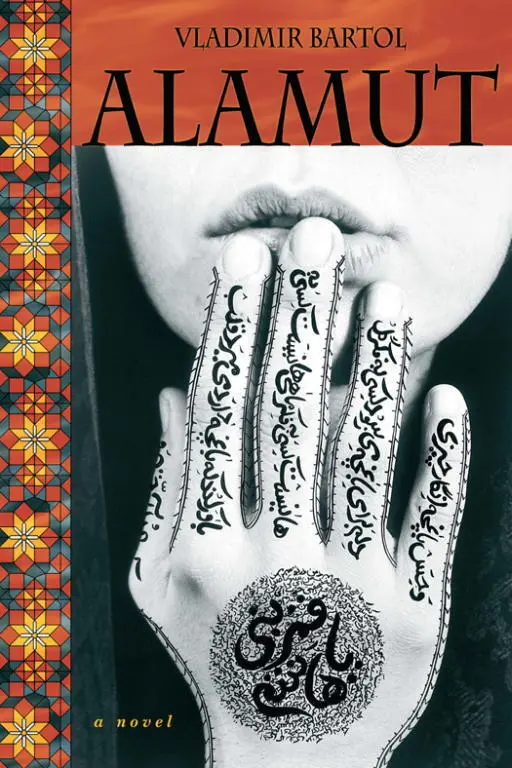
- Название:Alamut
- Автор:
- Издательство:North Atlantic Books
- Жанр:
- Год:2012
- Город:Berkeley
- ISBN:9781583946954
- Рейтинг книги:2.8 / 5. Голосов: 5
-
Избранное:Добавить в избранное
- Отзывы:
-
Ваша оценка:
Alamut: краткое содержание, описание и аннотация
Предлагаем к чтению аннотацию, описание, краткое содержание или предисловие (зависит от того, что написал сам автор книги «Alamut»). Если вы не нашли необходимую информацию о книге — напишите в комментариях, мы постараемся отыскать её.
Alamut — читать онлайн бесплатно полную книгу (весь текст) целиком
Ниже представлен текст книги, разбитый по страницам. Система сохранения места последней прочитанной страницы, позволяет с удобством читать онлайн бесплатно книгу «Alamut», без необходимости каждый раз заново искать на чём Вы остановились. Поставьте закладку, и сможете в любой момент перейти на страницу, на которой закончили чтение.
Интервал:
Закладка:
Yusuf and Suleiman had returned from their morning maneuvers with the novices. The sun bore down on the courtyard relentlessly. They lay on their beds lazily and inertly, chewing on dried fruit and exchanging a few words now and then.
The passions awakened in them, but no longer satisfied, had utterly crippled them. Their heads felt heavy and their eyes were sunken and swollen with blood.
Suddenly Naim burst in on them.
“Ibn Tahir has been to see Sayyiduna. He’s going on a trip.”
This news was like an explosion.
“Where to?”
“Who told you that?”
“I saw him as he was leaving the tower. He didn’t even notice me. It was like he’d gone strange in the head. He looked lost and he was smiling to himself. Then he ordered a soldier to saddle up a horse for him.”
“Is he going to paradise?”
Suleiman jumped off his bed.
“Let’s go see him, Yusuf!”
In the meantime ibn Tahir had cleared out all his possessions. He destroyed the wax cast of Miriam’s bite. He wrapped up his poems in an envelope. When Jafar came, he gave them to him.
“Keep this envelope for me until I return. If I don’t come back within a month, give it to Sayyiduna.”
Jafar promised to do this.
Suleiman and Yusuf rushed into the room. Naim lingered at the door. “You’ve been to see Sayyiduna!”
Suleiman grabbed ibn Tahir by the shoulders and gazed searchingly into his eyes.
“You know?”
“Sure. Naim told us.”
“Then you also know what my duty is.”
He shook loose of his grip. He picked up the bag holding the items Hasan had given him.
Yusuf and Suleiman looked at him woefully.
Jafar nodded to Naim. The two of them withdrew from the room.
“It’s hard, but I have to keep silent,” ibn Tahir said when they were alone.
“At least tell us if we’re going back to paradise.”
Suleiman’s voice was imploring and helpless.
“Be patient. Do everything Sayyiduna orders you to do. He’s looking out for all of us.”
He said goodbye to them both.
“We’re fedayeen,” he added, “the ones who sacrifice themselves. We’ve seen the reward, so we’re not afraid of death.”
He would have liked to embrace them one more time. But he mastered himself, waved to them in farewell, and hurried off toward his horse. He leapt up onto it and ordered the bridge lowered. He said the password and the guard let him leave the fortress. From the canyon he turned around to take one last look. Just as he had several months ago, now he saw the two imposing towers that ruled over their surroundings. That was Alamut, the eagle’s nest, where miracles took place and the fate of the world was forged. Would he see it again? A strange melancholy came over him. At this farewell he felt as though he could cry.
He found a concealed location and changed clothes there. He put everything he didn’t plan to take with him in the bag, which he placed in a hollow and covered with stones.
He had a look at himself. Yes, there was no way he could still be the old ibn Tahir. He was Othman, a student at the university in Baghdad, al-Ghazali’s student. Black trousers, a black jacket, black headgear. This was the color of the Sunnis, infidels, enemies of the Ismaili faith. He carried the book and the letter with the dagger in his billowing sleeves. Over his hip he carried a water bag and a satchel with provisions.
He set out toward the south. He rode the whole day and half the night until the moon came out. Then he found a place to bed down amid some rocks. The next morning from atop a ridge he noticed a large encampment in the valley—the vanguard of the sultan’s army. He steered clear of them and by evening arrived in Rai.
In the tavern where he was planning to spend the night, he learned that emir Arslan Tash was finally getting ready to attack Alamut after all, and that the whole army was marching toward the mountains—this at the sultan’s order, to avenge the shameful defeat of the Turkish cavalry. About the grand vizier he learned nothing.
He could barely wait to go to sleep. With trembling hands he untied the bundle and took out of it the first of the pellets that Hasan had given him for the journey. He swallowed it and waited for it to take effect.
Once again the mysterious power appeared. This time he no longer felt the same weakness as he did the first time. He thought about Miriam, but completely different images drew his attention. Before him he saw gigantic square buildings with tall towers. They glinted in their blinding whiteness. Then they began to melt, as though an unseen hand were crushing them into their components. New cities emerged and round cupolas shone in vivid colors. He felt as though he were the omnipotent ruler in control of it all. The climax came, followed by fatigue and sleep. He woke up late the next morning, feeling as though his arms and legs had been crushed. Oh, why hadn’t he awoken like the first time?
“I have to get going. Fast!” he told himself.
He took a detour around his native town. He was afraid of the memories. His head felt heavy and the sun was beating down hopelessly. His thoughts were dull, only his destination and everything connected with it were clearly visible ahead of him. He had just one wish: to find a place to spend the night as quickly as possible, stretch out, swallow a pellet and yield to its miraculous power.
Outside of Hamadan he caught up with a detachment of armed horsemen. He joined their quartermaster wagons.
“Where are you coming from, Pahlavan?” a sergeant asked him.
“Isfahan. Actually, I’ve been sent from Baghdad with a request for the grand vizier. But in Isfahan I learned that he’s set out down this road after the sultan.”
“You’re looking for His Excellency Nizam al-Mulk?”
The sergeant immediately began to show more respect.
“Yes. I have a request for him. There are other men in Isfahan.”
“Then come with us! His Excellency is in Nehavend, where there’s a military camp now. They’re assembling units there. Word is he’s going to march on Isfahan itself.”
“In the capital I almost fell into the hands of that other one. Completely by accident I learned in a tavern that His Excellency had left for somewhere else. Isn’t there some conflict involving some infidels?”
“Do you mean the Ismailis? They aren’t dangerous. Emirs Arslan Tash and Kizil Sarik will take care of them. There are more important things at stake.”
Ibn Tahir maneuvered his horse right up to the sergeant’s.
“I don’t know what more important things you mean.”
“The rumor is there’s a bitter battle going on over the succession. Nizam al-Mulk wants the first-born, Barkiarok, to be designated the sultan’s heir. But the sultana has been pressuring His Highness to promise the succession to her son Mohammed. The army and the people are for Barkiarok. I once saw him. There’s a real man for you. A soldier from head to foot. What Mohammed will be like, no one can know. He’s barely out of the cradle.”
Before they reached Hamadan, ibn Tahir had found out everything that the people and soldiers were saying about intrigues at the court. In the city he heard that the sultan had already left Nehavend heading for Baghdad. He left the sergeant and the quartermaster wagons, spent the night once again at an inn, and then changed horses and rode farther on toward Nehavend.
From the four corners of the realm, units were arriving at the military camp near Nehavend. Several thousand tents had been pitched on the broad, sun-scorched plain. The horses, mules, and camels chomped on dry grass, chased each other around the camp in herds, dug into the earth, and fled from guards on horseback. Thousands of head of cattle, goats and sheep were being kept in huge pens. In the mornings, shepherds would drive the herds into the hills, where pastures remained green. Detachments of soldiers rode from village to village collecting and plundering fodder for the livestock and anything that was in the least bit edible.
Читать дальшеИнтервал:
Закладка:
Похожие книги на «Alamut»
Представляем Вашему вниманию похожие книги на «Alamut» списком для выбора. Мы отобрали схожую по названию и смыслу литературу в надежде предоставить читателям больше вариантов отыскать новые, интересные, ещё непрочитанные произведения.







Обсуждение, отзывы о книге «Alamut» и просто собственные мнения читателей. Оставьте ваши комментарии, напишите, что Вы думаете о произведении, его смысле или главных героях. Укажите что конкретно понравилось, а что нет, и почему Вы так считаете.