Vladimir Bartol - Alamut
Здесь есть возможность читать онлайн «Vladimir Bartol - Alamut» весь текст электронной книги совершенно бесплатно (целиком полную версию без сокращений). В некоторых случаях можно слушать аудио, скачать через торрент в формате fb2 и присутствует краткое содержание. Город: Berkeley, Год выпуска: 2012, ISBN: 2012, Издательство: North Atlantic Books, Жанр: Историческая проза, на английском языке. Описание произведения, (предисловие) а так же отзывы посетителей доступны на портале библиотеки ЛибКат.
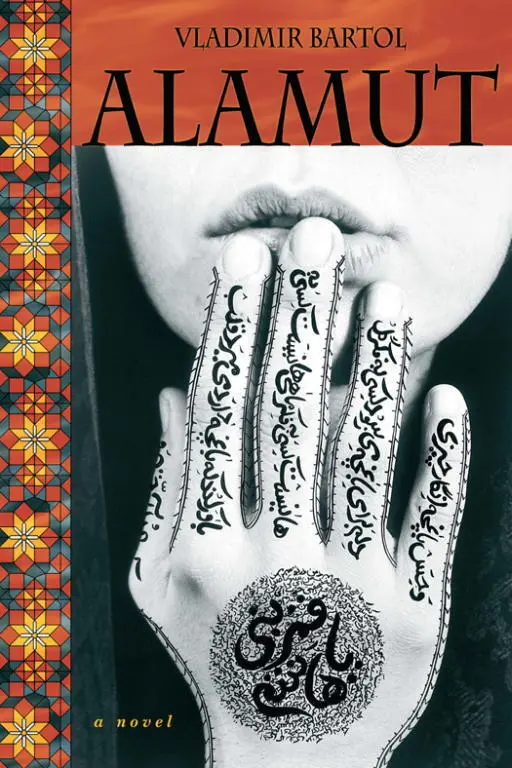
- Название:Alamut
- Автор:
- Издательство:North Atlantic Books
- Жанр:
- Год:2012
- Город:Berkeley
- ISBN:9781583946954
- Рейтинг книги:2.8 / 5. Голосов: 5
-
Избранное:Добавить в избранное
- Отзывы:
-
Ваша оценка:
Alamut: краткое содержание, описание и аннотация
Предлагаем к чтению аннотацию, описание, краткое содержание или предисловие (зависит от того, что написал сам автор книги «Alamut»). Если вы не нашли необходимую информацию о книге — напишите в комментариях, мы постараемся отыскать её.
Alamut — читать онлайн бесплатно полную книгу (весь текст) целиком
Ниже представлен текст книги, разбитый по страницам. Система сохранения места последней прочитанной страницы, позволяет с удобством читать онлайн бесплатно книгу «Alamut», без необходимости каждый раз заново искать на чём Вы остановились. Поставьте закладку, и сможете в любой момент перейти на страницу, на которой закончили чтение.
Интервал:
Закладка:
“Iblis is more than that. Iblis is a traitor to his own master, his sworn enemy.”
Ibn Tahir nodded.
“Whoever is a traitor to the true faith and becomes its enemy is related to Iblis. Because the true faith is Allah’s faith. And only one faith is true.”
“Yes. The Ismaili faith.”
“Correct. Do you know anyone who has betrayed our faith and become its sworn enemy?”
Ibn Tahir looked in his eyes, trying to guess what he was thinking.
“Perhaps you mean the grand vizier?”
“Yes, the same man who murdered your grandfather for professing our faith. He is our Iblis, our evil spirit. You be our archangel and your grandfather’s avenger. Get your sword ready.”
Ibn Tahir clenched his fists. He stood before Hasan as straight as a cypress.
“My sword is ready, Sayyiduna.”
“Do you know the road from Rai to Baghdad?”
“I do. I’m from the town of Sava, which lies on that road.”
“Then listen. You’re to set out along that road. You’ll go to Rai and from there through Sava and Hamadan to Nehavend. But avoid your father’s home! The whole time you have to be thinking about one thing—how to reach your goal. Be on the lookout everywhere and find out where the grand vizier is and what he’s planning to do. I’ve received a report that he’s assembling a large army in Nehavend that he plans to lead against us and his rival in Isfahan, Taj al-Mulk. Are you following all of this? Al-Ghazali is his friend. From now on you’re going to be al-Ghazali’s student Othman, bringing him a message from your teacher. So take his book along with you. Here’s the black garb of a Sunni seminarian for you, here’s a coin purse with money for the road, and here’s a letter for the grand vizier. The seal you see on it will clear the way for you.”
Ibn Tahir took the black clothing from him and examined it with a kind of happy excitement. He fixed the coin purse to his belt and put the envelope under his robe.
“You’ve learned from Hakim how to behave in the presence of the grand vizier. When you ride out from Alamut, you’ll take along everything I’ve given you in a bag. Once you’re away from the fortress you’ll find a concealed place to change clothes in and get rid of anything that might give you away. I know Nizam al-Mulk. When he hears that al-Ghazali has sent you, he’ll welcome you with open arms. Now listen carefully! There is a long, sharp dagger hidden in that sealed letter. Before you hand the envelope to the vizier, secretly take the dagger out of it. While the vizier is opening the letter, you thrust it hard into his neck. If you notice just a drop of blood, you can know that you’ve succeeded. But be careful not to injure yourself with it first—the tip of the dagger has been tempered in a terrible poison. If you even graze yourself with it, you won’t be able to complete your task and the paradise you want so much will be lost to you forever.”
Pale, but with eyes shining, ibn Tahir listened to him.
“And… what do I do then?”
Hasan gave him an abrupt glance.
“Then… then commend yourself to Allah. The gate to your paradise will be open to you. No one will be able to take that away from you at that point. The soft pillows are already spread out over the carpets. Miriam is waiting for you on them, surrounded by her and your servants. If you fall, you’ll go flying straight into her embrace. Do you understand me?”
“I understand, Sayyiduna.”
He bowed and quickly kissed Hasan’s hand.
Hasan shuddered. Ibn Tahir was too preoccupied with himself to notice this. Then the commander uncovered a shelf and took down from it the gold chest that ibn Tahir already knew. He opened it and shook several pellets out of it onto a linen cloth.
“One for each evening. They’ll bring you closer and closer to paradise. But be sure to save the last one for just before your audience with the grand vizier. Take good care of them, because they’re the key that will unlock the gates to paradise for you.”
He put his arm around his shoulders.
“Now off with you, my son.”
Dazed, pale, proud and strangely moved, ibn Tahir left him. Hasan watched until he disappeared behind the curtain. Then he grabbed at his heart. He needed air. He rushed to the top of the tower, where he took deep breaths.
“There’s still time,” he told himself.
It would be good to die now , he thought. Just one firm decision to throw himself over the battlements, and everything would be over. But God knows where he would awaken after that.
The night before, when he had learned about the murder of Alkeini, he had been unbelievably close to this state. It took the grand dais a long time to bring him back to consciousness. When he came to, his first thought was that he had died and was now in some different world. A crazed fear overcame him. “So there is something after death,” he told himself. He felt horrified by his whole life. He was conscious that he had done everything as though there were just a great nothing waiting after death. It was only the voices of his two friends that had summoned him back to reality.
Within a moment he had felt steady again. Praise be to Allah, the weakness had passed. He dismissed the grand dais. Husein Alkeini, his right hand, dead, murdered by his own son! He would execute the law mercilessly. Ibn Tahir would have to set out on his mission. He wrote a few words of a letter and sealed it. He took a sharp, awl-like dagger that looked just like a writing instrument and dipped it in poison. He let it dry. Then he threw himself on his bed and slept the sleep of the dead.
The dais and other commanders discussed the murder in Khuzestan passionately. What was Hasan going to do? Would he really observe the law? Would he sign his own son’s death warrant?
“Ibn Sabbah is in a difficult place,” Abdul Malik observed. “Husein Alkeini was his best associate, but the murderer is his own son.”
“The law is above everything,” Ibrahim said.
“Go on! One crow doesn’t attack the other.”
The Greek laughed. Ibrahim cast an ill-tempered glance at him.
“He has no small responsibility.”
“I know, dai Ibrahim. But it’s hard for me to imagine a father leading his son to the block.”
“Hosein is a member of the Ismaili brotherhood.”
“It’s true,” Abu Soraka commented. “He wrote the law and now he’s caught in it himself.”
“It’s easy for us to talk,” Manuchehr said. “But he’s facing the moment when he’ll have to pass sentence on his son.”
“It’s easier to pronounce them over other men’s sons,” the Greek muttered.
“It’s easy to mete out justice to others,” Abu Soraka added.
“I wouldn’t want to be in the commander’s skin,” Abdul Malik said. “Alkeini was more than a son to him. He owes half his success to him.”
“Fathers aren’t always responsible for the actions of their sons,” Ibrahim said.
“But if he condemns his son, people will say, ‘What a cruel father!’ He has the power to change the law, and he hasn’t used it.”
So spoke Abu Soraka.
The Greek added, “Strangers are going to laugh at him. Idiot! they’ll say. Could he really not find a way to sidestep the law?”
Ibrahim took a turn. “The faithful would rebel if the law weren’t carried out to the letter. The purpose of every law is to have universal applicability.”
“It’s true, our commander is in a mean vice,” the Greek suggested. “He’s lost his most trusted shield-bearer at the most critical moment. Who’s going to collect taxes for him in Khuzestan now? Who’s going to ambush and plunder infidel caravans? He may very well not have any option but to carry out the full measure of the law.”
Читать дальшеИнтервал:
Закладка:
Похожие книги на «Alamut»
Представляем Вашему вниманию похожие книги на «Alamut» списком для выбора. Мы отобрали схожую по названию и смыслу литературу в надежде предоставить читателям больше вариантов отыскать новые, интересные, ещё непрочитанные произведения.








Обсуждение, отзывы о книге «Alamut» и просто собственные мнения читателей. Оставьте ваши комментарии, напишите, что Вы думаете о произведении, его смысле или главных героях. Укажите что конкретно понравилось, а что нет, и почему Вы так считаете.