Dan Smith - The Child Thief
Здесь есть возможность читать онлайн «Dan Smith - The Child Thief» весь текст электронной книги совершенно бесплатно (целиком полную версию без сокращений). В некоторых случаях можно слушать аудио, скачать через торрент в формате fb2 и присутствует краткое содержание. Город: New York, Год выпуска: 2013, ISBN: 2013, Издательство: Pegasus Books, Жанр: Историческая проза, Триллер, на английском языке. Описание произведения, (предисловие) а так же отзывы посетителей доступны на портале библиотеки ЛибКат.
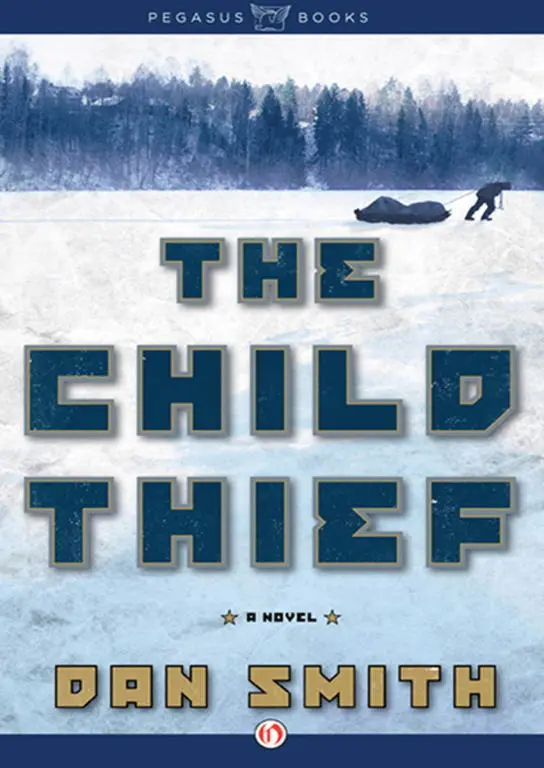
- Название:The Child Thief
- Автор:
- Издательство:Pegasus Books
- Жанр:
- Год:2013
- Город:New York
- ISBN:9781480419445
- Рейтинг книги:5 / 5. Голосов: 1
-
Избранное:Добавить в избранное
- Отзывы:
-
Ваша оценка:
The Child Thief: краткое содержание, описание и аннотация
Предлагаем к чтению аннотацию, описание, краткое содержание или предисловие (зависит от того, что написал сам автор книги «The Child Thief»). Если вы не нашли необходимую информацию о книге — напишите в комментариях, мы постараемся отыскать её.
and
, a troubled First World War veteran races across the frozen steppe of 1930s Ukraine to save a child from a shadowy killer with unthinkable plans. December 1930, Western Ukraine. Luka is a war veteran who now wants a quiet life with his family. His village has, so far, remained hidden from the advancing Soviet brutality, but everything changes the day the stranger arrives, pulling a sled bearing a terrible cargo. The villager’s fear turns deadly and they think they can save themselves, but their anger has cursed them: when calm is restored, a little girl has vanished. Luka is the only man with the skills to find who could have stolen a child in these frozen lands - and besides, the missing girl is best friend to Luka’s daughter, and he swears he will find her. Together with his sons, Luka sets out in pursuit across lands ravaged by war and gripped by treachery. Soon they realise that the man they are tracking is no ordinary criminal, but a skilful hunter with the child as the bait in his twisted game. It will take all of Luka's strength to battle the harshest of conditions, and all of his wit to stay a step ahead of Soviet authorities. And though his toughest enemy is the man he tracks, his strongest bond is a promise to his family back at home.
The Child Thief — читать онлайн бесплатно полную книгу (весь текст) целиком
Ниже представлен текст книги, разбитый по страницам. Система сохранения места последней прочитанной страницы, позволяет с удобством читать онлайн бесплатно книгу «The Child Thief», без необходимости каждый раз заново искать на чём Вы остановились. Поставьте закладку, и сможете в любой момент перейти на страницу, на которой закончили чтение.
Интервал:
Закладка:
The door opened wide, allowing a small amount of light to enter. It was weak and orange, of little real consequence, but to us, deprived of light, it was a connection to whatever was on the other side of the door.
The fragile glow slipped across the floor and reached for the face of the man who owned the voice I knew as Kostya. I saw him for the first time, drawn and thin, and I realised I hadn’t asked him how long he had been in this room. His beard was wild and scruffy, clinging to sunken cheeks, with patches of grey and places where it grew in tufts as if it had either been torn out or had fallen out. He reminded me of a starving feral dog with its stomach arched and boned, its hair missing in clumps. His skin was fissured into deep wrinkles across his forehead and around his sunken eyes. He was wearing a shirt and a waistcoat, the standard dress of a peasant, with dirty trousers and worn boots on his feet.
He looked over with watery eyes, but when hands took my shoulders and dragged me to my feet, Kostya looked away.
I was dragged backwards from the room before I even had a chance to stand, then hauled to my feet by opre soldier while another kicked the door closed and locked it once regain. The sound of the door slamming back into place reverberated from the church walls, filling my ears.
It was colder out there than it had been inside the room, and there was a harsh feeling of being taken out, like a traumatic birth. Inside it had been dark and disorientating, the stench of fear and urine in the air, but it had been warm, and now I was back in the cold, my bare feet on the freezing stone floor. In there it had been terrible – the waiting and the not knowing – but it had been safer than I knew it was out here.
23
The soldiers didn’t speak while they took me to the table in the centre of the church. They pushed me down into a chair and stepped away, one on each side, just a few feet away, and there they remained silent. Waiting.
On the table the candles flickered, flames twisting in the air, their light glinting on the surface of a heavy glass tumbler of water that stood by a dented metal jug. I sat straight in the chair, staring at the wooden crucifix lying on the table close to the half-burned candles. Its main upright was as long and thick as my forearm, and I could see where it had once stood in a base. It was not ornate, but a simple representation of the cross. I stared at it and prepared for what was to come. I tried to relax, calm my mind. I tried to close myself off and pretend I wasn’t here. I was at home, at the table in the kitchen. The pich was alight and warm. The table was laid with fresh bread and salo and mushrooms that Natalia had picked from the woods in the summer. There was a full bottle of horilka . And my family was there. Natalia beside me, my sons and my daughter around the table.
But I couldn’t hold the image in my head. I was cold. I was tired and hungry. And for all my strength – for all the things I had seen and done – I was afraid.
When the main church door opened, I could see it was night. I saw no stars or moon, just the darkness.
Two men entered and closed the door behind them. The first was younger than me, maybe in his early thirties, and he was clean shaven. Light blue eyes as cold as the night outside, and thin lips that were dry and broken by the weather. He wore a heavy coat and a small-peaked wide-crowned cap pulled tight on his head. His knee-length leather boots were polished to a proud shine. In his left hand he carried my satchel, and in his right he held my rifle.
The second man was closer to me in age and was dressed in the same way as Kostya, except that he wore an ill-fitting coat and had a cap on his head. His trousers were bagging around the knees because the bottoms were tucked into his boots. The boots looked new. He was bearded and dark and I thought he might be from the village, perhaps a loyal communist who was now part of a newly formed local soviet. Whether he was a true communist or just someone trying to save his own life and that of his family was irrelevant. He did what was expected of him.
They came along the aisle between the discarded and broken pews, and they stopped in front of the table. The young man looked down at me. He stood for a while, not speaking, then made a satisfied sound, low in his throat. He nodded and placed the satchel and rifle on the table, out of my reach, before removing his hat and laying it down so the red star was facing me. The hat looked as if it might be new; the royal-blue crown was still neat and clean, the red band not yet marked with mud and grime, the Soviet star pristine.
It was cold in the church, but the young man took off his coat and draped it over the back of one of the chairs, standing before me so I could see his uniform. The dark kitel tunic with the red collar tabs and gleaming black buttons. He was showing me who he was, and though I was unfamiliar with his uniform, I guessed the man was OGPU, perhaps the head of a provincial department. We used to call them Chekists, but the name made no difference. Whatever you called them, political police were renowned for their power and their brutality.
The young policeman sat down and folded his hands, resting them on the table. He looked me directly in the eye. The man beside him placed his hands in his lap and looked at the tabletop.
I met the policeman’s stare only for a few seconds before I deferred to him, looking down. The policeman responded by taking the glass of water in one hand and drinking its contents in a few long gulps. He refilled it from the jug, then wiped his lips with his fingers before folding his hands again.
‘What’s your name?’ He spoke in Russian.
I opened my mouth to reply but my tongue was dry.
‘Name?’ He asked a second time without taking his eyes off me.
‘Luka Mikhailovich Sidorov.’
He nodded. ‘Russian.’
‘Yes.’
‘Good. Then this should be a civilised conversation. My name is Sergei Artemevich Lermentov and I am the head of the provincial OGPU department.’ I remembered the name: Lermentov. The man who’d been in Uroz – the village Aleksandra came from.
He sat back and crossed his arms, still staring. ‘Can you tell me what you’re doing here, Luka?’
‘Your soldiers brought me here.’
‘That’s not what I meant.’
He removed a packet of papirosa cigarettes from his pocket and took one out. He left the packet on the table and crimped the tube of the cigarette before putting it into his mouth. Then he produced a match and scraped it across the surface of the table that had once been an altar and he touched it to the tobacco. He drew in a deep drag and blew it out without leaning away. The smoke came at me in a stream, tinged with the smell of alcohol.
‘Why are you in this shit hole? Ukraine, I mean. Why would any Russian want to be here?’
‘I fought here,’ I said. ‘And when we were demobilised I stayed.’
‘Red Army?’
‘Yes.’
‘So you fought the anarchists, you crushed their resistance and then you stayed?’
‘Yes.’
‘Interesting.’ He dragged on the cigarette again, raising his eyes as if he were mulling over what I’d just told him.
‘And before that?’ Lermentov asked. ‘Before the Red Army?’
‘Before that I fought for the Imperial Army.’
‘A war hero, no doubt.’
‘Just a soldier.’
‘Is that where you got this?’ He reached across and took up my rifle. He drew back the bolt as if to show that it wasn’t loaded, then he pulled it to his shoulder and sighted across the church using the scope.
‘Yes.’
‘Of course, we have better rifles now. Better marksmen.’ The policeman held the rifle out for one of the soldiers to take, then he waved him away with one hand. ‘Get rid of it.’
Читать дальшеИнтервал:
Закладка:
Похожие книги на «The Child Thief»
Представляем Вашему вниманию похожие книги на «The Child Thief» списком для выбора. Мы отобрали схожую по названию и смыслу литературу в надежде предоставить читателям больше вариантов отыскать новые, интересные, ещё непрочитанные произведения.







Обсуждение, отзывы о книге «The Child Thief» и просто собственные мнения читателей. Оставьте ваши комментарии, напишите, что Вы думаете о произведении, его смысле или главных героях. Укажите что конкретно понравилось, а что нет, и почему Вы так считаете.