Dan Smith - The Child Thief
Здесь есть возможность читать онлайн «Dan Smith - The Child Thief» весь текст электронной книги совершенно бесплатно (целиком полную версию без сокращений). В некоторых случаях можно слушать аудио, скачать через торрент в формате fb2 и присутствует краткое содержание. Город: New York, Год выпуска: 2013, ISBN: 2013, Издательство: Pegasus Books, Жанр: Историческая проза, Триллер, на английском языке. Описание произведения, (предисловие) а так же отзывы посетителей доступны на портале библиотеки ЛибКат.
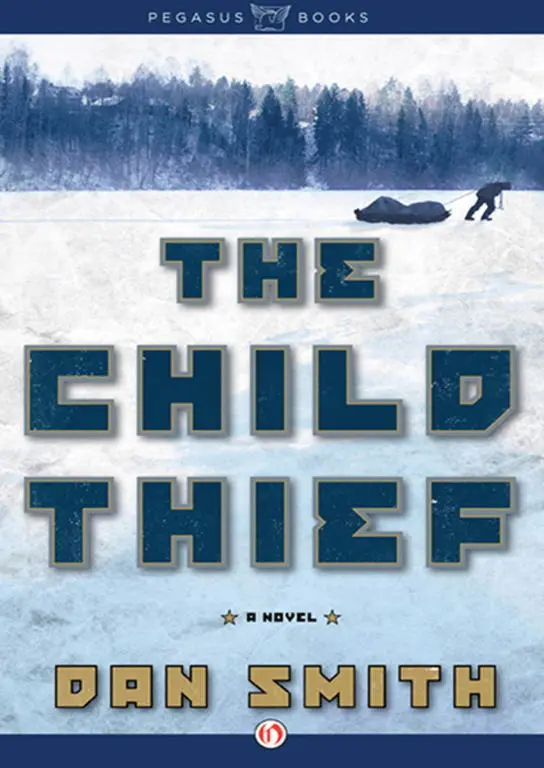
- Название:The Child Thief
- Автор:
- Издательство:Pegasus Books
- Жанр:
- Год:2013
- Город:New York
- ISBN:9781480419445
- Рейтинг книги:5 / 5. Голосов: 1
-
Избранное:Добавить в избранное
- Отзывы:
-
Ваша оценка:
The Child Thief: краткое содержание, описание и аннотация
Предлагаем к чтению аннотацию, описание, краткое содержание или предисловие (зависит от того, что написал сам автор книги «The Child Thief»). Если вы не нашли необходимую информацию о книге — напишите в комментариях, мы постараемся отыскать её.
and
, a troubled First World War veteran races across the frozen steppe of 1930s Ukraine to save a child from a shadowy killer with unthinkable plans. December 1930, Western Ukraine. Luka is a war veteran who now wants a quiet life with his family. His village has, so far, remained hidden from the advancing Soviet brutality, but everything changes the day the stranger arrives, pulling a sled bearing a terrible cargo. The villager’s fear turns deadly and they think they can save themselves, but their anger has cursed them: when calm is restored, a little girl has vanished. Luka is the only man with the skills to find who could have stolen a child in these frozen lands - and besides, the missing girl is best friend to Luka’s daughter, and he swears he will find her. Together with his sons, Luka sets out in pursuit across lands ravaged by war and gripped by treachery. Soon they realise that the man they are tracking is no ordinary criminal, but a skilful hunter with the child as the bait in his twisted game. It will take all of Luka's strength to battle the harshest of conditions, and all of his wit to stay a step ahead of Soviet authorities. And though his toughest enemy is the man he tracks, his strongest bond is a promise to his family back at home.
The Child Thief — читать онлайн бесплатно полную книгу (весь текст) целиком
Ниже представлен текст книги, разбитый по страницам. Система сохранения места последней прочитанной страницы, позволяет с удобством читать онлайн бесплатно книгу «The Child Thief», без необходимости каждый раз заново искать на чём Вы остановились. Поставьте закладку, и сможете в любой момент перейти на страницу, на которой закончили чтение.
Интервал:
Закладка:
Two men in uniform, rifles over their shoulders, stood at the base of those damaged steps, leaning against a part of the balustrade that was still intact. They were smoking cigarettes and looking in our direction. I didn’t need to see the man behind me to know this was where he wanted me to go. This was where they had made their jail in Sushne.
I walked on, heading towards the church, drawing no looks because there was no one in the street to watch me. There was no one outside but the two soldiers by the steps and the two behind me on horseback.
The sun had almost set now, the sky was dark with cloud, and there were lights on in some of the windows. Weak lights that flickered and melted the frost that had formed on the glass.
When I reached the steps of the church, the two soldiers came forward, flicking their cigarettes away and moving to either side of me, taking my arms.
‘Put him with the rest,’ said Yakov, and I heard his horse turn and move away.
The soldiers said nothing. They gripped me tight and bustled me up the steps as if I had resisted. One of them put his booted foot against the door and pushed it open.
Inside, the church was dim and smelled of stone and wood. It was a simple building, like the one in Vyriv, perhaps a little larger. From this place of faith, however, all traces of religion had been stripped away. The simple wooden benches, once arranged before the altar, were now swept aside and roughly piled around the edges. Some of them had been broken with boots and axes, kicked and cut for easy firewood. The altar itself had been stripped of its adornment and was now just a sturdy wooden table in the centre of the room. While it had once been pristine and well cared for, it was now functional and basic. Upon it there were no candlesticks, but there were candles, stuck in their own wax to secure them to the uneven surface. One or two of the candles were burning with strong flames that danced in the breeze from the open door, trailing capillaries of black smoke, giving enough light to see the wooden crucifix discarded on the table and dark patches on the walls where icons had been removed. They had been smashed and burned in the centre of the village along with any other symbols of religion.
The soldiers’ boots were loud on the stone floor, the pad of my own bare feet inaudible as we went to the far end of the church, where there was a single door in the wall. We stopped a few feet from it, and one of the soldiers released his grip, running his hands over my clothes, squeezing my pockets, feeling for any belongings. The other stepped forward, taking a key from his belt, and when the first soldier had finished searching me, the second unlocked the door and his comrade pushed me into the blackness.
The door shut behind me and the key turned in the lock.
I stood while my eyes grew accustomed to the darkness. The smell was not of wood and stone in there, but of sweat and fear. Of human waste.
The air was thick with it, closing around me.
‘Who is that?’
A single voice in the dark. A man speaking Ukrainian. Then a cough.
The blackness became grey as my eyes took in what light was available, but I could still see very little inside that room. I guessed it was the place where the priest would have prepared for mass, and that it had no windows, explaining the minimal light.
‘Who is it?’ The same voice. Weak. An old man with a dry throat.
‘No one,’ I answered, putting my hands to the door, running my fingers around its edges, feeling its contours. I could hear the receding footsteps of the soldiers and I put an ear to the wood, listening until they had gone. Then I took the handle and shook the door, barely even rattling it in its frame, it was so solid and well set. I felt the keyhole and crouched to look through into the church, but there was little to see other than the table with the crucifix and the candles burning on it. I felt further, testing the large iron hinges, slipping my fingertips beneath the door and trying to find any way it might open.
‘We’Ve all tried it,’ said the voice. ‘Every one of us.’
I stopped, stood, took a step forward, my feet catching on something that moved and pulled away, accompanied by a sharp intake of breath. A person’s leg, outstretched.
‘I’ m sorry.’
‘Sit down,’ said a voice, this one different, but with the same dryness, the same weariness. ‘Sit down before you hurt some–one.’
I touched the section of wall beside the door and put my back to it, sliding down, grateful for the relief in my legs.
Reaching out, I pulled one foot up, lodging it on the knee of my other leg and rubbing some life back into it. Already the feeling was coming back and the intensity of the pain was increasing.
‘You’re from this village?’ said the first voice.
‘No.’
‘What’s your name?’
I hesitated. ‘Luka Mikhailovich.’
‘Ah. Luka. A strong name. You’ll do well. You’ll survive with a name like Luka. It’s the Mishas and the Sashas that find it hard. My name is Konstantin Petrovich. Kostya. That’s a good name too.’
By now my eyes had begun to accept the tiniest light which filtered through the keyhole and beneath the door, and I could see the faint shadow of the man who had spoken. He sat opposite, against the other wall, but he shifted when he spoke his name, and I understood he was holding out his hand.
I leaned forward and took it.
‘Our fellow prisoners,’ he said, ‘are my brother Evgeni Petrovich and my neighbours Yuri Grigorovich and Dimitri Markovich.’
I immediately thought of the man whose daughter I had come to find. My own brother-in-law, Dimitri, lying dead in a field with his wife waiting for him at home, but I turned my head, looking for the dark smudges of the other men, reaching out and shaking their hands in a solemn act of mutual understanding.
‘But there are no formalities here,’ said Yuri Grigorovich. ‘We’re all friends. Call me Yuri.’
‘Where are you from?’ Kostya asked. ‘What village?’
Even here, among these other prisoners, I wanted to protect my home from the men who might destroy its heart. I didn’t know the people with whom I was imprisoned, but I knew of the OGPU and I knew of the activists sent to control our land. Any of these men might be here to gain my trust, find out something that might be of use to them. There were people everywhere, well placed and well trained to turn neighbour against neighbour, husband against wife, father against son. Any one of them might be a spy.
‘No village,’ I said. ‘I live alone with my daughter, close to the forest.’
‘No wife?’
‘No. The famine was not kind to us.’ I hated saying it, denying my own wife.
‘I’m sorry to hear it. You farm?’
‘Nothing to speak of. I hunt for food and skins.’
‘So what brings you here?’ asked Kostya, then he chuckled to himself, a low throaty sound that again made me picture him as an old man, his skin beaten by the weather, his hands hardened by years of working on the land. ‘I think you probably should’ve stayed in the forest.’
‘I’m looking for my daughter,’ I said.
‘Your daughter?’
‘She’s lost.’ I took my foot in my hands and began rubbing again.
‘How does one lose their daughter?’ asked Yuri.
‘It’s a long story.’
‘We have a long time.’
‘She wandered off, that’s all. I was following her tracks when the soldiers found me on the road.’
‘That’s unlucky.’
‘Do you know anything about her?’ I said.
For a while the men were silent. No one spoke.
‘Have I said something to offend you?’ I asked.
‘Tell him why you’re here, Dima.’
I waited for Dimitri Markovich to speak. He cleared his throat, shuffled a little, moved against the hard stone floor.
Читать дальшеИнтервал:
Закладка:
Похожие книги на «The Child Thief»
Представляем Вашему вниманию похожие книги на «The Child Thief» списком для выбора. Мы отобрали схожую по названию и смыслу литературу в надежде предоставить читателям больше вариантов отыскать новые, интересные, ещё непрочитанные произведения.









Обсуждение, отзывы о книге «The Child Thief» и просто собственные мнения читателей. Оставьте ваши комментарии, напишите, что Вы думаете о произведении, его смысле или главных героях. Укажите что конкретно понравилось, а что нет, и почему Вы так считаете.