Nicola Griffith - Hild
Здесь есть возможность читать онлайн «Nicola Griffith - Hild» весь текст электронной книги совершенно бесплатно (целиком полную версию без сокращений). В некоторых случаях можно слушать аудио, скачать через торрент в формате fb2 и присутствует краткое содержание. Город: New York, Год выпуска: 2013, ISBN: 2013, Издательство: Farrar, Straus and Giroux, Жанр: Историческая проза, на английском языке. Описание произведения, (предисловие) а так же отзывы посетителей доступны на портале библиотеки ЛибКат.
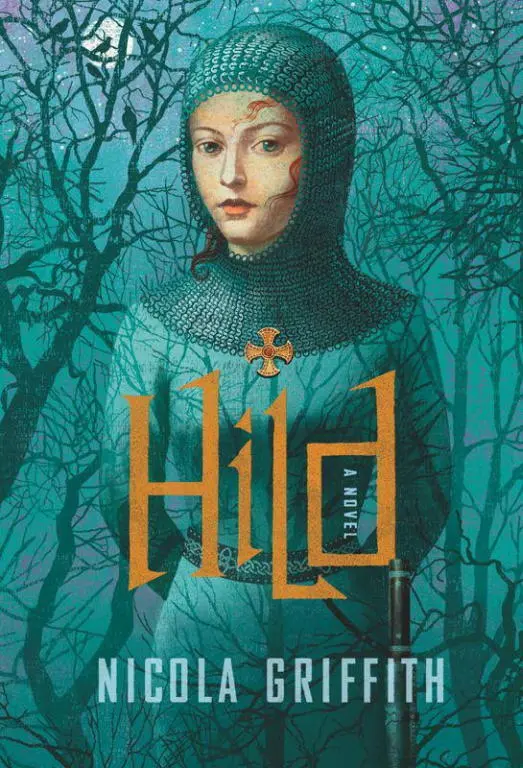
- Название:Hild
- Автор:
- Издательство:Farrar, Straus and Giroux
- Жанр:
- Год:2013
- Город:New York
- ISBN:978-0-374-28087-1
- Рейтинг книги:5 / 5. Голосов: 1
-
Избранное:Добавить в избранное
- Отзывы:
-
Ваша оценка:
Hild: краткое содержание, описание и аннотация
Предлагаем к чтению аннотацию, описание, краткое содержание или предисловие (зависит от того, что написал сам автор книги «Hild»). Если вы не нашли необходимую информацию о книге — напишите в комментариях, мы постараемся отыскать её.
But now she has only the powerful curiosity of a bright child, a will of adamant, and a way of seeing the world—of studying nature, of matching cause with effect, of observing her surroundings closely and predicting what will happen next—that can seem uncanny, even supernatural, to those around her.
Her uncle, Edwin of Northumbria, plots to become overking of the Angles, ruthlessly using every tool at his disposal: blood, bribery, belief. Hild establishes a place for herself at his side as the king’s seer. And she is indispensable—unless she should ever lead the king astray. The stakes are life and death: for Hild, for her family, for her loved ones, and for the increasing numbers who seek the protection of the strange girl who can read the world and see the future.
Hild is a young woman at the heart of the violence, subtlety, and mysticism of the early Middle Ages—all of it brilliantly and accurately evoked by Nicola Griffith’s luminous prose. Working from what little historical record is extant, Griffith has brought a beautiful, brutal world—and one of its most fascinating, pivotal figures, the girl who would become St. Hilda of Whitby—to vivid, absorbing life.
Hild — читать онлайн бесплатно полную книгу (весь текст) целиком
Ниже представлен текст книги, разбитый по страницам. Система сохранения места последней прочитанной страницы, позволяет с удобством читать онлайн бесплатно книгу «Hild», без необходимости каждый раз заново искать на чём Вы остановились. Поставьте закладку, и сможете в любой момент перейти на страницу, на которой закончили чтение.
Интервал:
Закладка:
Like Osric’s house at Arbeia, its bones were stone and brick, but it was rebuilt with elm and oak and pine and hung with tapestry and embroideries. Their bed was big, with a padded bench at the foot, and a little table against the northwest wall under the high window—shuttered now, but not proof against the smell of yeast and rising dough and, in the mornings, baking bread from the giant ovens to the east. There were specially built shelves, faced with polished slate, for lamps.
A taper burnt there now, lighting their supper.
Begu leaned forward for her ale, and a curl of hair dabbled in her lamb stew. Hild reached over and lifted it out without comment.
“How am I supposed to keep it out of things if we can’t bind it for the ritual? And what if it’s windy in the morning?”
It would be windy. It was Œstremonath. “The walls should shelter the church well enough.” The church was only a frame and roof in the principia courtyard.
Begu sucked the hair clean and tucked it back into its braid. “Here, eat some more. Who knows how long we’ll have to go hungry tomorrow.”
The baptism of a king would involve more ceremony than that of an infant. A king, two æthelings, Hild and Begu, Osric and Oswine and little Osthryth, Coelfrith, Coifi, and two dozen assorted thegns and gesiths, including Oeric.
Hild ate some of the stew.
“I hope I get all the words right,” Begu said.
“You’ll be fine.”
“He seems like such a solemn god. And fussy. Now, look, you’ve eaten the last of the stew.” She twisted on her stool. “Gwladus!” Gwladus put her head through the curtain. “Oh, for Eorðe’s sake. What do I keep telling you? Don’t pop your head in and out like a woodpecker from its hole. Someone will bite it off. Try to behave.” She lifted her bowl. Gwladus nodded and vanished. “Why can’t she learn? I should have her whipped.”
Gwladus did it because she got to lean forward and show her breasts. Showing off her best points was a habit that had saved her life more than once. And she did have good points.
“They don’t seem to like jokes,” Begu said. “Now what’s that look for? The Christians. They don’t like jokes. I don’t think their god does, either. I asked the queen for a funny story about the Christ, like the one about Ing tricking Herthe with the acorns, and she had to think for a while, and then told me about two villages called Sodom and Gomorrah and God-the-Father turning someone’s wife into salt, which wasn’t funny, and a horrible story about a man called Abram who was supposed to kill his son just because this God-the-Father said so. Not even any bargaining. Just obedience, like a wealh. Imagine! Imagine what Edwin king would say to Thunor if he suggested he kill Eadfrith or Osfrith just because. Which reminds me, Clotrude is very near, your ma thinks so, too. And she thinks it’s a son.”
Hild nodded, wondering about Hereswith. I am with child. The letter had only come two months ago but who knew when it was sent?
“What will I do if I get the words wrong tomorrow?”
“You won’t,” Hild said. “All you have to do is say your name. You know your name. And then swear against their demon Satan and for the Christ.”
“And his father, and the holy breath—or is it flame? That bit never makes sense.”
“No.” She didn’t like to think about it. James talked about a Holy Fire, a cleansing fire. Perhaps it meant being cleansed of the memory of the grit and slide of blade into spine. One quick sear, he’d said, and done, like a cauterising iron. But he had never tended a cauterised wound. Most swelled, turned angry, and leaked stinking pus. But her mother would have mentioned pain. But perhaps her mother hadn’t killed as many people as she had. She put it from her mind, scraped the bowl clean, and licked her fingers. The lamb tasted good this year.
“And I don’t understand why the Christ, or whichever one it is, is so squeamish. No blood in the church. No woman with her monthly bleeding. It makes no sense.”
James hadn’t thought to mention that to Hild. Perhaps they didn’t think a hægtes bled.
“And wearing white. What god likes plain old white and no jewels?”
“It’s so those priests can see if you’re bleeding,” Gwladus said, putting the bowl of stew on the table, along with a wedge of crumbly new white cheese and fresh watercress.
“What would they do if you are?” Begu said.
“No doubt nail you to the door, like the Christ,” Gwladus said. “And jam a hat of thorns on your head.” She laid her hand, brief and light as a drift of hawthorn blossom, on Hild’s head.
Begu didn’t notice. “You’d think their god was a slave, the way he let himself be treated.” She ladled herself some stew. The curtain swished behind Gwladus. “Your bleeding’s due soon, isn’t it?”
“Not tomorrow.”
“Better wear a rag just in case, or it’s a hat of thorns for you.” She paused, spoon over her bowl. “Do you suppose we’ll feel any different? I asked Cian if he felt different, afterwards. He said he felt… better. But he wouldn’t tell me how.”
No, thought Hild, because then he’d have to explain what he’d felt bad about, and neither of them wanted Begu to know what they did in war.
“Then I asked your mam, and she put on her meek-as-milk face and said it made her a better person, but the queen was listening, so you know how much that means.”
Hild nodded. Saying what made the people in power think well of her was as much a habit for Breguswith as showing her curves was for Gwladus.
“Do you think it odd that we’ll be swearing fealty to a god, like a gesith to his king?” When Hild didn’t say anything, Begu sighed. “Now what are you thinking about?”
“Um? Oh. My mother. And Gwladus. How they’re not so different.”
To Hild’s astonishment, Begu just nodded. She picked up her knife. “Let’s eat some of this lovely cheese. Let’s eat a lot of it. It’ll be a long morning.” She paused, cheese in hand. “What do you suppose the body of a god tastes like?”
“It’s bread. Like the bread Coifi buried at the root of the hedge.”
“But bread dipped in god juice. I expect it tastes like the air from a forge, buttered.”
Buttered?
“… cheese, then you can tell me about this Uinniau who’s coming from Rheged to witness for the king.”
Uinniau, prince of Rheged, sister-son of Rhoedd king, stood by the font. He was older than Cian, and though he had done some growing, he still was not tall. He still was freckled. His eyes still were the clear hazel Hild remembered. But he was no longer the boy who had bounced like an apple on the back of his too-large mare on the way from Caer Luel to Broac. He was there to stand in for his uncle as British witness to the baptism of Edwin, overking of the Anglisc. He wore the air of power the role lent him.
The font was the beautifully carved stone Paulinus had taken from Elmet, now mortared over the old well in the principia courtyard and bright with gilding and fresh red and blue paint. The font took up the north corner of what would become the church but was now merely a freshly sawn timber frame and a roof, open to the air. Beyond the brick of the principia, wind twisted the clouds this way and that, sometimes tearing them open and loosing flurries of cold rain, sometimes driving the sky clean for a moment and making way for a brief flood of daffodil-yellow sun. When the sun shone for more than a few heartbeats, it raised a strong smell of the dung with which the gardens north and west of the principia had been manured that morning.
Uinniau—and the priests, and the baptismal candidates and their sponsors—stayed dry and relatively sheltered. The crowd spilling into the courtyard was not so lucky. They didn’t seem to mind. They’d all enjoyed the big Easter breakfast the queen had ordered for anyone within the walls who asked. Anyone who wasn’t about to be baptised.
Читать дальшеИнтервал:
Закладка:
Похожие книги на «Hild»
Представляем Вашему вниманию похожие книги на «Hild» списком для выбора. Мы отобрали схожую по названию и смыслу литературу в надежде предоставить читателям больше вариантов отыскать новые, интересные, ещё непрочитанные произведения.





Обсуждение, отзывы о книге «Hild» и просто собственные мнения читателей. Оставьте ваши комментарии, напишите, что Вы думаете о произведении, его смысле или главных героях. Укажите что конкретно понравилось, а что нет, и почему Вы так считаете.