Nicola Griffith - Hild
Здесь есть возможность читать онлайн «Nicola Griffith - Hild» весь текст электронной книги совершенно бесплатно (целиком полную версию без сокращений). В некоторых случаях можно слушать аудио, скачать через торрент в формате fb2 и присутствует краткое содержание. Город: New York, Год выпуска: 2013, ISBN: 2013, Издательство: Farrar, Straus and Giroux, Жанр: Историческая проза, на английском языке. Описание произведения, (предисловие) а так же отзывы посетителей доступны на портале библиотеки ЛибКат.
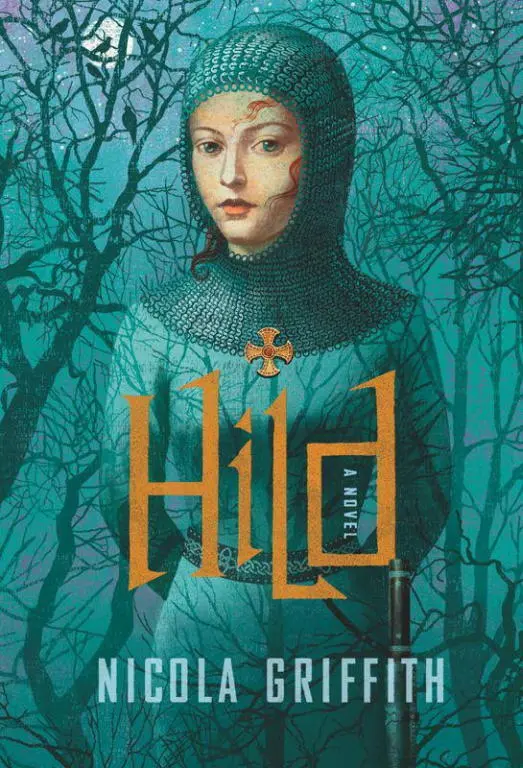
- Название:Hild
- Автор:
- Издательство:Farrar, Straus and Giroux
- Жанр:
- Год:2013
- Город:New York
- ISBN:978-0-374-28087-1
- Рейтинг книги:5 / 5. Голосов: 1
-
Избранное:Добавить в избранное
- Отзывы:
-
Ваша оценка:
Hild: краткое содержание, описание и аннотация
Предлагаем к чтению аннотацию, описание, краткое содержание или предисловие (зависит от того, что написал сам автор книги «Hild»). Если вы не нашли необходимую информацию о книге — напишите в комментариях, мы постараемся отыскать её.
But now she has only the powerful curiosity of a bright child, a will of adamant, and a way of seeing the world—of studying nature, of matching cause with effect, of observing her surroundings closely and predicting what will happen next—that can seem uncanny, even supernatural, to those around her.
Her uncle, Edwin of Northumbria, plots to become overking of the Angles, ruthlessly using every tool at his disposal: blood, bribery, belief. Hild establishes a place for herself at his side as the king’s seer. And she is indispensable—unless she should ever lead the king astray. The stakes are life and death: for Hild, for her family, for her loved ones, and for the increasing numbers who seek the protection of the strange girl who can read the world and see the future.
Hild is a young woman at the heart of the violence, subtlety, and mysticism of the early Middle Ages—all of it brilliantly and accurately evoked by Nicola Griffith’s luminous prose. Working from what little historical record is extant, Griffith has brought a beautiful, brutal world—and one of its most fascinating, pivotal figures, the girl who would become St. Hilda of Whitby—to vivid, absorbing life.
Hild — читать онлайн бесплатно полную книгу (весь текст) целиком
Ниже представлен текст книги, разбитый по страницам. Система сохранения места последней прочитанной страницы, позволяет с удобством читать онлайн бесплатно книгу «Hild», без необходимости каждый раз заново искать на чём Вы остановились. Поставьте закладку, и сможете в любой момент перейти на страницу, на которой закончили чтение.
Интервал:
Закладка:
For the next two days, Gwladus, pale and slow moving, was in the care of Guenmon; Begu happy to renew her acquaintance with the cows and goats; Cian showing off his ringed sword to the young men of the hall; and Breguswith and Onnen lost for hours gathering herbs and talking of old times, or sitting in the sun weaving quietly together, each with a twin at her side. The king was busy with Mulstan, discussing trade and sailing weather and the new wīc at York. No one needed a seer.
Hild was glad to escape the responsibilities she didn’t quite understand and roam the moor.
She watched a goshawk rolling and diving over the gorse and heather, crying like a gull. She didn’t see a mate; perhaps he soared and swooped for joy. She hiked along the cliff’s edge, paused to listen to the rock pipits building their nest in a crevice and watch the male feed beetles to his mate. The eggs would come soon.
When she thought at all, she thought in British, the language of the high places, of wild and wary and watchful things. A language of resistance and elliptical thoughts.
She climbed the paths morning and evening, breathing the salt-sharp air, watching the slow spring dusk tighten around the shore like an adder and the sea turn to jet. She was glad to be alone, to be free, to be high above the world, where she could see everything coming. She had people to protect.
On the last afternoon she walked four miles north along the shore, over sand and shingle and long beach grass. By one rill, where low tangled hawthorn and gorse grew among the long sea grass, she found a row of tiny wrens and mouse pups spiked on thorns: the work of the wariangle, the butcher-bird.
She walked half a mile inland, checking blackthorn hedges, but the only nest she found was abandoned. By it were thorns hung with two caterpillars and a bee: the work of their young. All gone now, master and apprentice, flown to warmer climes. Like kings, they ravaged then moved on, leaving their trophies hanging from battlements, drying to husks, proclaiming, My land, my law.
Hild stood at the aft rail with Breguswith, watching the world slide by and the wake unfurl. The Humber was mushroom brown, still thick with spring silt. On the north bank, as they moved west and inland, the mudflats became wolds, undulating folds of green grass dotted with flinty-coloured sheep and tiny white puffs of lambs.
“A lot of lambs this year,” her mother said. “And their dams with good thick wool after the cold winter.”
Hild nodded, idly pondering the wake, the little curls of dirty cream constantly being born and dying along the edge of the deep trough they cut through the water. There was a pattern there but she hadn’t the words to describe it.
“I talked to Onnen about Aberford and the York wīc. She’ll watch for the good wool that comes down from the north, from Tinamutha. Aberford will make a good place for collecting, sorting, and spinning in winter, as you said. Though I think somewhere along these banks, too, might be handy.”
Hild liked listening to her mother planning to build, rather than destroy or take. It felt as comforting as a larder full of food with only a month til spring. It made her feel safe; that their web, their weft and warp, was wide and strong.
“And between the York wīc and Lindum port we can reach the Frisians and Franks ourselves. We won’t have to go through Gipswīc with sulky Eorpwald taking his cut. Tinamutha and the Bay of the Beacon will feed trade with the men of the north, even west across to Rheged and east over the North Sea.”
On the bank a woman, dress kilted to her waist, threw something in her bark basket and shaded her eyes to watch them glide by. “Not the Irish, though.”
Breguswith shook her head. “Nor the Scots. Gwynedd still has that trade. And a fine, lordly gesith to trumpet their wares.” She nodded to where Cian, bold cloak thrown back from his shoulders, was leaning with Lintlaf against the rails midships and passing comments on the folk, mostly women, working in the bows. Lintlaf offered him the jar of beer he was drinking. Cian shook his head. “We must make him a good Anglisc cloak that he likes better.”
“I like his cloak,” Hild said. “It suits him.”
“Something in blue. The blue that the women of Northumbria make better than any in the world.”
“But not royal blue.”
“No.”
The water slished. The sail rippled.
“No doubt the king will soon be putting Cadwallon and Gwynedd in their place,” Breguswith said. “And, meanwhile, there’s always Dyfneint.”
“Do you know anyone in Dyfneint?”
Breguswith shook her head.
“Nor do I,” Hild said, watching the way Lintlaf watched Gwladus, who stood over Morud, bossing him with close to her usual vigour on the proper way to scrub a pot. “But I know who does.”
It was evening by the time the ship docked on the south bank of the Ouse. Ropes were thrown, gangplanks dropped fore and aft, and people disembarked with the usual din of near disaster and swift efficiency that Hild had come to associate with the meeting of ship and land. The deck swarmed with men, all shouting, all carrying things. The ship, now seized tightly to the dock, felt stiff and lifeless underfoot.
The king and most of his retinue were already forming up on the muddy landing near the bridge. Horses milled. Hild stood by the fore gangplank, looked about for Gwladus, thought she saw the flash of her pale hair among the heave of men unstepping the mast. There, midships, pressed back against the larboard rail…
“No,” said Hild, and a man turned, thinking she was talking to him.
“Lady?”
She picked up a batten. “Out of my way.”
Then she stood before Lintlaf and Gwladus. Lintlaf, hand still white and tight around Gwladus’s arm, turned, face slack with drink.
Hild said, “Gwladus. You will take my bag to shore. Now.”
Lintlaf stood there, mazed as an ox just herded from the byre. Hild tapped his hand with the end of her batten.
He blinked, let go. Gwladus rubbed her arm, glared at him.
“Bitch,” Lintlaf said. His breath was sour with ale.
Gwladus spat at him. He raised his hand.
Hild drew his gaze with her batten. “Don’t touch her.”
He put his hand on his seax.
She hefted the batten: good, weathered oak. “I’ll break your arm.”
“She’s wealh.”
She set her feet. “She’s mine.”
His face puckered like a purse with a pulled string. “So. The freemartin has finally learnt what it’s all for.”
She hefted the batten again. “You will not touch her.”
He considered, spat, took his hand from his seax. “She’s soiled, spoiled, and sullen. You’re welcome to her.”
He pushed himself from the rail and walked with care to the gangplank.
Gwladus slid her hand around Hild’s waist and whispered in her ear, “Thank you, lady.” Then she stepped away. “Where’s your bag?”
“My bag?” For a moment, she had no idea what Gwladus was talking about. She still felt that warm whisper in her ear. She gripped the rail. Had someone untied the ship?
“There it is,” Gwladus said, and left Hild standing with batten in one hand, rail in the other.
It was strange to be back in York only a few weeks after Bebbanburg and Yeavering. The new women’s wing was ready, a row of rooms running at a right angle from the hall. The apartment Hild shared with Begu was three small rooms: a bedroom with a curtained doorway to the chamber where Gwladus and others slept, which had a stout door to the next, in which slept Morud and a guard, often Oeric. At the mouth of the corridor, the queen’s men stood guard over the whole wing: the queen’s suite, Clotrude’s, Breguswith’s.
Читать дальшеИнтервал:
Закладка:
Похожие книги на «Hild»
Представляем Вашему вниманию похожие книги на «Hild» списком для выбора. Мы отобрали схожую по названию и смыслу литературу в надежде предоставить читателям больше вариантов отыскать новые, интересные, ещё непрочитанные произведения.









Обсуждение, отзывы о книге «Hild» и просто собственные мнения читателей. Оставьте ваши комментарии, напишите, что Вы думаете о произведении, его смысле или главных героях. Укажите что конкретно понравилось, а что нет, и почему Вы так считаете.