Dennis Lehane - The Given Day
Здесь есть возможность читать онлайн «Dennis Lehane - The Given Day» весь текст электронной книги совершенно бесплатно (целиком полную версию без сокращений). В некоторых случаях можно слушать аудио, скачать через торрент в формате fb2 и присутствует краткое содержание. Год выпуска: 2008, ISBN: 2008, Издательство: William Morrow & Company, Жанр: Историческая проза, Полицейский детектив, на английском языке. Описание произведения, (предисловие) а так же отзывы посетителей доступны на портале библиотеки ЛибКат.
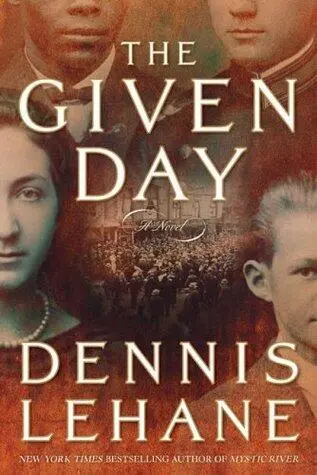
- Название:The Given Day
- Автор:
- Издательство:William Morrow & Company
- Жанр:
- Год:2008
- ISBN:9780688163181
- Рейтинг книги:4 / 5. Голосов: 1
-
Избранное:Добавить в избранное
- Отзывы:
-
Ваша оценка:
The Given Day: краткое содержание, описание и аннотация
Предлагаем к чтению аннотацию, описание, краткое содержание или предисловие (зависит от того, что написал сам автор книги «The Given Day»). Если вы не нашли необходимую информацию о книге — напишите в комментариях, мы постараемся отыскать её.
The Given Day — читать онлайн бесплатно полную книгу (весь текст) целиком
Ниже представлен текст книги, разбитый по страницам. Система сохранения места последней прочитанной страницы, позволяет с удобством читать онлайн бесплатно книгу «The Given Day», без необходимости каждый раз заново искать на чём Вы остановились. Поставьте закладку, и сможете в любой момент перейти на страницу, на которой закончили чтение.
Интервал:
Закладка:
“You must be Luther.”
Luther sat up. “I am, ma’am.”
“That’s good. Be a frightful thing if some other man stole up here and took your place.” She lay a straight razor, tub of shaving cream, brush and bowl by the pot. “Mr. Giddreaux expects a man to come to the dinner table clean-shaven, and dinner’s almost served. We’ll work on cleaning up the rest of you afterward. Sound right?”
Luther swung his legs off the bed and suppressed a yawn. “Yes, ma’am.”
She held out a delicate hand, so small it could have been a doll’s. “I’m Yvette Giddreaux, Luther. Welcome to my home.”
While they waited for Isaiah to hear back from the police captain, Luther accompanied Yvette Giddreaux to the proposed NAACP offices on Shawmut Avenue. The building was Second Empire style, a baroque monster of chocolate stone skin with a mansard roof. First time Luther’d seen the style outside of a book. He stepped in close and looked up as he walked along the sidewalk. The lines of the building were straight, no bowing, no humps, either. The structure had shifted with the weight of itself, but no more so than would be expected from a building Luther guessed dated back to the 1830s or so. He took a good look at the tilt of the corners and decided the foundation hadn’t racked, so the shell was in good shape. He stepped off the sidewalk and walked along the edge of the street, looking up at the roof.
“Mrs. Giddreaux?”
“Yes, Luther.”
“Seem to be a piece of this roof missing.”
He looked over at her. She held her purse tight in front of her and gave him a look of such innocence it could only be a front.
She said, “I believe I heard something to that effect, yes.”
Luther continued moving his gaze from the point on the ridgeline where he’d spotted the gap, and he found a dip exactly where he was hoping he wouldn’t — in the center of the spine. Mrs. Giddreaux was still giving him that wide-eyed innocence, and he placed his hand softly under her elbow as he led her inside.
Most of the first-floor ceiling was gone. What remained leaked. The staircase just to his right was black. The walls were missing their plaster in half a dozen places, the lathes and studs exposed, and scorched black in half a dozen more. The floor was so eaten away by fire and water that even the subflooring was damaged. All the windows were boarded.
Luther whistled. “You buy this place at auction?”
“About so,” she said. “What do you think?”
“Any way you can get your money back?”
She slapped his elbow. The first time, but he was sure it wouldn’t be the last. He resisted the urge to hug her to him, the way he’d done with his mother and sister, loving that they’d always fought him, that it had always cost him a shot to the ribs or the hip.
“Let me guess,” Luther said, “George Washington never slept here, but his footman did?”
She bared her teeth at him, little fists placed to little hips. “Can you fix it?”
Luther laughed and heard the echo bounce through the dripping building. “No.”
She looked up at him. Her face was stony. Her eyes were gay. “But of what usefulness does that speak, Luther?”
“Can’t nobody fix this. I’m just amazed the city didn’t condemn it.”
“They tried.”
Luther looked at her and let out a long sigh. “You know how much money it’ll take to make this livable?”
“Don’t you worry about money. Can you fix it?”
“I honestly don’t know.” He whistled again, taking it all in, the months, if not years, of work. “Don’t suppose I’ll be getting much in the way of help?”
“We’ll round up some volunteers every now and then, and when you need something, you just make a list. I can’t promise we’ll get you everything you need or that any of it will arrive in the time you need it, but we’ll try.”
Luther nodded and looked down into her kind face. “You understand, ma’am, that the effort this will take will be biblical ?”
Another slap on the elbow. “You best set to it then.”
Luther sighed. “Yes, ma’am.”
Captain Thomas Coughlin opened the door to his study and gave Luther a wide, warm smile. “You must be Mr. Laurence.”
“Yes, sir, Captain Coughlin.”
“Nora, that’ll be all for now.”
“Yes, sir,” the Irish girl Luther’d just met said. “Nice to meet you, Mr. Laurence.”
“You, too, Miss O’Shea.”
She bowed and took her leave.
“Come in, come in.” Captain Coughlin swung the door wide, and Luther entered a study that smelled of good tobacco, a recent fire in the hearth, and the dying autumn. Captain Coughlin led him to a leather chair and went around the other side of a large mahogany desk and took his seat by the window.
“Isaiah Giddreaux said you’re from Ohio.”
“Yes, suh.”
“I heard you say ‘sir.’”
“Suh?”
“Just a moment ago. When we met.” His light blue eyes glittered. “You said ‘sir,’ not ‘suh.’ Which will it be, son?”
“Which do you prefer, Captain?”
Captain Coughlin waved an unlit cigar at the question. “Whichever makes you comfortable, Mr. Laurence.”
“Yes, sir.”
Another smile, this one not so much warm as self-satisfied. “Columbus, correct?”
“Yes, sir.”
“And what did you do there?”
“I worked for the Anderson Armaments Corporation, sir.”
“And before that?”
“I did carpentry, sir, some masonry work, piping, you name it.”
Captain Coughlin leaned back in his chair and propped his feet on the desk. He lit his cigar and stared through the flame and the smoke at Luther until the tip was fat with red. “You’ve never worked in a household, however.”
“No, sir, I have not.”
Captain Coughlin leaned his head back and blew smoke rings at the ceiling.
Luther said, “But I’m a fast learner, sir. And there’s nothing I can’t fix. And I look right smart, too, in tails and white gloves.”
Captain Coughlin chuckled. “A sense of wit. Bully for you, son. Indeed.” He ran a hand over the back of his head. “It’s not a full-time position that’s being offered. Nor do I offer any lodging.”
“I understand, sir.”
“You would work roughly forty hours a week, and most of it would be driving Mrs. Coughlin to mass, cleaning, maintenance, and the serving of meals. Do you cook?”
“I can, sir.”
“Not a bother. Nora will do most of that.” Captain Coughlin gave another wave of his cigar. “She’s the lass you just met. She lives with us. She does chores as well, but she’s gone most of the day, working at a factory. You’ll meet Mrs. Coughlin soon,” he said, and his eyes glittered again. “I may be the head of the household, but God was remiss in telling her. You follow my meaning? Anything she asks, you hop to.”
“Yes, sir.”
“Stay on the east side of the neighborhood.”
“Sir?”
Captain Coughlin brought his feet off the desk. “The east side, Mr. Laurence. The west side is fairly infamous for its intolerance of coloreds.”
“Yes, sir.”
“Word will get out, of course, that you work for me and that’s fair warning, sure, to most ruffians, even west-siders, but you can never be too careful.”
“Thank you for the advice, sir.”
The captain’s eyes fell on him through the smoke again. This time they were part of the smoke, swirling in it, swimming around Luther, looking into his eyes, his heart, his soul. Luther had seen hints of this ability in cops before — they didn’t call them copper’s eyes for nothing — but Captain Coughlin’s gaze achieved a level of invasion Luther had never come across in a man before. Hoped to never come across twice.
Читать дальшеИнтервал:
Закладка:
Похожие книги на «The Given Day»
Представляем Вашему вниманию похожие книги на «The Given Day» списком для выбора. Мы отобрали схожую по названию и смыслу литературу в надежде предоставить читателям больше вариантов отыскать новые, интересные, ещё непрочитанные произведения.












Обсуждение, отзывы о книге «The Given Day» и просто собственные мнения читателей. Оставьте ваши комментарии, напишите, что Вы думаете о произведении, его смысле или главных героях. Укажите что конкретно понравилось, а что нет, и почему Вы так считаете.