Dennis Lehane - The Given Day
Здесь есть возможность читать онлайн «Dennis Lehane - The Given Day» весь текст электронной книги совершенно бесплатно (целиком полную версию без сокращений). В некоторых случаях можно слушать аудио, скачать через торрент в формате fb2 и присутствует краткое содержание. Год выпуска: 2008, ISBN: 2008, Издательство: William Morrow & Company, Жанр: Историческая проза, Полицейский детектив, на английском языке. Описание произведения, (предисловие) а так же отзывы посетителей доступны на портале библиотеки ЛибКат.
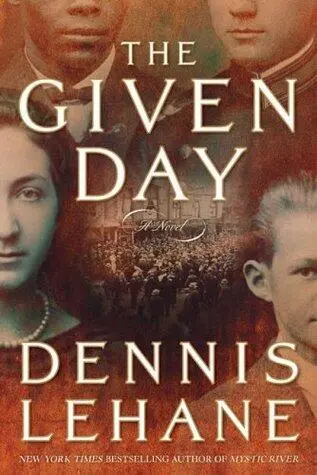
- Название:The Given Day
- Автор:
- Издательство:William Morrow & Company
- Жанр:
- Год:2008
- ISBN:9780688163181
- Рейтинг книги:4 / 5. Голосов: 1
-
Избранное:Добавить в избранное
- Отзывы:
-
Ваша оценка:
The Given Day: краткое содержание, описание и аннотация
Предлагаем к чтению аннотацию, описание, краткое содержание или предисловие (зависит от того, что написал сам автор книги «The Given Day»). Если вы не нашли необходимую информацию о книге — напишите в комментариях, мы постараемся отыскать её.
The Given Day — читать онлайн бесплатно полную книгу (весь текст) целиком
Ниже представлен текст книги, разбитый по страницам. Система сохранения места последней прочитанной страницы, позволяет с удобством читать онлайн бесплатно книгу «The Given Day», без необходимости каждый раз заново искать на чём Вы остановились. Поставьте закладку, и сможете в любой момент перейти на страницу, на которой закончили чтение.
Интервал:
Закладка:
“What else?” Danny had asked.
Thomas wagged a finger. “I’m not that drunk, boy.”
Tonight, he stood with his godfather by the shed with a glass of Irish and one of the fine cigars Eddie received monthly from a friend on the Tampa PD. The air smelled damp and smoky the way it did in heavy fog, but the skies were clear. Danny had given Eddie his report on meeting Nathan Bishop, on Bishop’s comment about what should be done to the rich, and Eddie had barely acknowledged he’d heard.
But when Danny handed over yet another list — this one half names/half license plates of a meeting of the Coalition of the Friends of the Southern Italian Peoples, Eddie perked right up. He took the list from Danny and scanned it quickly. He opened the door to his garden shed and removed the cracked leather satchel he carried everywhere and added the piece of paper to it. He put the satchel back in the shed and closed the door.
“No padlock?” Danny said.
Eddie cocked his head. “For tools now?”
“And satchels.”
Eddie smiled. “Who in their right mind would ever so much as approach this abode with less than honest intentions?”
Danny gave that a smile, but a perfunctory one. He smoked his cigar and looked out at the city and breathed in the smell of the harbor. “What are we doing here, Eddie?”
“It’s a nice night.”
“No. I mean with this investigation.”
“We’re hunting radicals. We’re protecting and serving this great land.”
“By compiling lists?”
“You seem a bit off your feed, Dan.”
“What’s that mean?”
“Not yourself. Have you been getting enough sleep?”
“No one’s talking about May Day. Not how you expected them to anyway.”
“Well, it’s not like they’re going to go a galavanting about, shouting their nefarious aims from the rooftops, are they? You’ve barely been on them a month.”
“They’re talkers, the lot of them. But that’s all they are.”
“The anarchists?”
“No,” Danny said. “ They’re fucking terrorists. But the rest? You’ve got me checking out plumbers unions, carpenters, every toothless socialist knitting group you can find. For what? Names? I don’t understand.”
“Are we to wait until they do blow us up before we decide to take them seriously?”
“Who? The plumbers?”
“Be serious.”
“The Bolshies?” Danny said. “The socialists? I’m not sure they have the capacity to blow up anything outside of their own chests.”
“They’re terrorists.”
“They’re dissidents.”
“Maybe you need some time off.”
“Maybe I just need a clearer sense of exactly what the hell we’re doing here.”
Eddie put an arm around his shoulder and led him to the roof edge. They looked out at the city — its parks and gray streets, brick buildings, black rooftops, the lights of downtown reflecting off the dark waters that coursed through it.
“We’re protecting this, Dan. This right here. That’s what we’re doing.” He took a pull of his cigar. “Home and hearth. And nothing less than that indeed.”
With Nathan Bishop, another night at the Capitol Tavern, Nathan taciturn until the third drink kicked in and then:
“Has anyone ever hit you?”
“What?”
He held up his fists. “You know.”
“Sure. I used to box,” he said. Then: “In Pennsylvania.”
“But have you ever been physically pushed aside?”
“Pushed aside?” Danny shook his head. “Not that I can remember. Why?”
“I wonder if you know how exceptional that is. To walk through this world without fear of other men.”
Danny had never thought of it like that before. It suddenly embarrassed him that he’d moved through his entire life expecting it to work for him. And it usually had.
“It must be nice,” Nathan said. “That’s all.”
“What do you do?” Danny asked.
“What do you do?”
“I’m looking for work. But you? Your hands aren’t those of a laborer. Your clothes, either.”
Nathan touched the lapel of his coat. “These aren’t expensive clothes.”
“They’re not rags either. They match your shoes.”
Nathan Bishop gave that a crooked smile. “Interesting observation. You a cop?”
“Yes,” Danny said and lit a cigarette.
“I’m a doctor.”
“A copper and a doctor. You can fix whoever I shoot.”
“I’m serious.”
“So am I.”
“No really.”
“Okay, I’m not a copper. You a doctor, though?”
“I was.” Bishop stubbed his cigarette out. He took a slow pull of his drink.
“Can you quit being a doctor?”
“You can quit anything.” Bishop took another drink and let out a long sigh. “I was a surgeon once. Most of the people I saved didn’t deserve to be saved.”
“They were rich?”
Danny saw an exasperation cross Bishop’s face that he was becoming familiar with. It meant Bishop was heading for the place where his anger would dominate him, where he couldn’t be calmed down until he’d exhausted himself.
“They were oblivious,” he said, his tongue lathering the word with contempt. “If you said to them, ‘People die every day. In the North End, in the West End, in South Boston, in Chelsea. And the thing that’s killing them is one thing . Poverty. That’s all. Simple as that.’” He rolled another cigarette and leaned over the table as he did, slurped his drink from the glass with his hands still in his lap. “You know what people say when you tell them that? They say, ‘What can I do?’ As if that’s an answer. What can you do? You can very well fucking help. That’s what you can do, you bourgeois piece of shit. What can you do ? What can’t you do? Roll up your fucking sleeves, get off your fat fucking arse, and move your wife’s fatter fucking arse off the same cushion, and go down to where your mates — your brother and sister fellow fucking human beings — are quite authentically starving to death. And do whatever you need to do to help them. That’s what the bloody fuck you can bloody well fucking do.”
Nathan Bishop slammed back the rest of his drink. He dropped the glass to the scarred wood table and looked around the bar, his eyes red and sharp.
In the heavy air that often followed one of Nathan’s tirades, Danny said nothing. He could feel the men at the nearest table shift in awkwardness. One of them suddenly began talking about Ruth, about the newest trade rumors. Nathan breathed heavily through his nostrils while he reached for the bottle and placed his cigarette between his lips. He got a shaky hand on the bottle. He poured himself another drink. He leaned back in his chair and flicked his thumbnail over a match and lit his cigarette.
“That’s what you can do,” he whispered.
In the Sowbelly Saloon, Danny tried to see through the crowd of Roxbury Letts to the back table where Louis Fraina sat tonight in a dark brown suit and a slim black tie sipping from a small glass of amber liquor. It was only the blaze of his eyes behind a pair of small round spectacles that gave him away as something other than a college professor who’d entered the wrong bar. That, and the deference the others showed him, placing his drink carefully on the table in front of him, asking him questions with the jutting chins of anxious children, checking to see whether he was watching when they expounded on a point. It was said that Fraina, Italian by birth, spoke Russian as close to fluently as could be asked of one not raised in the Motherland, an assessment rumored to have been first delivered by Trotsky himself. Fraina kept a black moleskin notebook open on the table in front of him, and he’d occasionally jot notes in it with a pencil or flip through the pages. He rarely looked up, and when he did, it was only to acknowledge a speaker’s point with a soft flick of his eyelids. Not once had he and Danny exchanged so much as a glance.
Читать дальшеИнтервал:
Закладка:
Похожие книги на «The Given Day»
Представляем Вашему вниманию похожие книги на «The Given Day» списком для выбора. Мы отобрали схожую по названию и смыслу литературу в надежде предоставить читателям больше вариантов отыскать новые, интересные, ещё непрочитанные произведения.



Обсуждение, отзывы о книге «The Given Day» и просто собственные мнения читателей. Оставьте ваши комментарии, напишите, что Вы думаете о произведении, его смысле или главных героях. Укажите что конкретно понравилось, а что нет, и почему Вы так считаете.