Dennis Lehane - The Given Day
Здесь есть возможность читать онлайн «Dennis Lehane - The Given Day» весь текст электронной книги совершенно бесплатно (целиком полную версию без сокращений). В некоторых случаях можно слушать аудио, скачать через торрент в формате fb2 и присутствует краткое содержание. Год выпуска: 2008, ISBN: 2008, Издательство: William Morrow & Company, Жанр: Историческая проза, Полицейский детектив, на английском языке. Описание произведения, (предисловие) а так же отзывы посетителей доступны на портале библиотеки ЛибКат.
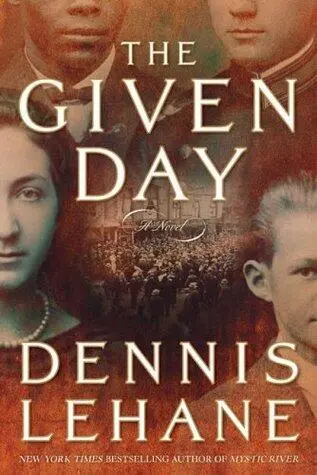
- Название:The Given Day
- Автор:
- Издательство:William Morrow & Company
- Жанр:
- Год:2008
- ISBN:9780688163181
- Рейтинг книги:4 / 5. Голосов: 1
-
Избранное:Добавить в избранное
- Отзывы:
-
Ваша оценка:
The Given Day: краткое содержание, описание и аннотация
Предлагаем к чтению аннотацию, описание, краткое содержание или предисловие (зависит от того, что написал сам автор книги «The Given Day»). Если вы не нашли необходимую информацию о книге — напишите в комментариях, мы постараемся отыскать её.
The Given Day — читать онлайн бесплатно полную книгу (весь текст) целиком
Ниже представлен текст книги, разбитый по страницам. Система сохранения места последней прочитанной страницы, позволяет с удобством читать онлайн бесплатно книгу «The Given Day», без необходимости каждый раз заново искать на чём Вы остановились. Поставьте закладку, и сможете в любой момент перейти на страницу, на которой закончили чтение.
Интервал:
Закладка:
He extended his hand. “You must be Luther Laurence.”
Luther shook the hand. “Isaiah?”
Isaiah said, “Mr. Giddreaux if you please, son.”
“Mr. Giddreaux, yes, sir.”
For a small man Isaiah seemed tall. He stood as straight as any man Luther had ever seen, his hands folded in front of his belt buckle, his eyes so clear it was impossible to read them. They could have been the eyes of a lamb lying down in the last spot of sun on a summer evening. Or those of a lion, waiting for the lamb to get sleepy.
“Your Uncle Hollis is well, I trust?” He led Luther down the front hall.
“He is, sir.”
“How’s that rheumatism of his?”
“His knees ache awful in the afternoons but otherwise he feels in top form.”
Isaiah looked over his shoulder as he led him up a wide staircase. “He’s done marrying I hope.”
“I believe so, sir.”
Luther hadn’t been in a brownstone before. The breadth of it surprised him. He’d have never been able to tell from the street how deep the rooms went or how high the ceilings got. It was as nicely appointed as any of the homes on Detroit Avenue, with heavy chandeliers and dark gumwood beams and French sofas and settees. The Giddreauxs had the master bedroom on the top floor, and there were three more bedrooms on the second, one of which Isaiah led Luther to and opened the door long enough for him to drop his bag on the floor. He got a glimpse of a nice brass bed and walnut dresser with a porcelain wash pot on top before Isaiah ushered him back out again. Isaiah and his wife, Yvette, owned the whole place, three floors and a widow’s walk on top that looked out over the entire neighborhood. The South End, Luther discerned from Isaiah’s description, was a budding Greenwood unto itself, the place where Negroes had carved out a little something for themselves with restaurants served their kind of food and clubs played their kind of music. Isaiah told Luther the neighborhood had been born out of a need for servant housing, the servants being those who attended to the needs of the rich old-money folk on Beacon Hill and in Back Bay, and the reason the buildings were so nice — all red-brick town houses and chocolate bowfront brownstones — was that the servants had taken pains to live in the style of their employers.
They took the stairs back down to the parlor, where a pot of tea waited for them.
“Your uncle speaks highly of you, Mr. Laurence.”
“He does?”
Isaiah nodded. “He says you have some jackrabbit in your blood but sincerely hopes that one day you’ll slow down and find enough peace to be an upstanding man.”
Luther couldn’t think of a reply to that.
Isaiah reached for the pot and poured them each a cup, then handed Luther’s to him. Isaiah poured a single drop of milk into his cup and stirred it slowly. “Did your uncle tell you much about me?”
“Only that you were his wife’s father and you were at Niagara with Du Bois.”
“ Doctor Du Bois. I was.”
“You know him?” Luther asked. “Dr. Du Bois?”
Isaiah nodded. “I know him well. When the NAACP decided to open an office here in Boston he asked me to run it.”
“That’s quite an honor, sir.”
Isaiah gave that a tiny nod. He dropped a cube of sugar into his cup and stirred. “Tell me about Tulsa.”
Luther poured some milk into his tea and took a small sip. “Sir?”
“You committed a crime. Yes?” He lifted his cup to his lips. “Hollis deigned not to be specific what that crime was.”
“Then with all due respect, Mr. Giddreaux, I … deign the same.”
Isaiah shifted and tugged his pant leg down until it covered the top of his sock. “I’ve heard folks speak of a shooting in a disreputable nightclub in Greenwood. You wouldn’t know anything about that, would you?”
Luther met the man’s gaze. He said nothing.
Isaiah took another sip of tea. “Did you feel you had a choice?”
Luther looked at the rug.
“Shall I repeat myself?”
Luther kept his eyes on the rug. It was blue and red and yellow and all the colors swirled together. He supposed it was expensive. The swirls.
“Did you feel you had a choice?” Isaiah’s voice was as calm as his teacup.
Luther raised his eyes to him and still said nothing.
“And yet you killed your own kind.”
“Evil got a way of not caring about kinds, sir.” Luther’s hand shook as he lowered his cup to the coffee table. “Evil just muck things around till things go all sideways.”
“That’s how you define evil?”
Luther looked around this room, as fine as any in the fine houses on Detroit Avenue. “You know it when you see it.”
Isaiah sipped his tea. “Some would say a murderer is evil. Would you agree?”
“I’d agree some would say it.”
“You committed murder.”
Luther said nothing.
“Ergo …” Isaiah held out his hand.
“All due respect? I never said I committed anything, sir.”
They sat silent for a bit, a clock ticking behind Luther. A car horn beeped faintly from a few blocks away. Isaiah finished his tea and placed the cup back on the tray.
“You’ll meet my wife later. Yvette. We’ve just purchased a building to use as the NAACP office here. You’ll volunteer there.”
“I’ll what?”
“You’ll volunteer there. Hollis tells me you’re good with your hands, and we have repairs that need seeing to in the building before we can open for business. You’ll pull your weight here, Luther.”
Pull my weight. Shit. When’s the last time this old man pulled any weight outside of lifting a teacup? Seemed the same shit Luther had left behind in Tulsa — moneyed colored folk acting like their money gave them the right to order you around. And this old fool acting like he could see inside Luther, talking about evil like he’d know it if it sat down beside him and bought him a drink. Man was probably a step or two away from whipping out a Bible. But he reminded himself of the pledge he’d made in the train car to create the New Luther, the better Luther, and promised he would give it time before he made up his mind about Isaiah Giddreaux. This man worked with W.E.B. Du Bois, and Du Bois was one of only two men in this country that Luther felt worthy of his admiration. The other, of course, was Jack Johnson. Jack didn’t take shit from no one, black or white.
“I know of a white family that needs a houseman. Could you handle that work?”
“Can’t see why not.”
“They are good people as far as whites can be.” He spread his hands. “There is one caveat — the household in question is headed by a police captain. If you were to attempt an alias, I suspect he would ferret it out.”
“No need,” Luther said. “Trick is to never mention Tulsa. I’m just Luther Laurence, late of Columbus.” Luther wished he could feel something beyond his own weariness. Spots had started popping in the air between him and Isaiah. “Thank you, sir.”
Isaiah nodded. “Let’s get you upstairs. We’ll wake you for dinner.”
Luther dreamed of playing baseball in floodwaters. Of outfielders washed away in the tide. Of trying to hit above the waterline and men laughing every time his bat head slapped off the muddy water that rose above his waist, up over his ribs, while Babe Ruth and Cully flew past in a crop duster, dropping grenades that failed to explode.
He woke to an older woman pouring hot water into the wash pot on his dresser. She looked back over her shoulder at him, and for a moment he thought she was his mother. They were the same height and had the same light skin speckled with dark freckles over the cheekbones. But this woman’s hair was gray and she was thinner than his mother. Same warmth, though, same kindliness living in the body, like the soul was too good to be kept covered.
Читать дальшеИнтервал:
Закладка:
Похожие книги на «The Given Day»
Представляем Вашему вниманию похожие книги на «The Given Day» списком для выбора. Мы отобрали схожую по названию и смыслу литературу в надежде предоставить читателям больше вариантов отыскать новые, интересные, ещё непрочитанные произведения.











Обсуждение, отзывы о книге «The Given Day» и просто собственные мнения читателей. Оставьте ваши комментарии, напишите, что Вы думаете о произведении, его смысле или главных героях. Укажите что конкретно понравилось, а что нет, и почему Вы так считаете.