Sloan Wilson - Man in the Gray Flannel Suit
Здесь есть возможность читать онлайн «Sloan Wilson - Man in the Gray Flannel Suit» весь текст электронной книги совершенно бесплатно (целиком полную версию без сокращений). В некоторых случаях можно слушать аудио, скачать через торрент в формате fb2 и присутствует краткое содержание. Год выпуска: 1973, ISBN: 1973, Издательство: Da Capo Press, Жанр: Проза, на английском языке. Описание произведения, (предисловие) а так же отзывы посетителей доступны на портале библиотеки ЛибКат.
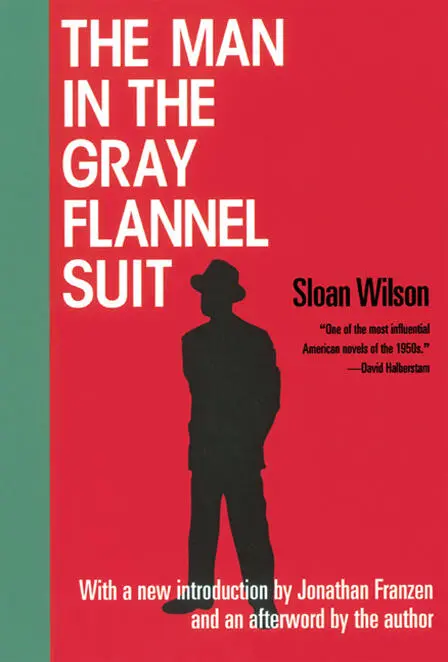
- Название:Man in the Gray Flannel Suit
- Автор:
- Издательство:Da Capo Press
- Жанр:
- Год:1973
- ISBN:978-1-56858-246-7
- Рейтинг книги:3 / 5. Голосов: 1
-
Избранное:Добавить в избранное
- Отзывы:
-
Ваша оценка:
Man in the Gray Flannel Suit: краткое содержание, описание и аннотация
Предлагаем к чтению аннотацию, описание, краткое содержание или предисловие (зависит от того, что написал сам автор книги «Man in the Gray Flannel Suit»). Если вы не нашли необходимую информацию о книге — напишите в комментариях, мы постараемся отыскать её.
is a deeply rewarding novel about the importance of taking responsibility for one's own life.
Man in the Gray Flannel Suit — читать онлайн бесплатно полную книгу (весь текст) целиком
Ниже представлен текст книги, разбитый по страницам. Система сохранения места последней прочитанной страницы, позволяет с удобством читать онлайн бесплатно книгу «Man in the Gray Flannel Suit», без необходимости каждый раз заново искать на чём Вы остановились. Поставьте закладку, и сможете в любой момент перейти на страницу, на которой закончили чтение.
Интервал:
Закладка:
“Would it be putting you to too much trouble to ask for a rough draft in, say, three or four days?”
“I’ll have something for you,” Tom said.
“Fine! Thanks so much for coming up. I know how hard it is to stay in town late when you live in Connecticut. I certainly appreciate it!”
Bill Ogden stood up. “Thanks for everything, Ralph,” he said. “I’ve got to be running.”
“Thank you , Bill!” Hopkins said.
This is the most polite damn bunch of people I’ve ever met, Tom thought. As he and Bill Ogden went out the door he heard Hopkins say to the other two men, “I certainly appreciate your giving up your evening for this! Have you got some of those promotion plans we were discussing last week spelled out a little more?”
It turned out that Ogden lived in Stamford, and he rode to Grand Central Station in a taxi with Tom. They had just missed the nine-thirty-five train, and there wasn’t another one for more than an hour. They went to the bar on the lower level of the station and ordered highballs.
“I can’t help being curious,” Tom said. “Does Mr. Hopkins work every night?”
“He often takes long week ends on an island he has up in Maine,” Ogden said.
Tom reflected upon this for a few moments. “You mean he just lives alone in that apartment and has business appointments every evening?” he asked incredulously.
“Oh, he goes out to his place at South Bay quite often,” Ogden said. “He sees a lot of his family — especially around Christmas time.”
Tom took a few swallows of his drink.
“He never gets tired,” Ogden said. “Lots of guys work hard, but he’s always fresh. I’ve never seen him tired in my life.”
When Tom got back to Westport, the first thing he noticed when he stepped in the front door of his house was that everything looked suspiciously neat, and a table with a large vase of hollyhocks had been moved against the living-room wall to obscure the crack in the plaster. Betsy was waiting. “How did it go?” she asked.
“Fine,” he said. “I got to write a speech. I mean, I have to help Mr. Hopkins with a speech. I might as well get the terminology of this thing straight from the beginning.”
To his surprise, Betsy looked hurt. “I wish you’d stop being so damn bright and cynical,” she said. “It’s no way to start a new job. You ought to be enthusiastic. Damn it, Tommy, try being naïve!”
“What’s got into you?” he asked, looking puzzled.
“I’ll bet Hopkins doesn’t go around making wisecracks!” she said. “Does he?”
“No.”
“Nobody does who gets anywhere. You’ve got to be positive and enthusiastic!”
“How come you know so much all of a sudden about how to get ahead?”
“I just know ,” she said. “I’m sick of being smart and broke.”
“Okay,” he said. “I’ll be owl-faced. My whole interest in life is working for mental health. I care nothing for myself. I am a dedicated human being.”
“All right, be witty. But I’ve been worried about this for a long time. You’ve always been talking about Hopkins’ mental-health project with your tongue in your cheek, and if you feel that way about it, you ought not work for the man. You ought to be thinking it’s the best idea in the world! And why isn’t it a good idea, when you come right down to it? What’s wrong with trying to do something about mental illness? Why do you have to be so damn cynical about it?”
“From now on I’ll be pious,” he said, “if you promise to stop being insufferable.”
“I just want you to start off on the right foot,” she said. “Do you like Mr. Hopkins?”
“I guess so.”
“You should try to like him! Give him the benefit of every doubt. Or quit working for him right now!”
“I love him,” he said simply. “I adore him. My heart is his.”
“You scare me, Tommy,” she said. “I’m dead serious. You scare hell out of me when you’re like that. To me it means you’re going to be unenthusiastic about everything for the rest of your life.”
“I’m going to try to do this job right,” he said. “You don’t have to worry about that. I’m going to try.”
“Sit down now and have a drink,” she said. “Three people looked at the house today, and one may be coming back.”
JUST as Tom and Betsy were preparing to go to bed, the telephone rang. It was Lucy Hitchcock, who lived next door. “Hi!” she said with slightly alcoholic jubilation in her voice. “Could you and Tom come over for cocktails tomorrow night? Bob just got a wonderful raise, and we’re going to celebrate.”
“Congratulations,” Betsy said. “We’ll be there.”
“I’ve got to call twenty other people,” Lucy said. “Good-by!”
Filled with sudden distaste, Betsy put the telephone down. In this invitation tendered so late in the evening to a party for the celebration of an increase in salary received by the host, Betsy found concentrated everything she disliked about Greentree Avenue. The intensity of her displeasure surprised her, and long after she had gone to bed, she lay awake trying to analyze it.
It’s not that I’m a snob — it’s more than that, she thought fiercely. There are all kinds of reasons. Slowly she counted them off.
The first reason the invitation annoyed her was that she felt obligated to accept it. She and Tom had already declined invitations to two of the Hitchcocks’ parties, and Lucy would interpret a third refusal as a slight, regardless of what excuse were given.
The second reason was that like most cocktail parties on Greentree Avenue, this one would be an exhausting exercise. On Greentree Avenue cocktail parties started at seven-thirty, when the men came home from New York, and they usually continued without any dinner until three or four o’clock in the morning. It was almost impossible for the owners of the small houses to provide dinner for their guests — on that street the custom of asking people in for dinner had almost disappeared. The kitchens were small, dining rooms were almost nonexistent, and after the women had put the children to bed, they were in no mood to fix company meals. Cocktail parties were an easier form of hospitality, and the only trouble was that anyone who went home for dinner was considered a spoilsport. Somewhere around nine-thirty in the evening, Martinis and Manhattans would give way to highballs, but the formality of eating anything but hors d’oeuvres in between had been entirely omitted.
It can’t be true that the whole street is like that, Betsy thought — it must be just the people we know. For a long while after she went to bed, she lay thinking of the various families up and down the street. Almost all the houses were occupied by couples with young children, and few people considered Greentree Avenue a permanent stop — the place was just a crossroads where families waited until they could afford to move on to something better. The finances of almost every household were an open book. Budgets were frankly discussed, and the public celebration of increases in salary was common. The biggest parties of all were moving-out parties, given by those who finally were able to buy a bigger house. Of course there were a few men in the area who had given up hope of rising in the world, and a few who had moved from worse surroundings and considered Greentree Avenue a desirable end of the road, but they and their families suffered a kind of social ostracism. On Greentree Avenue, contentment was an object of contempt.
No one here is evil, Betsy thought defensively. In spite of all the drinking, the young couples were usually well enough behaved at the cocktail parties. Sure, there were sometimes a few kitchen kisses and an occasional high-pitched argument, but usually the men and their wives just sat talking about the modern houses they would like to build, or the old barns they would like to convert into dwellings. The price the small houses on Greentree Avenue were currently bringing and the question of how big a mortgage the local banks were offering on larger places were constantly discussed. As the evening wore on, the men generally fell to divulging dreams of escaping to an entirely different sort of life — to a dairy farm in Vermont, or to the management of a motel in Florida — but for the most part, the cocktail parties simply gave everyone a chance to prove he considered Greentree Avenue no more than a stepping stone to the same kind of life on a bigger scale. There’s nothing wrong with that, Betsy tried to tell herself. This isn’t a bad place to be, it’s just.
Читать дальшеИнтервал:
Закладка:
Похожие книги на «Man in the Gray Flannel Suit»
Представляем Вашему вниманию похожие книги на «Man in the Gray Flannel Suit» списком для выбора. Мы отобрали схожую по названию и смыслу литературу в надежде предоставить читателям больше вариантов отыскать новые, интересные, ещё непрочитанные произведения.











Обсуждение, отзывы о книге «Man in the Gray Flannel Suit» и просто собственные мнения читателей. Оставьте ваши комментарии, напишите, что Вы думаете о произведении, его смысле или главных героях. Укажите что конкретно понравилось, а что нет, и почему Вы так считаете.