Min Lee - Pachinko
Здесь есть возможность читать онлайн «Min Lee - Pachinko» весь текст электронной книги совершенно бесплатно (целиком полную версию без сокращений). В некоторых случаях можно слушать аудио, скачать через торрент в формате fb2 и присутствует краткое содержание. Город: NYC, Год выпуска: 2017, ISBN: 2017, Издательство: Grand Central Publishing, Жанр: Проза, на английском языке. Описание произведения, (предисловие) а так же отзывы посетителей доступны на портале библиотеки ЛибКат.
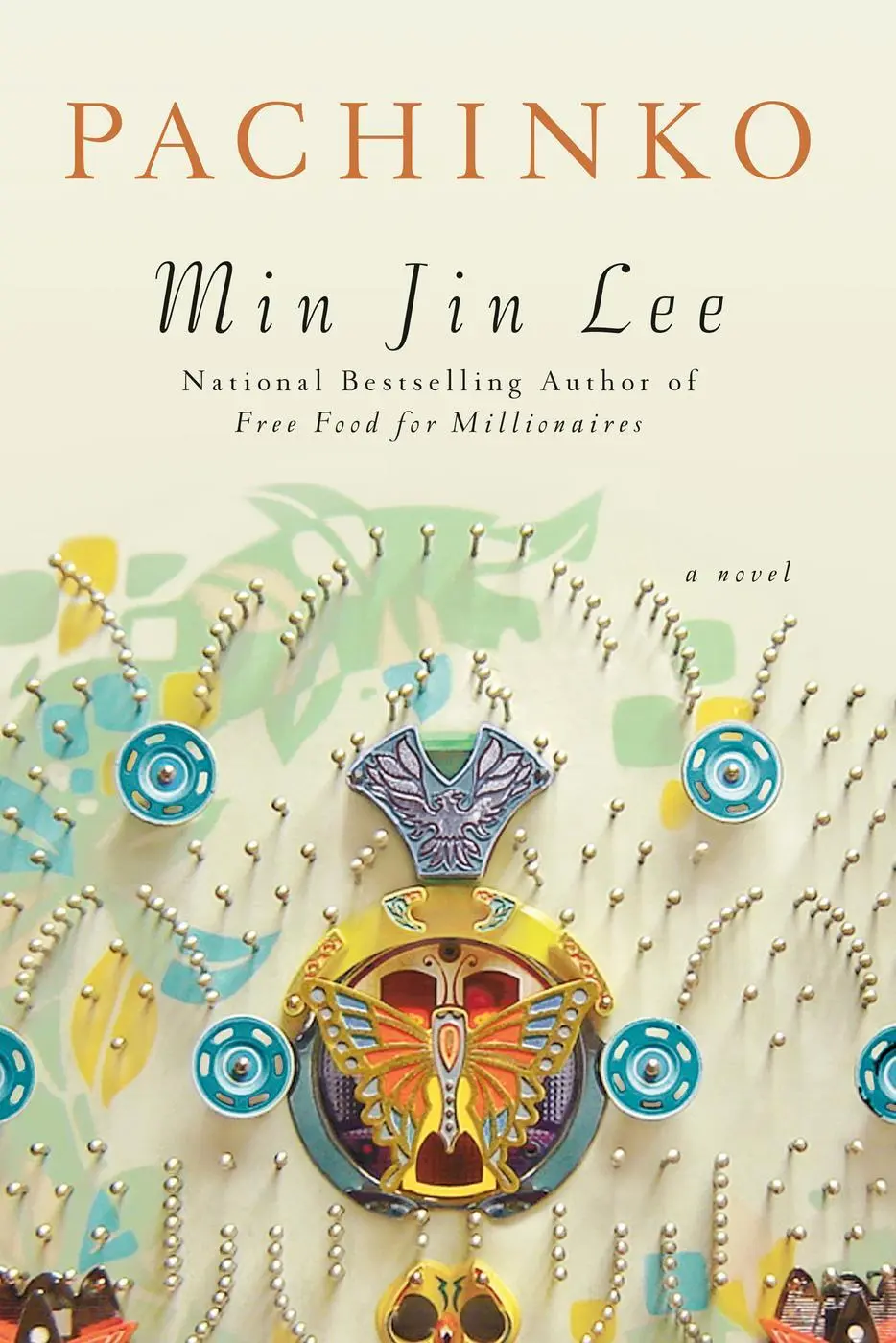
- Название:Pachinko
- Автор:
- Издательство:Grand Central Publishing
- Жанр:
- Год:2017
- Город:NYC
- ISBN:978-1-4555-6391-3
- Рейтинг книги:4.5 / 5. Голосов: 2
-
Избранное:Добавить в избранное
- Отзывы:
-
Ваша оценка:
Pachinko: краткое содержание, описание и аннотация
Предлагаем к чтению аннотацию, описание, краткое содержание или предисловие (зависит от того, что написал сам автор книги «Pachinko»). Если вы не нашли необходимую информацию о книге — напишите в комментариях, мы постараемся отыскать её.
Profoundly moving and gracefully told, PACHINKO follows one Korean family through the generations, beginning in early 1900s Korea with Sunja, the prized daughter of a poor yet proud family, whose unplanned pregnancy threatens to shame them. Betrayed by her wealthy lover, Sunja finds unexpected salvation when a young tubercular minister offers to marry her and bring her to Japan to start a new life.
So begins a sweeping saga of exceptional people in exile from a homeland they never knew and caught in the indifferent arc of history. In Japan, Sunja's family members endure harsh discrimination, catastrophes, and poverty, yet they also encounter great joy as they pursue their passions and rise to meet the challenges this new home presents. Through desperate struggles and hard-won triumphs, they are bound together by deep roots as their family faces enduring questions of faith, family, and identity.
Pachinko — читать онлайн бесплатно полную книгу (весь текст) целиком
Ниже представлен текст книги, разбитый по страницам. Система сохранения места последней прочитанной страницы, позволяет с удобством читать онлайн бесплатно книгу «Pachinko», без необходимости каждый раз заново искать на чём Вы остановились. Поставьте закладку, и сможете в любой момент перейти на страницу, на которой закончили чтение.
Интервал:
Закладка:
“Brother,” Isak said. “My brother.”
“Isak, you’re here. I’m so glad.”
Isak beamed, his eyes fixed to his elder brother’s face.
“But you’ve grown much bigger than me. That’s disrespectful!”
Isak bowed waist-deep in mock apology.
Sunja stood there holding her bundles. She was comforted by the brothers’ ease and warmth. Isak’s brother Yoseb was funny. His joking reminded her a little of Fatso, the boardinghouse guest. When Fatso first learned that she’d married Isak, he had pretended to faint, making a splat sound on the floor of the front room. Moments later, he took out his wallet and gave her two yen — over two days of a workman’s wages — telling her to buy something tasty to eat with her husband when she got to Osaka. “When you’re munching on sweet rice cakes in Japan, remember me, lonely and sad in Yeongdo, missing you; imagine Fatso’s heart torn out like the mouth of a sea bass hooked too young.” He had pretended to cry, rubbing his meaty fists into his eyes and making loud boo-hoo noises. His brothers had told him to shut up, and each of them had also given her two yen as a wedding present.
“And you’re married!” Yoseb said, looking carefully at the small girl beside Isak.
Sunja bowed to her brother-in-law.
“It’s good to meet you again,” Yoseb said. “You were just a little thing, though; you used to follow your father around. Maybe you were five or six? I don’t think you can remember me.”
Sunja shook her head because she had tried but couldn’t.
“I remember your father very well. I was sorry to hear about his death; he was a very wise man. I enjoyed talking with him. He didn’t have extra words, but everything he said was well considered. And your mother made the most outstanding meals.”
Sunja lowered her eyes.
“Thank you for letting me come here, Elder Brother. My mother sends her deepest thanks for your generosity.”
“You and your mother saved Isak’s life. I’m grateful to you, Sunja. Our family is grateful to your family.”
Yoseb took the heavy suitcases from Isak, and Isak took Sunja’s lighter bundles. Yoseb noticed that her stomach protruded, but her pregnancy was not entirely obvious. He looked away in the direction of the station exits. The girl didn’t look or talk like some village harlot. She seemed so modest and plain that Yoseb wondered if she could have been raped by someone she knew. That sort of thing happened, and the girl might have been blamed for having misled a fellow.
“Where’s Sister?” Isak asked, looking around for Kyunghee.
“At home, cooking your dinner. You better be hungry. The neighbors must be dying of jealousy from the smells coming from the kitchen!”
Isak smiled; he adored his sister-in-law.
Sunja pulled her jacket closer to her body, aware of the passersby staring at her traditional dress. No one else in the station was wearing a hanbok .
“My sister-in-law’s a wonderful cook,” Isak said to Sunja, happy at the thought of seeing Kyunghee again.
Yoseb noticed the people staring at the girl. She’d need clothes, he realized.
“Let’s go home!” Yoseb guided them out of the station in no time.
The road opposite the Osaka station was teeming with streetcars; hordes of pedestrians streamed in and out of the main entrances. Sunja walked behind the brothers, who darted carefully through the crowd. As they walked toward the trolley, she turned back for a moment and caught sight of the train station. The Western-style building was like nothing she had ever seen before — a stone and concrete behemoth. The Shimonoseki station, which she’d thought was big, was puny compared to this immense structure.
The men walked quickly, and she tried to keep up. The trolley car was approaching. In her mind, she had been to Osaka before. In her mind, she had ridden the Shimonoseki ferry, the Osaka train, and even the trolley that could outpace a boy running or cycling. As cars drove past them, she marveled that they did look like metal bulls on wheels, which was what Hansu had called them. She was a country girl, but she had heard of all these things. Yet she could not let on that she knew of uniformed ticket collectors, immigration officers, porters, and of trolleys, electric lamps, kerosene stoves, and telephones, so at the trolley stop, Sunja remained quiet and still like a seedling sprouting from new soil, upright and open to collect the light. She would have uprooted herself to have seen the world with him, and now she was seeing it without him.
Yoseb directed Sunja to the only empty seat at the back of the trolley and deposited her there. She took back the bundles from Isak and held them in her lap. The brothers stood close to each other and caught each other up on family news. Sunja didn’t pay any mind to the men’s conversation. As before, she held her bundles close to her heart and belly to inhale the lingering scent of home on the fabric covering their possessions.
The wide streets of downtown Osaka were lined with rows of low brick buildings and smart-looking shops. The Japanese who had settled in Busan resembled the ones here, but there were many more kinds of them. At the station, there were young men in fancy Western suits that made Isak’s clothing look dated and fusty, and beautiful women wearing glorious kimonos that would have made Dokhee swoon with pleasure at their exceptional colors and embroidery. There were also very poor-looking people who must have been Japanese — that was something she had never seen in Busan. Men spat in the streets casually. The trolley ride felt brief to her.
They got off at Ikaino, the ghetto where the Koreans lived. When they reached Yoseb’s home, it looked vastly different from the nice houses she’d passed by on the trolley ride from the station. The animal stench was stronger than the smell of food cooking or even the odors of the outhouses. Sunja wanted to cover her nose and mouth, but kept from doing so.
Ikaino was a misbegotten village of sorts, comprised of mismatched, shabby houses. The shacks were uniform in their poorly built manner and flimsy materials. Here and there, a stoop had been washed or a pair of windows polished, but the majority of the facades were in disrepair. Matted newspapers and tar paper covered the windows from inside, and wooden shims were used to seal up the cracks. The metal used on the roof was often rusted through. The houses appeared to have been put up by the residents themselves using cheap or found materials — not much sturdier than huts or tents. Smoke vented from makeshift steel chimneys. It was warm for a spring evening; children, half-dressed in rags, played tag, ignoring the drunken man asleep in the alley. A small boy defecated by a stoop not far from Yoseb’s house.
Yoseb and Kyunghee lived in a boxlike shack with a slightly pitched roof. Its wooden frame was covered with corrugated steel. A plywood panel with a metal covering served as the front door.
“This place is fit for only pigs and Koreans,” Yoseb said, laughing. “It’s not quite like home, is it?”
“No, but it’ll do very well for us,” Isak said, smiling. “I’m sorry for the inconvenience we’ll be causing.”
Sunja couldn’t believe how poorly Yoseb and his wife lived. It could not be possible that a foreman of a factory could live in such impoverished quarters.
“The Japanese won’t rent decent properties to us. We bought this house eight years ago. I think we’re the only Koreans who own a house on this row, but no one can know that.”
“Why?” Isak asked.
“It’s not good to let on that you’re an owner. The landlords here are bastards; that’s all everyone complains about. I bought this with the money Father gave me when I moved out here. I couldn’t afford to buy it now.”
Читать дальшеИнтервал:
Закладка:
Похожие книги на «Pachinko»
Представляем Вашему вниманию похожие книги на «Pachinko» списком для выбора. Мы отобрали схожую по названию и смыслу литературу в надежде предоставить читателям больше вариантов отыскать новые, интересные, ещё непрочитанные произведения.








Обсуждение, отзывы о книге «Pachinko» и просто собственные мнения читателей. Оставьте ваши комментарии, напишите, что Вы думаете о произведении, его смысле или главных героях. Укажите что конкретно понравилось, а что нет, и почему Вы так считаете.