Min Lee - Pachinko
Здесь есть возможность читать онлайн «Min Lee - Pachinko» весь текст электронной книги совершенно бесплатно (целиком полную версию без сокращений). В некоторых случаях можно слушать аудио, скачать через торрент в формате fb2 и присутствует краткое содержание. Город: NYC, Год выпуска: 2017, ISBN: 2017, Издательство: Grand Central Publishing, Жанр: Проза, на английском языке. Описание произведения, (предисловие) а так же отзывы посетителей доступны на портале библиотеки ЛибКат.
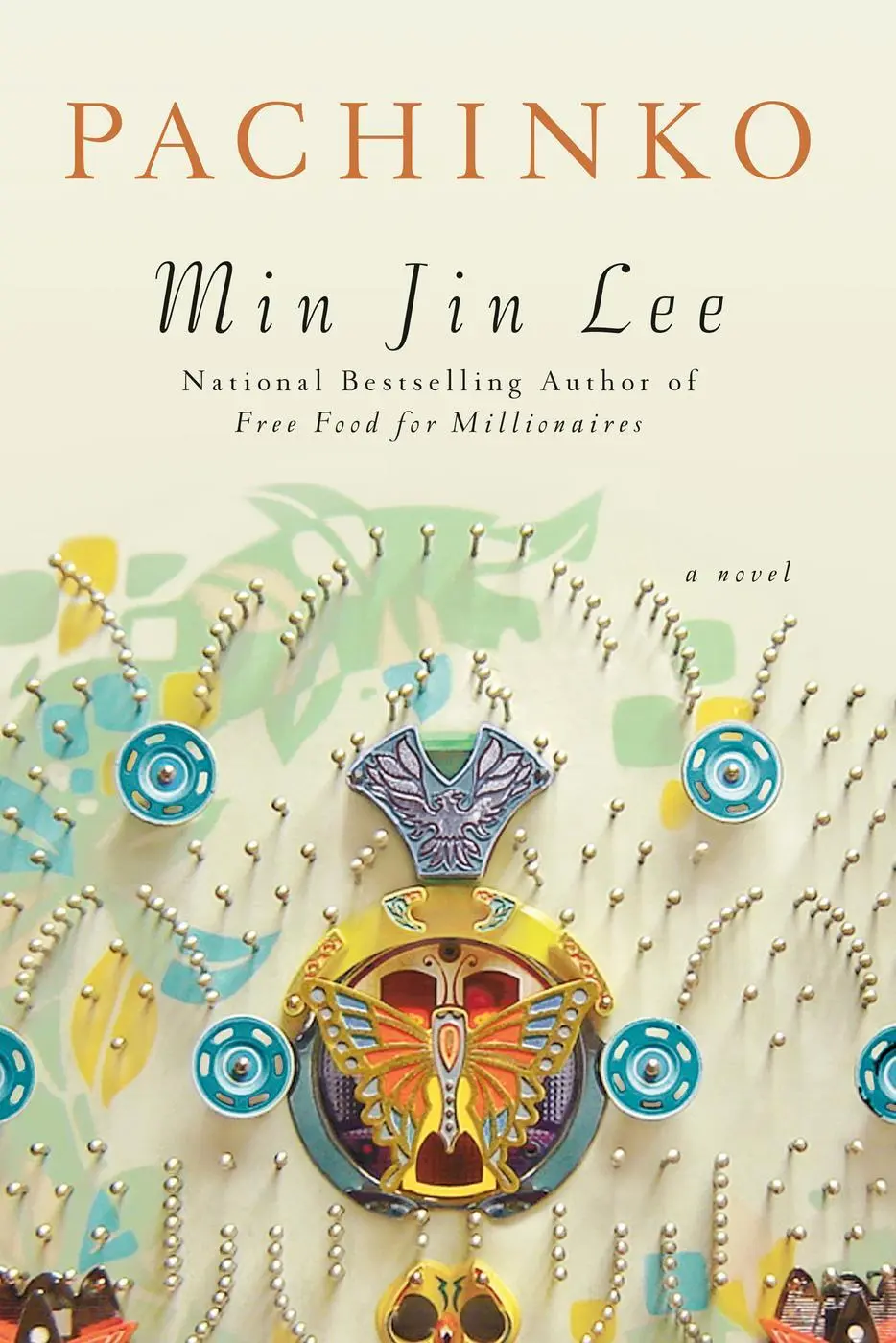
- Название:Pachinko
- Автор:
- Издательство:Grand Central Publishing
- Жанр:
- Год:2017
- Город:NYC
- ISBN:978-1-4555-6391-3
- Рейтинг книги:4.5 / 5. Голосов: 2
-
Избранное:Добавить в избранное
- Отзывы:
-
Ваша оценка:
Pachinko: краткое содержание, описание и аннотация
Предлагаем к чтению аннотацию, описание, краткое содержание или предисловие (зависит от того, что написал сам автор книги «Pachinko»). Если вы не нашли необходимую информацию о книге — напишите в комментариях, мы постараемся отыскать её.
Profoundly moving and gracefully told, PACHINKO follows one Korean family through the generations, beginning in early 1900s Korea with Sunja, the prized daughter of a poor yet proud family, whose unplanned pregnancy threatens to shame them. Betrayed by her wealthy lover, Sunja finds unexpected salvation when a young tubercular minister offers to marry her and bring her to Japan to start a new life.
So begins a sweeping saga of exceptional people in exile from a homeland they never knew and caught in the indifferent arc of history. In Japan, Sunja's family members endure harsh discrimination, catastrophes, and poverty, yet they also encounter great joy as they pursue their passions and rise to meet the challenges this new home presents. Through desperate struggles and hard-won triumphs, they are bound together by deep roots as their family faces enduring questions of faith, family, and identity.
Pachinko — читать онлайн бесплатно полную книгу (весь текст) целиком
Ниже представлен текст книги, разбитый по страницам. Система сохранения места последней прочитанной страницы, позволяет с удобством читать онлайн бесплатно книгу «Pachinko», без необходимости каждый раз заново искать на чём Вы остановились. Поставьте закладку, и сможете в любой момент перейти на страницу, на которой закончили чтение.
Интервал:
Закладка:
Which authors do you admire?
I adore nineteenth-century writers Bronte, Eliot, Trollope, Dickens, Flaubert, Tolstoy, and Balzac. I also love Sinclair Lewis, Theodore Dreiser, Sherwood Anderson, William Faulkner, Edith Wharton, Ernest Hemingway, Zora Neale Hurston, Mark Twain, Tanizaki, Henry James, James Baldwin, and Ralph Ellison. As for modern living writers, I very much admire Lynn Ahrens, Lan Samantha Chang, Alexander Chee, Junot Díaz, Robin Marantz Henig, Kazuo Ishiguru, Colson Whitehead, Haruki Murakami, David Henry Hwang, Meg Wolitzer, Maxine Hong Kingston, Hilton Als, Simon Winchester, Chang-rae Lee, David Mitchell, Toni Morrison, Alice Munro, Gary Shteyngart, William Trevor, and Erica Wagner. The writings of Cynthia Ozick, Shelley Fisher Fishkin, Audre Lorde, Vivian Gornick, bell hooks, James Baldwin, and Virginia Woolf continue to encourage me to write more honestly and to dwell on subjects that matter to me.
In many ways, Sunja’s plight is the catalyst for much of the book’s plot. What is your relationship with her character? What inspired her creation?
From 2007 to 2011, I interviewed many Korean-Japanese men and women, and a great many of them mentioned a first-generation matriarch who sacrificed much of her life for the next generation, which ultimately led me to Sunja and her world. To earn money, first-generation Korean women in Japan worked in open markets, raised pigs in their homes, picked and traded rags and scrap metal, manufactured bootleg alcohol, farmed, and sold homemade goods from carts, among other things. Back then as well as today, the poorest women sold homemade goods in the open market, because they did not have much capital to invest. By selling boiled corn, tteokbokki , confections, sweet rice cakes, or gimbap in stalls or from carts, market women supported their families. Later, I met women peddlers in the open markets in Osaka and Tokyo. It is not easy to sell things in an open market, exposed to the elements as well as to be vulnerable to any person who wants to approach you. Also, then as well as today, market women often work in societies where women have less legal protections, rights, and significantly less socio-economic power.
I was born in Seoul and lived there until I was seven, and in my childhood I was keenly aware of the old women who sold snacks in the open markets and on street corners when I went food shopping with my mother. They were also vivid because they wore traditional clothing, in stark contrast to the modern Koreans of Seoul. When I visited South Korea as a college student in the late 1980s and many times later as an adult, I saw these women again in the markets and in the streets, almost unchanged in their expressions except for their clothes and hair.
Finally, my parents became small business owners when they immigrated to the United States. The daughter of a well-known minister and the headmaster of an orphanage school in Busan, my mother grew up very sheltered in a privileged home. A former music major at Yonsei University, she taught piano in our home when we lived in Seoul. When we moved to New York, she worked alongside my father in their cramped, under-heated wholesale jewelry shop in Manhattan, which was robbed and burgled on numerous occasions. She was on her feet most of the day dealing with customers. On weekends and school holidays, my sisters and I took turns working with our parents at the store. In college, I worked part-time selling clothes and shoes in retail shops. I continue to feel a strong connection with anyone who has worked in sales or in the service industry.
Is it easy for you to write your characters’ deaths, or do you have a strong sentimental attachment to them?
My characters are very real to me, and I speculate that this must be true for most writers. Also, as a reader, I am very attached to characters in books. When Lily Bart dies in The House of Mirth , I wept and wept. Years later, I read Elaine Showalter’s brilliant essay “The Death of the Lady (Novelist)” where she posits that Lily’s death represents the death of the “perfect lady” who no longer belongs in an era of “vulgarity, boorishness, and malice.” Showalter argues cogently that Lily has to die, because her aspiration for the ideals of a perfect lady no longer made sense and that the author Wharton was also shedding an outdated role as a “lady novelist”: “In deciding that a Lily cannot survive, that the lady must die to make way for the modern woman who will work, love and give birth, Wharton was also signaling her own rebirth as the artist.” I mention Showalter’s insightful analysis of a formative work in my reading and writing life because she taught me a larger idea beyond death as a plot element or death as the expiration of a life. It is possible that characters need to die for the author to make her moral point, for the author himself to regenerate by letting go of an ideal identity, or for the world to recognize the necessity of certain ideas and ideals to die. Certain characters die in Pachinko , and to me, their deaths were both natural to the plot and necessary symbolically. To me, the deaths were painfully inevitable; and to be clear, dear reader, each death broke me.
Much of this novel deals with the pressures of being a first-generation immigrant, or having dual cultural identities. How much of this was informed by your own experiences? What effects do you think war has on individuals and society?
Consciously or unconsciously, being a first-generation immigrant informs my point of view and interests. Regardless of one’s identity, all of us live in an information era where we are continually made to feel physically vulnerable to the political instability and violence around the globe in real time. Consequently, most of the developed world has growing factions in each nation, which want to raise the drawbridge and batten down the hatches. Out of fear, many of us want to retreat, and this makes some sense. Fair or no, immigration is considered in the context of economic scarcity, fear of terrorism, wars and geopolitical conflicts, which may be incipient stages of informal proxy wars. Whatever their cause, all such anxieties and conflicts affect individuals and societies and their movement patterns. Naturally, the movement of people changes the culture of the people around them, and the culture of the people around them affects the migrant people.
As for me, I lived just a few blocks away from the World Trade Center during the September 11, 2001, attacks, and my family and I had to be evacuated for a time. My family and I were residing in Tokyo during the Tohoku Earthquake on March 11, 2011. I have been changed by these events, and these events inform my work and the way I approach crises.
Unfortunately, every one of us is vulnerable to manmade and natural disasters, small and great. According to the United Nations High Commissioner of Refugees (UNHCR), there are over 65 million refugees in the world, which is about 1 out of every 113 people on earth. When my father was sixteen years old, he lost his family in the Korean War. The war and the memory of being a war refugee was not spoken of often, but these events lingered in the air of my childhood home. I think this kind of trauma is an unspoken legacy for many first- and second-generation immigrants in the United States and elsewhere. My father, a teenage war refugee from Wonsan, became a South Korean migrant worker in Busan, then a college-educated businessman in Seoul. He immigrated to the United States and became a small business owner. He is now a naturalized American citizen, a retiree, and a member of the AARP who also enjoys recreational deep-sea fishing. He has lived many lives away from his birthplace. Most immigrants are like this. Many of my friends and their families have been directly affected by the Holocaust, World War II, the Korean War, the Vietnam War, the collapse of the Soviet Union, and the suffering inflicted by military dictatorships in the Americas and in African nations. Today, all of us live in an era of vast income, educational and information inequality. However, what we also witness each day is how many ordinary people resist the indignities of life and history with grace and conviction by taking care of their families, friends, neighbors, and communities while striving for their individual goals. We cannot help but be interested in the stories of people that history pushes aside so thoughtlessly.
Читать дальшеИнтервал:
Закладка:
Похожие книги на «Pachinko»
Представляем Вашему вниманию похожие книги на «Pachinko» списком для выбора. Мы отобрали схожую по названию и смыслу литературу в надежде предоставить читателям больше вариантов отыскать новые, интересные, ещё непрочитанные произведения.

Обсуждение, отзывы о книге «Pachinko» и просто собственные мнения читателей. Оставьте ваши комментарии, напишите, что Вы думаете о произведении, его смысле или главных героях. Укажите что конкретно понравилось, а что нет, и почему Вы так считаете.