Min Lee - Pachinko
Здесь есть возможность читать онлайн «Min Lee - Pachinko» весь текст электронной книги совершенно бесплатно (целиком полную версию без сокращений). В некоторых случаях можно слушать аудио, скачать через торрент в формате fb2 и присутствует краткое содержание. Город: NYC, Год выпуска: 2017, ISBN: 2017, Издательство: Grand Central Publishing, Жанр: Проза, на английском языке. Описание произведения, (предисловие) а так же отзывы посетителей доступны на портале библиотеки ЛибКат.
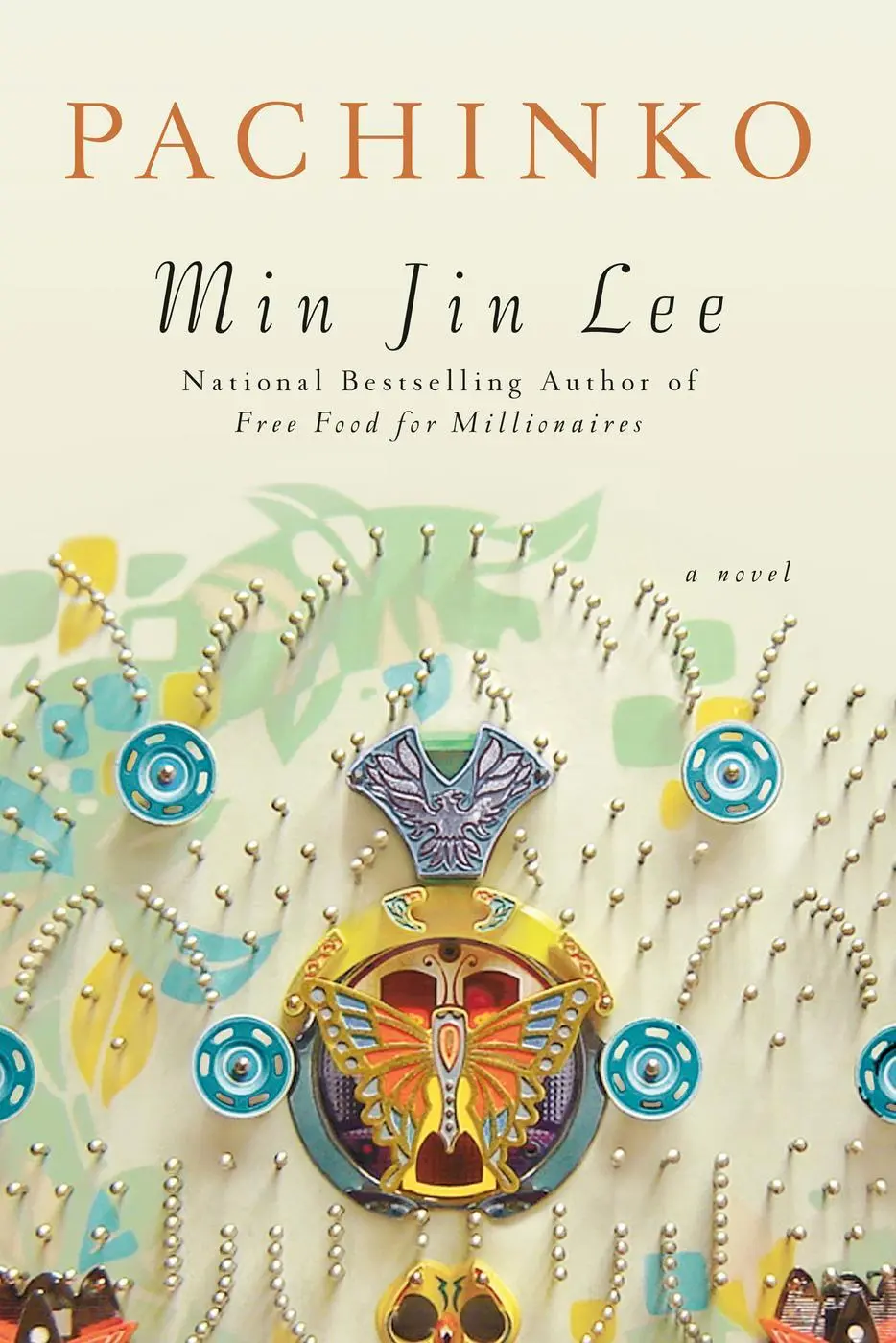
- Название:Pachinko
- Автор:
- Издательство:Grand Central Publishing
- Жанр:
- Год:2017
- Город:NYC
- ISBN:978-1-4555-6391-3
- Рейтинг книги:4.5 / 5. Голосов: 2
-
Избранное:Добавить в избранное
- Отзывы:
-
Ваша оценка:
Pachinko: краткое содержание, описание и аннотация
Предлагаем к чтению аннотацию, описание, краткое содержание или предисловие (зависит от того, что написал сам автор книги «Pachinko»). Если вы не нашли необходимую информацию о книге — напишите в комментариях, мы постараемся отыскать её.
Profoundly moving and gracefully told, PACHINKO follows one Korean family through the generations, beginning in early 1900s Korea with Sunja, the prized daughter of a poor yet proud family, whose unplanned pregnancy threatens to shame them. Betrayed by her wealthy lover, Sunja finds unexpected salvation when a young tubercular minister offers to marry her and bring her to Japan to start a new life.
So begins a sweeping saga of exceptional people in exile from a homeland they never knew and caught in the indifferent arc of history. In Japan, Sunja's family members endure harsh discrimination, catastrophes, and poverty, yet they also encounter great joy as they pursue their passions and rise to meet the challenges this new home presents. Through desperate struggles and hard-won triumphs, they are bound together by deep roots as their family faces enduring questions of faith, family, and identity.
Pachinko — читать онлайн бесплатно полную книгу (весь текст) целиком
Ниже представлен текст книги, разбитый по страницам. Система сохранения места последней прочитанной страницы, позволяет с удобством читать онлайн бесплатно книгу «Pachinko», без необходимости каждый раз заново искать на чём Вы остановились. Поставьте закладку, и сможете в любой момент перейти на страницу, на которой закончили чтение.
Интервал:
Закладка:
He had been such an elegant and beautiful man. Sunja could recall how the servant girls back home had admired him; Bokhee and Dokhee had never seen such a handsome man before. Mozasu took after her more and had her plain face, but he had his father’s straight carriage and steady stride.
“ Yobo ,” she said, “Mozasu is well. Last week, he called me, because Solomon lost his job with that foreign bank, and now he wants to work with his father. Imagine that? I wonder what you’d make of this.”
The silence encouraged her.
“I wonder how you are—” She stopped speaking when she saw Uchida-san, the groundskeeper. Sunja was sitting on the ground in her black woolen pants suit. She glanced at her handbag on the ground. It was an expensive designer bag that Etsuko had bought for her seventieth birthday.
The groundskeeper stopped before her and bowed, and she returned the bow.
Sunja smiled at the polite young man, who must have been about forty or forty-five. Uchida-san looked younger than Mozasu. How did she look to him? Her skin was deeply grooved from the years of sun, and her short hair was bright white. No matter — seventy-three did not feel very old to her. Had the groundskeeper heard her mumbling in Korean? Ever since she’d stopped working at the confectionery, her limited Japanese had deteriorated further. It was not terrible, but lately she felt shy around native speakers. Uchida-san picked up his rake and walked away.
Sunja put both hands on the white marble, as if she could touch Isak from where she was.
“I wish you could tell me what will happen to us. I wish. I wish I knew that Noa was with you.”
Several rows from her, the groundskeeper cleared wet leaves from stone markers. Now and then he would glance up at her, and Sunja felt embarrassed to be seen talking to a grave. She wanted to stay a little longer. Wanting to look like she was busy, Sunja opened her canvas bag to put away the dirty towels. In the bottom of her bag, she found her house keys on the key ring with thumbnail-sized photographs of Noa and Mozasu in a sealed acrylic frame.
Sunja started to weep, and she could not help her crying.
“Boku-san.”
“ Hai ?” Sunja looked up at the groundskeeper.
“May I get you something to drink? I have a thermos of tea in the cottage. It is not very fine tea, but it is warm.”
“No, no. Thank you. All time, you see people cry,” she said in broken Japanese.
“No, actually, very few people come here, but your family visits regularly. You have two sons and a grandson, Solomon. Mozasu-sama visits every month or two. I haven’t seen Noa-sama in eleven years, but he used to come on the last Thursday of each month. You could set a watch to him. How is Noa-sama? He was a very kind man.”
“Noa come here? Come before 1978?”
“ Hai .”
“From 1963 to 1978?” She mentioned the years he would have been in Nagano. She said the dates again, hoping that her Japanese was correct. Sunja pointed to Noa’s photograph on the key ring. “He visit here?”
The groundskeeper nodded with conviction at the photograph, then looked up in the sky like he was trying to see some sort of calendar in his mind.
“ Hai, hai . He came in those years and before, too. Noa-sama told me to go to school and even offered to send me if I wished.”
“Really?”
“Yes, but I told him I have an empty gourd for a head, and that it would have been pointless to send me to school. Besides, I like it here. It’s quiet. Everybody who comes to visit is very kind. He asked me never to mention his visits, but I have not seen him in over a decade, and I’d wondered if he moved away to England. He told me to read good books and brought me translations of the great British author Charles Dickens.”
“Noa, my son, is dead.”
The groundskeeper opened his mouth slightly.
“My son, my son,” Sunja said quietly.
“I am very sad to hear that, Boku-san. Truly, I am,” the groundskeeper said, looking forlorn. “I’d been hoping to tell him that after I finished all the books he’d brought me, I bought more of my own. I have read through all of Mr. Dickens’s books in translations, but my favorite is the first one he gave me, David Copperfield . I admire David.”
“Noa loved to read. The best. He loved to read.”
“Have you read Mr. Dickens?”
“I don’t know how,” she said. “To read.”
“ Maji ? If you are Noa’s mother, you are very smart, too. Perhaps you can go to night school for adults. That is what Noa-sama told me to do.”
Sunja smiled at the groundskeeper, who seemed hopeful about sending an old woman to school. She remembered Noa cajoling Mozasu to persevere with his studies.
The groundskeeper looked at his rake. He bowed deeply, then excused himself to return to his tasks.
When he was out of sight, Sunja dug a hole at the base of the tombstone about a foot deep with her hands and dropped the key ring photograph inside. She covered the hole with dirt and grass, then did what she could to clean her hands with her handkerchief, but dirt remained beneath her nails. Sunja tamped down the earth, then brushed the grass with her fingers.
She picked up her bags. Kyunghee would be waiting for her at home.
Acknowledgments
I got the idea for the story in 1989.
I was a junior in college, and I didn’t know what I’d do after graduation. Rather than ponder my future, I sought distractions. One afternoon, I attended what was then called a Master’s Tea, a guest lecture series at Yale. I’d never been to one before. An American missionary based in Japan was giving a talk about the “ Zainichi ,” a term used often to describe Korean Japanese people who were either migrants from the colonial era or their descendants. Some Koreans in Japan do not wish to be called Zainichi Korean because the term means literally “foreign resident staying in Japan,” which makes no sense since there are often third, fourth, and fifth surviving generations of Koreans in Japan. There are many ethnic Koreans who are now Japanese citizens, although this option to naturalize is not an easy one. There are also many who have intermarried with the Japanese or who have partial Korean heritage. Sadly, there is a long and troubled history of legal and social discrimination against the Koreans in Japan and those who have partial ethnic Korean backgrounds. There are some who never disclose their Korean heritage, although their ethnic identity may be traced to their identification papers and government records.
The missionary talked about this history and relayed a story of a middle school boy who was bullied in his yearbook because of his Korean background. The boy jumped off a building and died. I would not forget this.
I graduated college in 1990 with a degree in history. I went to law school and practiced law for two years. After quitting the law, I decided to write as early as 1996 about the Koreans in Japan. I wrote many stories and novel drafts, which were never published. I was despondent. Then in 2002, The Missouri Review published the story “Motherland,” which is about a Korean Japanese boy who gets fingerprinted and receives a foreigner’s identity card on his birthday, and later it won the Peden Prize. Also, I’d submitted a fictionalized account of the story I’d heard in college and received a New York Foundation for the Arts fellowship. With that grant money, I took classes and paid for a babysitter so I could write. This early recognition was critical, because it took me so long to publish anything at all. Moreover, the NYFA fellowship confirmed my stubborn belief that the stories of Koreans in Japan should be told somehow when so much of their lives had been despised, denied, and erased.
Читать дальшеИнтервал:
Закладка:
Похожие книги на «Pachinko»
Представляем Вашему вниманию похожие книги на «Pachinko» списком для выбора. Мы отобрали схожую по названию и смыслу литературу в надежде предоставить читателям больше вариантов отыскать новые, интересные, ещё непрочитанные произведения.






Обсуждение, отзывы о книге «Pachinko» и просто собственные мнения читателей. Оставьте ваши комментарии, напишите, что Вы думаете о произведении, его смысле или главных героях. Укажите что конкретно понравилось, а что нет, и почему Вы так считаете.