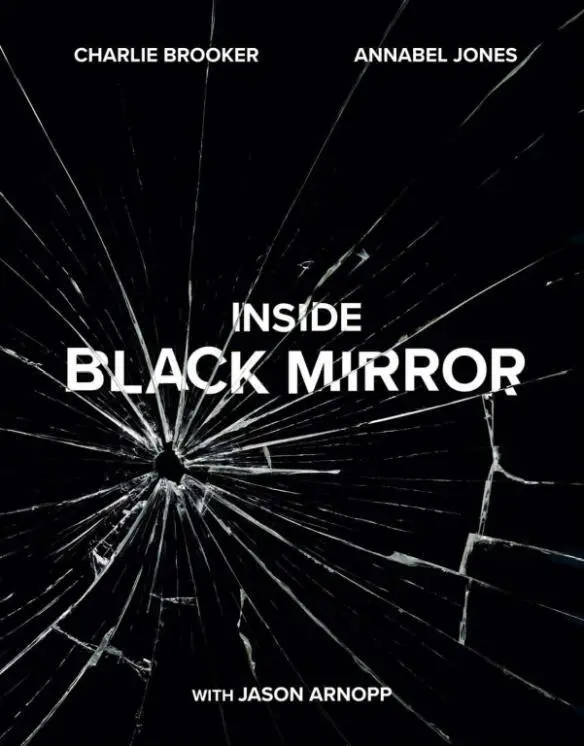
Charlie Brooker - Inside Black Mirror
Здесь есть возможность читать онлайн «Charlie Brooker - Inside Black Mirror» весь текст электронной книги совершенно бесплатно (целиком полную версию без сокращений). В некоторых случаях можно слушать аудио, скачать через торрент в формате fb2 и присутствует краткое содержание. Город: London, Год выпуска: 2018, ISBN: 2018, Издательство: Ebury Publishing, Жанр: cine, на английском языке. Описание произведения, (предисловие) а так же отзывы посетителей доступны на портале библиотеки ЛибКат.
- Название:Inside Black Mirror
- Автор:
- Издательство:Ebury Publishing
- Жанр:
- Год:2018
- Город:London
- ISBN:978-15-2910-258-1
- Рейтинг книги:3 / 5. Голосов: 1
-
Избранное:Добавить в избранное
- Отзывы:
-
Ваша оценка:
Inside Black Mirror: краткое содержание, описание и аннотация
Предлагаем к чтению аннотацию, описание, краткое содержание или предисловие (зависит от того, что написал сам автор книги «Inside Black Mirror»). Если вы не нашли необходимую информацию о книге — напишите в комментариях, мы постараемся отыскать её.
This first official book logs the entire Black Mirror journey, from its origins in creator Charlie Brooker’s mind to its current status as one of the biggest cult TV shows to emerge from the UK. Alongside a collection of astonishing behind-the-scenes imagery and ephemera, Brooker and producer Annabel Jones will detail the creative genesis, inspiration and thought process behind each film for the first time, while key actors, directors and other creative talents relive their own involvement. cite – The Hollywood Reporter cite – Telegraph
Inside Black Mirror — читать онлайн бесплатно полную книгу (весь текст) целиком
Ниже представлен текст книги, разбитый по страницам. Система сохранения места последней прочитанной страницы, позволяет с удобством читать онлайн бесплатно книгу «Inside Black Mirror», без необходимости каждый раз заново искать на чём Вы остановились. Поставьте закладку, и сможете в любой момент перейти на страницу, на которой закончили чтение.
Интервал:
Закладка:
Colm McCarthy:One of the tricky things with a portmanteau story is balancing all the different elements. The comedic stuff and the dark stuff all need to make sense in the same world. You have to find Rolo repulsive enough that you want him to die at the end, so you get what you’re rooting for as an audience, but not so repulsive that you don’t want to watch at all. In one take, for instance, we had Rolo relishing Clayton’s execution, but we thought it was enough that he was there, and complicit in killing the guy. So we steered away from him revelling in that as much as he did in certain performances.
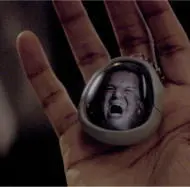
Douglas Hodge:I never tend to do the same take twice, even though you’re doing the same lines. Colm wanted this Nicolas Cage or Jack Nicholson level of glee in the performance – a real showman, risking being over-the-top. So at times, I was laughing my head off and singing songs like, “Every time we say goodbyeeee, I die a little…” People were taken aback, I think.
Annabel Jones:Yes, there were moments when Rolo was being very flippant, or singing to himself. It slipped maybe too far into evil caricature and you go, “Hmmm, Rolo’s mercenary, but I still think he’s human.”
Douglas Hodge:I hated doing the electrocution scene, if I’m honest – it was very difficult to do. It’s hard to believe execution still happens in a civilised world and thank God it doesn’t happen in Britain. I was very relieved to let Rolo go, when it was finished. And I never got a chance to apologise to Letitia or any of them, really…
‘Never accept drinks from strangers. My daddy taught me that’
– NishLetitia Wright:At the end of the film, that scene when I get Rolo in the electric chair? That was me giving Doug everything! “You don’t wanna run lines with me, Doug? Haha!”
Charlie Brooker:I really, really like Black Museum . Whereas White Christmas had this chilling sort of Dead Of Night nasty tone, Black Museum is a bit more DC comics, a bit more [the 90s US horror anthology series] Tales from the Crypt . There’s literally a guy taking you round a museum of nasty things, so it’s heightened and slightly Stephen King. Everything’s ramped up and it’s quite playfully ghoulish in places.
But also then, on another level, it’s about punishment and racism. It’s a bit White Bear . There’s a lot of thematic stuff going on, but at heart it’s a popcorn, campfire story. A ghost story with a nasty twist. So what I like to find, I guess, is the popcorn story that’s fun to write, but will also make me look like I’m clever, because it’s thematically interesting.
Penn Jillette:I was so very happy to be a tiny part of it, and have this imagery I’ve been obsessed with for 35 years used in Black Museum . If you asked me whether it was worth going through all that intense pain in 1981 to contribute to Black Mirror , the answer would be absolutely yes, because the story is very well-remembered, and remembering pain is very, very difficult! But if you’d asked me in Barcelona in 1981, I’m guessing the answer would’ve been no.
THE FUTURE OF BLACK MIRROR
In Conversation
Charlie Brooker – executive producer
Annabel Jones – executive producer
Cindy Holland – Vice President of Original Content, Netflix
Peter Friedlander – Vice President of Original Series, Netflix
Barney Reisz – producer
Shane Allen – Controller of Comedy Commissioning, BBC
Charlie Brooker:Season Four went down well, and the number of people seeing it seemed to have exponentially swollen.
Annabel Jones:“Swollen”! You have to put it in bad terms, like an infection! We’d been nominated at the Producers’ Guild Awards, so I went to LA a few weeks after Season Four had launched. Usually, the immigration officers realise you’re not very interesting and move you on to try and spot Tom Hanks. But this time, not only was the woman who dealt with me a Black Mirror fan, but everyone she worked with was too! Normally I’m either in a development bubble or a production bubble, so I don’t often come up for air to see or hear the reception. It’s little moments like that when you realise your niche show has become more of a global thing.
Cindy Holland (Vice President of Original Content, Netflix):What’s been enormously gratifying to see is that not only has the show kept growing and finding new viewers each season, but that it’s done that in countries around the world. The show and its themes have crossed borders and resonated despite geography or language. It’s also become a true pop culture touchstone. When people say something is a ‘ Black Mirror ’ moment, everyone now knows what that is. We’re also proud to see the show being recognized with awards, including the Emmy awards in 2017.
Charlie Brooker:Season Five will see… the usual departures from the norm.
Annabel Jones:We’re taking on new genres again. In Season Four we deliberately avoided doing anything too contemporary or politicised.
Charlie Brooker:At the time Season Four was being written, I had no idea of what state the world was going to be in by the time we went out on Netflix.
Annabel Jones:You don’t want to look reactive or dated. There was so much debate anyway, about the political climate, that what could we possibly add?
Charlie Brooker:So Season Five might reflect that a bit more, because it turns out that fucking lunacy is the new norm. We just needed the dust to settle first.
Annabel Jones:We’ll only continue to do the show if we think we’re bringing new stories and elements to it. The great thing about being on Netflix is you can continue the show without it having to stick rigidly to being six hour-long films. They can take different forms, so that’s quite exciting. If we wanted to, maybe we could do a Black Mirror feature film with Netflix and take the time we needed to do that. Not that we have a huge burning desire to do a big blockbuster film, because sometimes it’s more creatively freeing not to have the commercial pressures that would come with a massive budget.
Charlie Brooker:Giant blockbusters that cost millions and millions can be very emotional and exciting, but they’re a different thing to Black Mirror . But what you want is for Black Mirror to keep being surprising, and… ha, I was going to say, “fun for us to make”, but it’s not just fun! Well, it is fun, but we don’t sit around on a yacht, watching people work.
Annabel Jones:I think we’ll look back and say, “How did we manage to do that number of Netflix films in three years?”
Charlie Brooker:That assumes we’re alive to think that.
Annabel Jones:A lot of people have said, “I can’t believe you threw that idea away in one film – you could’ve done a series of that.” And we could have. We’ve done a lot of ideas in a short period of time.
Charlie Brooker:And we’ve always managed to find ways of making them more complicated to make! That’s one thing we can say about Season Five: we’ve definitely come up with something that’s the most complicated thing we’ve ever done.
Peter Friedlander (Vice President of Original Series, Netflix):The show will continue to be everything that viewers love. It will push the boundaries on storytelling, embrace all kinds of technology and shoot in new international locales, with stellar actors and performances.
Читать дальшеИнтервал:
Закладка:
Похожие книги на «Inside Black Mirror»
Представляем Вашему вниманию похожие книги на «Inside Black Mirror» списком для выбора. Мы отобрали схожую по названию и смыслу литературу в надежде предоставить читателям больше вариантов отыскать новые, интересные, ещё непрочитанные произведения.


Обсуждение, отзывы о книге «Inside Black Mirror» и просто собственные мнения читателей. Оставьте ваши комментарии, напишите, что Вы думаете о произведении, его смысле или главных героях. Укажите что конкретно понравилось, а что нет, и почему Вы так считаете.