Charlie Brooker - Inside Black Mirror
Здесь есть возможность читать онлайн «Charlie Brooker - Inside Black Mirror» весь текст электронной книги совершенно бесплатно (целиком полную версию без сокращений). В некоторых случаях можно слушать аудио, скачать через торрент в формате fb2 и присутствует краткое содержание. Город: London, Год выпуска: 2018, ISBN: 2018, Издательство: Ebury Publishing, Жанр: cine, на английском языке. Описание произведения, (предисловие) а так же отзывы посетителей доступны на портале библиотеки ЛибКат.
- Название:Inside Black Mirror
- Автор:
- Издательство:Ebury Publishing
- Жанр:
- Год:2018
- Город:London
- ISBN:978-15-2910-258-1
- Рейтинг книги:3 / 5. Голосов: 1
-
Избранное:Добавить в избранное
- Отзывы:
-
Ваша оценка:
Inside Black Mirror: краткое содержание, описание и аннотация
Предлагаем к чтению аннотацию, описание, краткое содержание или предисловие (зависит от того, что написал сам автор книги «Inside Black Mirror»). Если вы не нашли необходимую информацию о книге — напишите в комментариях, мы постараемся отыскать её.
This first official book logs the entire Black Mirror journey, from its origins in creator Charlie Brooker’s mind to its current status as one of the biggest cult TV shows to emerge from the UK. Alongside a collection of astonishing behind-the-scenes imagery and ephemera, Brooker and producer Annabel Jones will detail the creative genesis, inspiration and thought process behind each film for the first time, while key actors, directors and other creative talents relive their own involvement. cite – The Hollywood Reporter cite – Telegraph
Inside Black Mirror — читать онлайн бесплатно полную книгу (весь текст) целиком
Ниже представлен текст книги, разбитый по страницам. Система сохранения места последней прочитанной страницы, позволяет с удобством читать онлайн бесплатно книгу «Inside Black Mirror», без необходимости каждый раз заново искать на чём Вы остановились. Поставьте закладку, и сможете в любой момент перейти на страницу, на которой закончили чтение.
Интервал:
Закладка:
Annabel Jones:Whatever makes you feel better…
Dan Trachtenberg:Charlie and I hit it off immediately over Skype. We both had not realised the other’s history in games journalism and fandom. Ours is a very specific love for all things video game.
Charlie Brooker:Originally, Playtest was set in Tokyo. We even booked a recce to Tokyo to have a look, before cancelling it. Even though Resident Evil was a reference point, and that’s a Japanese game, it still felt strange to basically have a character from the west fly to Japan to stand in a house that’s like a house from Britain.
Annabel Jones:Also, we hadn’t shown contemporary London in all the films we’d done. We’d been hiding London, or the UK, and making it timeless, so this was an opportunity to embrace the flavour.

Wyatt Russell:We shot around London for half a day on one of those double-decker tourist buses, which was awesome. I’d been to London when I was young but had never seen it, you know, for real. One of the ad-libs they kept in was Cooper asking how high buildings were. Slipping in some American stereotypes felt like a fun thing to do. Americans can be overly nice, to the point of being annoying. They’re always asking how high buildings are.
The pub scene with Cooper’s date with Sonja wasn’t improv: it’s just the way we wanted to do it. We have a very short time to get invested in Cooper’s journey through Europe, so that scene was important to get to know him a little bit. And it was important for when Sonja becomes the figment of his imagination: when he meets her again later, you trust that she’s real. Because when you recall their time together, it feels real, rather than staged.
Charlie Brooker:Cooper was originally written as more of a dick. Very intuitively, Dan said we should like him, or he should have a strong flavour about him. So rather than Cooper being a bland everyman, he should have a cockiness and a spark, so we can really break him down.
Dan Trachtenberg:Once I started rehearsing with Wyatt, I very quickly clocked into how much fun we would have improvising. There was a lot of humour to be mined in Cooper’s eager aloofness. I loved bringing a more naturalistic approach to the first half of the film, so that you’re more firmly linked to the characters. You’re on the train with them as it heads towards disaster.
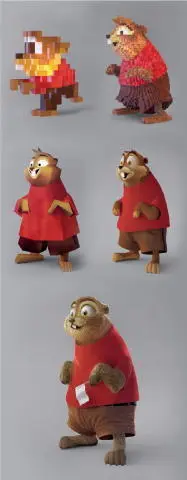
Charlie Brooker:I’m not too worried if actors go slightly off-piste, as long as they don’t start saying anything mental. But we really encouraged Wyatt to go for broke. So, early on in the Harlech house, there are loads of different takes where he’s doing all sorts of fucking stuff.
Wyatt Russell:For instance, there was my scene with the childhood bully Peters. For VFX reasons, nobody was actually there for half that scene. So when I was doing karate on Peters, that came out because there was nobody there to do karate on! We did this whole 14-minute take of me talking about how Peters’ dad was a drunk, and other stuff I didn’t like about him.
Cooper is wisecracking during the experiment because he’s nervous. I would be! I wanted to find the humour in almost everything. Not comedy, but humour. In dark situations in life, a lot of people fall back on humour to try and relate to something unrelatable. If you tried to play it earnest, you’d run the risk of people saying how they’d never get themselves into that situation.
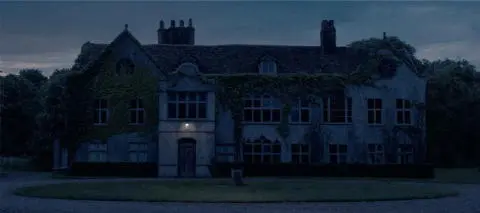
Joel Collins (series production designer): Playtest was the last film we shot for that season. It ended up being one of the most fun stories of that first Netflix season to make, but I must admit we were all quite tired. Our big build of the SaitoGemu company offices was multi-level and Japanese-inspired. We built the Harlech House on the Unity game engine [software framework], so people were actually building a real game on-set at the game company. You can see it in the background: it’s all there.
Wyatt Russell:It was incredible how they transformed this old abandoned school building into SaitoGemu, but the Harlech House was an actual house. It was the home of a woman, who was 91 or something. She was there and I met her. The kitchen was dressed as this creepy witch’s brew kitchen, and they took all the furniture out of the main room. But all that woodwork, the bones of that house, are the actual place, so it was awesomely immersive for me.
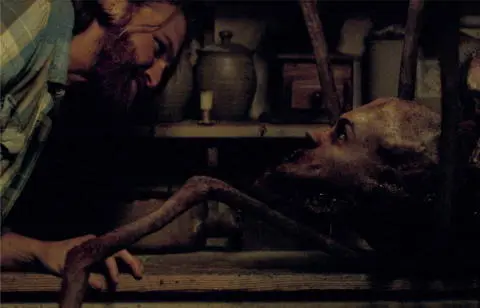
In one hair-raising scene, Cooper finds himself confronted with a bizarre hybrid of his childhood bully Peters and a giant spider.
Joel Collins:Dan Trachtenberg made references to the slug-like creatures in [the 2005 film] King Kong and the spider Shelob in [the 2003 film] The Lord of The Rings: The Return of the King . So I got my friend Alan Lee, who was the conceptual designer for both movies, to do some illustrations and sketches of the Peters-Spider. Then we got a whole array of other ideas, and threw them all in.
Dan Trachtenberg:The CGI Peters-Spider was a challenge, but beautifully executed by the VFX company Framestore. It was also fun to lean into the audience’s expectations and genre awareness. There’s a math to the ‘jump scare’ that I wanted to play with. Sometimes Cooper is aware that a scare is coming, and then it’s delivered to him, and us, in an unexpected way.
Wyatt Russell:I said to Dan, “Doesn’t Cooper know that the Peters-Spider can’t hurt him now? He’s knows it’s not real, so why is he scared?” And then he told me it was 14 feet long, and I was like, “Holy shit, okay!” And then I enjoyed how, whatever Cooper did would dictate what the thing might do. That was really fun with the Peters-Spider, feeding it a cookie or whatever.
The film’s true psychological horror arrives when Cooper enters the upstairs bedroom and suffers a full mental breakdown.
Wyatt Russell:That last scene was tough: the big switch from This Is Fun to This Is Not Fun. Dan came to me and said they were gonna do it all in one shot. So it was put-up-or-shut-up time.
Dan Trachtenberg:That wasn’t some intellectual notion we had early on. Rather, we looked at the room and realised one continuous shot would be the most efficient and cinematically ‘best’ way to go.
‘Who are you and what have you done to me?… I don’t know who I am…’
– CooperWyatt Russell:It had been a long day and everybody wanted to go home, but every single person was on point. We walked through it first, for Dan to get the idea of what things would happen where. Cooper goes from sheer terror on entering the room, to relief that he’s in the room, to wanting to get out, to realising it’s one step further than he ever thought, then to pure panic, then anger, then to total desperation and total loss. Every single fucking thing has to play: you have to see it. If I got stuck behind a bed post and my face got blocked, then that take would be unusable, even if it was otherwise the best take I ever did in my life.
Читать дальшеИнтервал:
Закладка:
Похожие книги на «Inside Black Mirror»
Представляем Вашему вниманию похожие книги на «Inside Black Mirror» списком для выбора. Мы отобрали схожую по названию и смыслу литературу в надежде предоставить читателям больше вариантов отыскать новые, интересные, ещё непрочитанные произведения.




Обсуждение, отзывы о книге «Inside Black Mirror» и просто собственные мнения читателей. Оставьте ваши комментарии, напишите, что Вы думаете о произведении, его смысле или главных героях. Укажите что конкретно понравилось, а что нет, и почему Вы так считаете.