Vanora Bennett - The People’s Queen
Здесь есть возможность читать онлайн «Vanora Bennett - The People’s Queen» — ознакомительный отрывок электронной книги совершенно бесплатно, а после прочтения отрывка купить полную версию. В некоторых случаях можно слушать аудио, скачать через торрент в формате fb2 и присутствует краткое содержание. Жанр: unrecognised, на английском языке. Описание произведения, (предисловие) а так же отзывы посетителей доступны на портале библиотеки ЛибКат.
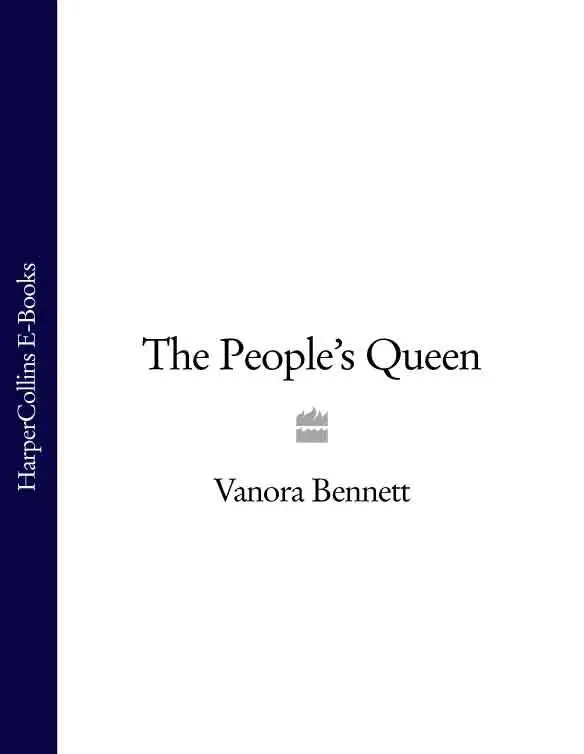
- Название:The People’s Queen
- Автор:
- Жанр:
- Год:неизвестен
- ISBN:нет данных
- Рейтинг книги:3 / 5. Голосов: 1
-
Избранное:Добавить в избранное
- Отзывы:
-
Ваша оценка:
The People’s Queen: краткое содержание, описание и аннотация
Предлагаем к чтению аннотацию, описание, краткое содержание или предисловие (зависит от того, что написал сам автор книги «The People’s Queen»). Если вы не нашли необходимую информацию о книге — напишите в комментариях, мы постараемся отыскать её.
The People’s Queen — читать онлайн ознакомительный отрывок
Ниже представлен текст книги, разбитый по страницам. Система сохранения места последней прочитанной страницы, позволяет с удобством читать онлайн бесплатно книгу «The People’s Queen», без необходимости каждый раз заново искать на чём Вы остановились. Поставьте закладку, и сможете в любой момент перейти на страницу, на которой закончили чтение.
Интервал:
Закладка:
Chaucer wishes he could catch his breath.
‘The King…wrote…Lyons a licence?’ he pants. ‘Himself?’ He doesn’t want to believe the King would have done down the merchants if he’d promised them not to sell any more foreigners any more special licences. Like everyone in the King’s service, and in the country, he adores the old man. But he’s heard about too many slips – and seen that fleeting, amused look in the royal eye too often – to know that loving the King and trusting him, at least with money, can’t always be quite the same thing.
The whole business with special licences has always been pure foolishness, in any case. In principle, the King is cheating his own royal coffers – and therefore himself – by selling foreigners the right not to pay England’s wool tax. But for a King who’s always short of money, right here, right now, who’s constantly scrabbling around for the coin to put down on that war-horse, or castle wing, or costume, on top of all the war expenses…well, in practice, it’s tempting, any offer of a bag of actual gold, in the hand, no questions asked. Of course it is. Chaucer understands that. And as for the King breaking his royal word to Walworth and the other merchants, well, Chaucer can imagine how the King might finesse that, too. He can see Edward telling himself, with a bit of a grin, that even if he’s promised not to sell any more licences to Italians, if it’s a Fleming who comes along, offering the right price, why, that’s quite a different matter…
There’s resignation in Walworth’s laugh. ‘Things are never that simple with my lord the King,’ he says. ‘No, he didn’t write the licence himself.’
Chaucer’s panting, and guessing, ever more wildly by now. ‘A forgery?’ he says, trying not to sound too hopeful. He’d rather it was that.
Walworth shakes his head. ‘Not that, either…the licence was signed’, he says sadly, ‘by Baron Latimer. It was quite legal. He’s the chamberlain. He’s authorised to sign on the King’s behalf. The King’s hand wasn’t on it, but he must have known.’
‘But then…’ Chaucer is utterly out of his depth by now. So the licence was legal, and the King just slyly hiding behind his servant’s signature. That much he’s got straight, now. But what he can’t for the life of him see is how Richard Lyons ever met the King to do this private deal in the first place? Flemish merchants don’t go running around at court without an introduction, and Walworth, who is sometimes received at court, would obviously never take along a chancer like Lyons. Someone else must have taken him to the King. But who?
It is only now that the other, separate, picture Chaucer woke up with today comes back into his mind. Latimer looking at Lyons, and Lyons looking back across Chaucer’s table, groaning with all that food provided by Alice Perrers. And Alice in between them, eyes darting from one to the other, and a little smile on her lips…
‘…Mistress Perrers,’ he says flatly. Of course. He’s known all along, really, bar the details. It will be Mistress Perrers who’s introduced the foreign merchant to the King, or simply made the deal for him without an introduction. She likes money, and she likes stirring things up, just for fun. She enjoyed putting Philippa’s nose out of joint with her feast, Chaucer saw yesterday, as much as she enjoyed making sure that the merchants were being properly fed. She’ll be taking a cut from this, just as Latimer will be. She has fingers in every pie, doesn’t she?
He shakes his head in reluctant admiration. You have to admire Mistress Perrers’ sheer audaciousness. Suggesting to him that he should be keeping watch on Walworth and his men, while all along she knows that if there’s mischief in the City, it’s happening somewhere entirely different; somewhere much closer to her own good self. No, there are no flies on her…
Chaucer’s almost smiling at this new insight into his new patron when Walworth interrupts his reverie by grunting with satisfaction and squeezing his arm.
‘You were always a bright boy,’ he says. Then, more hesitantly: ‘Of course, I can’t swear this is true, but they do say that the house Mistress Perrers got in the City last year was a gift from Master Lyons…’
He stops walking. He’s going to turn left down Thames Street, while Chaucer’s going to go straight over. The thoroughfare is crowded with salesmen shouting their wares. Elbows and baskets and carts knock into both men as the streams of human traffic part and sweep on past them. But neither Walworth nor Chaucer notice. Their eyes are locked. Walworth isn’t quite ready to bow farewell.
‘And of course, what really worries me is who might be behind Mistress Perrers, trying to undermine…’ Walworth pauses, searching fastidiously for the right word, then settling for, ‘… us. ’ Chaucer understands him to mean us narrowly: the trio of merchant princes with power in the City. It doesn’t actually include him. Still, he’s flattered to be honoured by Walworth’s confidences so soon in their adult relationship. And he wants to know more, of course. He wants to know why Walworth thinks Alice Perrers has gone to the trouble of putting Chaucer in the City, and of sending him off on this wild-goose chase of suspecting the top merchants are dishonest, while they nurse their own quiet fears about her.
Chaucer waits for Walworth to go on.
But then the future Mayor looks down at him, and, almost regretfully, puts his lips together. He begins gently to shake his head, as if wondering at himself. With a visible change of mood, he says, much more briskly, ‘Listen to me, gossiping away like a Billingsgate fishwife – and you hungry and looking forward to your dinner. Age, dear boy, age. You’ll have to forgive me.’ He turns, and, smiling gaily over his shoulder, says, brightly, ‘Till tomorrow.’
No point in showing disappointment. Chaucer waves and bobs his own cheerful bow. Thoughtfully he crosses Thames Street. But, on the other side, he stops again, looking back at the crowds packing the busy street without really seeing them. Who was Walworth about to say he suspected of being ‘behind’ the shifty money-making tactics of Mistress Perrers and Richard Lyons? And what stopped him finishing that thought?
It can’t have been, can it, that for some reason, remembered at the last minute, long after he’d started confiding, William Walworth has suddenly got it into his head that he should also be wary of him, Geoffrey Chaucer?
Chaucer shakes his head in wonderment. What would have given the merchant that idea? It can’t surely have been something he said?
He shrugs. He can’t think what he can have said, or done. He probably won’t be able to guess, either. Not yet. He doesn’t know enough about the City yet.
So Chaucer’s about to turn around again and head on home, towards the dinner he’ll buy at a cookshop somewhere (no point in keeping a houseful of cooks if there’s just him to look after) when he notices a tall gold-and-silver head back on Thames Street, sticking out above the crowd, a few yards down from where he and Walworth have just parted.
Walworth, like him, has stopped, deep in thought, and is looking back unseeingly at the people, towards where Chaucer was standing a few moments before. Even at this distance, Chaucer can see him slowly shaking his head.
It is later still before Chaucer finally puzzles out what was on Walworth’s mind. Late enough that it’s dark, and the torches are at their windy last gasp out on the terrace where he’s sitting with Stury, looking out over the rushing water at the fire of stars above.
It’s Stury who explains. The knight is pouring out more wine with an unsteady hand (unsteady because they have been here for hours, since before sunset, and they haven’t bothered much with supper, because what do two poets need with food when they can drink and admire the view?).
Читать дальшеИнтервал:
Закладка:
Похожие книги на «The People’s Queen»
Представляем Вашему вниманию похожие книги на «The People’s Queen» списком для выбора. Мы отобрали схожую по названию и смыслу литературу в надежде предоставить читателям больше вариантов отыскать новые, интересные, ещё непрочитанные произведения.





Обсуждение, отзывы о книге «The People’s Queen» и просто собственные мнения читателей. Оставьте ваши комментарии, напишите, что Вы думаете о произведении, его смысле или главных героях. Укажите что конкретно понравилось, а что нет, и почему Вы так считаете.