Vanora Bennett - The People’s Queen
Здесь есть возможность читать онлайн «Vanora Bennett - The People’s Queen» — ознакомительный отрывок электронной книги совершенно бесплатно, а после прочтения отрывка купить полную версию. В некоторых случаях можно слушать аудио, скачать через торрент в формате fb2 и присутствует краткое содержание. Жанр: unrecognised, на английском языке. Описание произведения, (предисловие) а так же отзывы посетителей доступны на портале библиотеки ЛибКат.
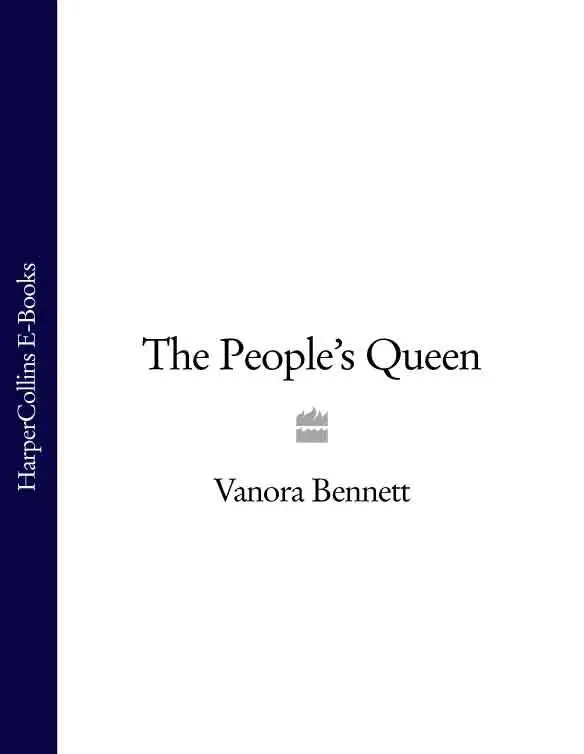
- Название:The People’s Queen
- Автор:
- Жанр:
- Год:неизвестен
- ISBN:нет данных
- Рейтинг книги:3 / 5. Голосов: 1
-
Избранное:Добавить в избранное
- Отзывы:
-
Ваша оценка:
The People’s Queen: краткое содержание, описание и аннотация
Предлагаем к чтению аннотацию, описание, краткое содержание или предисловие (зависит от того, что написал сам автор книги «The People’s Queen»). Если вы не нашли необходимую информацию о книге — напишите в комментариях, мы постараемся отыскать её.
The People’s Queen — читать онлайн ознакомительный отрывок
Ниже представлен текст книги, разбитый по страницам. Система сохранения места последней прочитанной страницы, позволяет с удобством читать онлайн бесплатно книгу «The People’s Queen», без необходимости каждый раз заново искать на чём Вы остановились. Поставьте закладку, и сможете в любой момент перейти на страницу, на которой закончили чтение.
Интервал:
Закладка:
Country gentry families, in Essex as elsewhere, don’t, on the whole, marry their daughters into City trade families, unless they’ve fallen on hard times and happened upon a temptingly rich merchant suitor already buying land in the countryside near their home. What little Chaucer knows of Master Champagne the baker doesn’t seem to fit. If Master Champagne was indeed the first husband.
Then he blushes. He’s given away the fact that he’s been prying into her past all afternoon now, hasn’t he? ‘If that isn’t an impertinent question,’ he adds hastily. But he isn’t too mortified. With Alice Perrers, he’s beginning to feel, he can ask, at least. She won’t hold a spirit of enquiry against him.
He’s right. She doesn’t look offended. She even hesitates, as if she might confide in him. There are memories in her eyes. For the first time, Chaucer sees the beauty of her.
But all she ends up saying, as Chaucer goes on looking expectantly into her eyes, is, ‘Oh…I hardly remember. A day on the river…cygnets and ducklings…liverymen notching their beaks…a lot of laughing…spring in the air, I expect. But you know how it is. It seems so important at the time, but then you forget…’
Her voice grows lighter and more playful with every phrase. The moment has passed. She isn’t going to tell him anything.
He shrugs. There’s something delicious in this conversation, even without the kind of confidences he’s been fishing for. So he doesn’t much care.
But she isn’t just teasing him. He can tell from the little furrow that now appears on her forehead – which, strangely enough, makes her look very young for a moment, not old – that she’s thinking something serious, too.
‘You know, Chaucer,’ she adds (by now he likes the way she just calls him ‘Chaucer’), ‘I think people worry far too much about where they’re from. It’s not the past that counts, or where you’re from. It’s where you’re going, and what you do when you get there. That’s what matters.’
Chaucer thinks this over, and finds that the honesty in this matter-of-fact statement of her ambition pleases him more than he might have expected it to. This clarity of hers must be what has so impressed the merchants. He thinks: I’ll do what they do in future and forget her past. No point asking foolish questions.
There’s another pause. The red begins to bleed out of the shadows.
She’s staring out again at the greying fields. Without turning towards him, with her eyes fixed out there somewhere, she adds, with that near-wistfulness she’s had earlier, that he took for the beginning of sincerity, ‘Anyway, you can marry all you want…but there’s only one person you ever truly love, isn’t there?’
Chaucer wonders, but can’t for the life of him tell, whether she means the King.
Chaucer goes to sleep in a mostly happy blur of impressions and memories, the majority of them concerning his new friendship with Alice Perrers. But when he wakes up before dawn with a pounding headache, full of worries again, what he remembers most clearly is that quiet, strange moment between Alice Perrers, and Lyons, and Latimer: the three of them muttering together, glancing quickly at each other, egging each other on to something he couldn’t grasp.
Even when he thinks back on it now, in the scratchy predawn, tossing in his bed, reaching for the water jug, he can’t imagine what that conversation can have been about.
FIVE
‘Why was Richard Lyons with us yesterday?’ Chaucer asks through his headache. ‘When he’s a vintner?’
Walworth, who until July, when his mayoral job begins, will represent the City at the wool trade, looks up from his desk across the hall. Chaucer sees the fishmonger’s lean jaw clench, and the beautiful peaceful eyes go flinty, so you can see that, despite the angel’s golden hair, he’d be a bad man to cross.
Then the merchant’s eyes clear and his wry smile comes, transforming the fighter back into a charmer. ‘Ah,’ Walworth says, easily. ‘You mean you don’t know why Lyons needed to meet the wool comptroller, since his business has nothing to do with wool?’
The clerks at each man’s desk also look up. Chaucer’s one puts down his quill. There are faint, expectant smiles on both pink young faces. Chaucer can practically see them craning forward.
Chaucer’s feeling a little wary now. He never expected such a strong reaction. But he nods.
‘As it happens, we’d all like to know the answer to that question, dear boy,’ Walworth says, nodding to the inquisitive clerks to go back to their columns of figures. They bow their heads. Then Walworth smiles a little wider, till his flawlessly ivory teeth glint in the sun. ‘Just why is Master Lyons so interested in the wool business, when, as you say, he’s a vintner?’
Walworth does tell Chaucer what he thinks of the Flemish vintner, but only later, at midday, outside the Customs House, and out of the clerks’ earshot. He links arms with Chaucer and walks him up Water Lane to Thames Street. He has to lean down and sideways to reach, and to murmur in, Chaucer’s ear. He’s tall and wiry, and as strong as a knight in the lists.
‘We are very glad,’ he begins, with what to Chaucer’s ear sounds unnecessary formality, ‘all of us, that it is you who have been chosen as comptroller – a man we in the City can talk to without reserve. Someone we can trust.’
Chaucer bows, out of courtesy and pleasure combined. Perhaps he’s just being flattered. But his own instinct, likewise, is to trust the three merchants he’s trying not to think of as Uncle Will, Uncle Nichol, and Uncle John. Still, he’s puzzled. The subtext of everything he’s been told in the past few weeks of briefings is that his job in London will be to stop these three men expanding their interests beyond what is proper, and taking for themselves what is rightfully the King’s. Yet, in this deep, comforting, familiar voice, he already hears a note of appeal. as if William Walworth and his friends fear that their own rightful interests are being eaten into.
Walworth’s saying: ‘Ever since I’ve held office in the City, we merchants have been complaining to the King that he was selling Italians too many special licences to export wool from England without paying customs to you’ – he bows at Chaucer the Customs Comptroller – ‘as all Englishmen have to. We’ve complained long and loudly. And, it seems, he heard us. For at least two, maybe three years, no more licences have been granted to Italians.’
Chaucer has to half jog to keep up with Walworth’s stride. He puffs, ‘Yes?’
‘But someone else has been granted a special licence.’ Walworth turns and arches an eyebrow. He wants Chaucer to guess who. It’s a test of Chaucer’s wit.
‘Lyons,’ Chaucer puffs, suddenly seeing it all – exactly how Lyons has become so rich, and why the merchants, who so obviously dislike and mistrust the Fleming, are nevertheless cautiously trying to bind him closer, and buy his loyalty to them, by giving him a post in their City administration. And why they’re smarting.
Walworth nods. He looks pleased with Chaucer’s quick response.
‘We arrested some men at Southampton a week or so ago,’ he confirms. ‘They were loading cargo there. Sacks and sacks of wool, on a ship bound for Flanders. No stop at London or Middleburg planned, where they would have to pay customs. Naturally we tried to confiscate the cargo. My wool investigators are allowed to, even outside London, whenever they find contraband (and we’d had a tip-off that that’s what this would be). But we couldn’t, with this cargo, because there was nothing illegal about it. The men had a licence. An absolutely official licence, all green sealing-wax and royal stamps, straight from the King’s administration. Made out to Richard Lyons.’
Читать дальшеИнтервал:
Закладка:
Похожие книги на «The People’s Queen»
Представляем Вашему вниманию похожие книги на «The People’s Queen» списком для выбора. Мы отобрали схожую по названию и смыслу литературу в надежде предоставить читателям больше вариантов отыскать новые, интересные, ещё непрочитанные произведения.




Обсуждение, отзывы о книге «The People’s Queen» и просто собственные мнения читателей. Оставьте ваши комментарии, напишите, что Вы думаете о произведении, его смысле или главных героях. Укажите что конкретно понравилось, а что нет, и почему Вы так считаете.