Vanora Bennett - The People’s Queen
Здесь есть возможность читать онлайн «Vanora Bennett - The People’s Queen» — ознакомительный отрывок электронной книги совершенно бесплатно, а после прочтения отрывка купить полную версию. В некоторых случаях можно слушать аудио, скачать через торрент в формате fb2 и присутствует краткое содержание. Жанр: unrecognised, на английском языке. Описание произведения, (предисловие) а так же отзывы посетителей доступны на портале библиотеки ЛибКат.
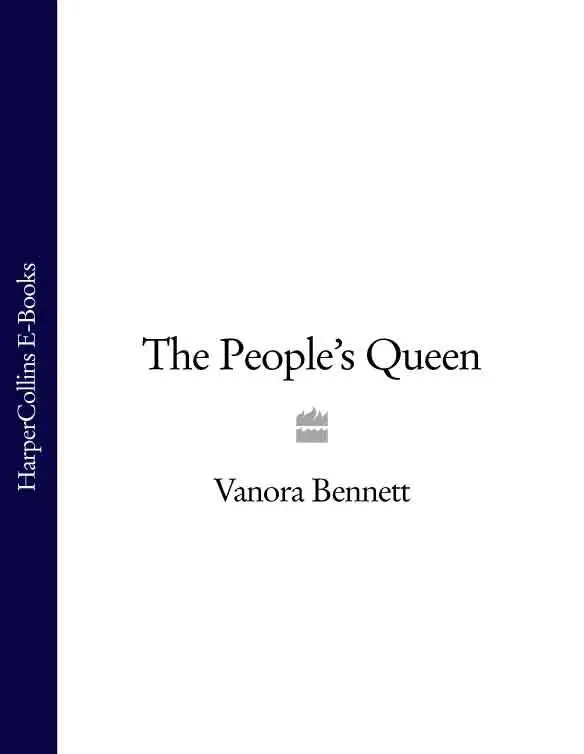
- Название:The People’s Queen
- Автор:
- Жанр:
- Год:неизвестен
- ISBN:нет данных
- Рейтинг книги:3 / 5. Голосов: 1
-
Избранное:Добавить в избранное
- Отзывы:
-
Ваша оценка:
The People’s Queen: краткое содержание, описание и аннотация
Предлагаем к чтению аннотацию, описание, краткое содержание или предисловие (зависит от того, что написал сам автор книги «The People’s Queen»). Если вы не нашли необходимую информацию о книге — напишите в комментариях, мы постараемся отыскать её.
The People’s Queen — читать онлайн ознакомительный отрывок
Ниже представлен текст книги, разбитый по страницам. Система сохранения места последней прочитанной страницы, позволяет с удобством читать онлайн бесплатно книгу «The People’s Queen», без необходимости каждый раз заново искать на чём Вы остановились. Поставьте закладку, и сможете в любой момент перейти на страницу, на которой закончили чтение.
Интервал:
Закладка:
The apartment above Aldgate was signed over to him last month, as part of his payment for this job. It’s a great spacious place, looking out over the cut-throat eastern slum villages beyond the City walls one way, along the Colchester road through to Essex on the horizon, and over the roofs and gardens of Holy Trinity Priory and teeming Aldgate Street the other way, inside the City walls.
The apartment itself is all large echoing rooms, with a solar above and a cellar below the easternmost of the six City gates. It’s the only toll-free gate, open to all, beggars included, and there are plenty of those coming from the wild, sparsely populated Essex country beyond. There’ll be people coming and going in their carts underneath Chaucer’s feet every day, cursing as they try to squeeze through the narrow arch, and the clank of the City gate closing every night at curfew. The apartment has been used as a prison in the past; this is a strategic spot. He’s had to swear to use it well and not let enemies of the City enter through the gate below; they’ve had to swear not to put prisoners in there with him and his family for his lifetime. It was a comical little City ceremony, the kind that would have made Philippa smirk. But the apartment’s prestigious enough – as good as Stury’s riverside house – so any smirking on her part, right now, is also partly a genuinely happy smile.
Alice Perrers winked when she told him she’d got him the apartment rent-free. ‘It’s not usually rent-free. But the Mayor said yes, for you.’
‘Whatever kindness the worshipful Mayor is doing, it’s to impress you, I’m sure, not me,’ he replied gratefully. It’s her kind of favour, he understands. He’s heard a lot of stories about Alice Perrers’ ruthless ways with property, exchanging influence and access to the King for favours in land and buildings, constantly obtaining new leases on still more properties, all on the never-never, feathering her own nest. The stories aren’t flattering, but they’re probably all true. It’s obvious she’s minting money. Everyone says the same thing. Chaucer knows he’s supposed to be shocked by her greed. Philippa, in particular, keeps telling him so. But he can’t help admiring the merry mischief in Alice Perrers’ eyes. He likes her for enjoying her tricks and subterfuges so much.
Philippa will have made those empty spaces above Aldgate beautiful in these past days. She’ll have hung the tapestries and scattered the cushions artfully to fill the rooms with loveliness and colour. There’ll be flowers. All their little wealth will be on brave display. She’ll understand the importance of that.
Geoffrey Chaucer finds his hands clutching at his long sleeves. He’s wearing merchant robes today, long sweeping things to his feet; he plans to dress like the merchants he’ll be living among. But he hasn’t reckoned with the heat inside the tube of velvet. He’s forgotten that, in his years of aristocratic tunics and hosen. He’s stifling. His linen undershirt is soaking. He wishes his stomach would stop churning.
If only he could be sure his wife also understands how important it is to treat these merchants like princes, and feed them like kings. If only he knew for certain that she’s understood about the dinner.
FOUR
There’s a crowd at Aldgate as the merchant procession arrives. Two donkeys, pulling a heavily laden cart, are blocking the traffic while men unload trays from it. They’re ignoring other men, who are darting in and out of the gatehouse, complaining, as well as the men on carts trying to come into the City, who are shouting and cat-calling and hooting obscenities in their rustic Essex voices from beyond the gate.
Chaucer winces. He remembers these stubborn City scraps for space so well. It might go on for hours, this slow-motion shouting. It might turn into a fight. He doesn’t want his dignitaries to be caught up in one of these spats now.
But, after a heart-stopping moment, he realises there’s no cause for concern. The aldermen are City folk too. They know, better than he, that there’s no need to mix themselves up in this competition among low-lifes. They just puff out their padded chests and glide through the fracas as if unaware of it, making straight for Chaucer’s staircase. They don’t even seem to see the shaking fists and jutting jaws all around them.
‘Warm for the time of year,’ Will Walworth opines, velvet-smooth, taking Chaucer’s arm and guiding him into the doorway. Only the glint of amusement in his eyes gives away his awareness of the little birds fighting.
It’s only when Chaucer is on the narrow stone steps, aware that Walworth has politely taken the narrower side of the spiral yet is so delicate on his long feet that he seems to be flying up the tiny treads, that the new comptroller sees that some of the men with trays are also in the stairwell, both above and below him, and that each of them is carrying a platter on his shoulder.
When Chaucer reaches the top of the stairs, and emerges into the biggest of the stone chambers, he sees, to his unspeakable relief, that it is all decked out with trestles and cushions and benches and the cupboard containing his and Philippa’s many silver-gilt Christmas gifts from Countess Elizabeth, his first employer, and both the past and present Duchesses of Lancaster, Philippa’s two employers, and Duke John too, and the King himself, each cup bearing one or other noble coat of arms. He sees, too, that the damp back wall is covered by the tapestry his mother worked, a hunting scene she deemed appropriate for his new gentlemanly station in life, and there are nosegays of sweet purple roses and clove-scented pink gillyflowers in small vases everywhere. Only then does he begin to understand what’s going on with the food and the platters.
Philippa, in a neat blue robe that she must have considered quite showy enough for City folk, is here, sure enough, with one eyebrow very slightly raised, her gaze passing over Chaucer as she steps forward, with her usual willowy formality, to bow to and welcome the future Mayor to her new home.
But behind her, supervising the men arriving in the room with their trays and platters – on which he can now see, as their coverings are removed, are cooked fishes of every description, and piles of cut oranges and pomegranates and lemons, dates and dried apricots, crumbles and jumbles, pink creamy castles of blancmange and wobbling rivers of posset, and a sugared pastry extravagance in the shape of a swan, until the table resembles nothing so much as the Land of Cockaigne – is another, less familiar, female form.
‘Over there,’ he hears, as if in a dream. ‘And this one, here, in the corner. There’s a little bit of space here still.’ She has her back to him, but there’s something about that strangely confident voice, and about that tan robe. Before the woman has finished and turned round, allowing Chaucer properly to admire the elaborate cauls in which her hair has been arranged over each ear, and the sheer veil sparkling with fine gold threads wafting around her face, he’s guessed.
‘Madame Perrers,’ he mumbles, stepping forward. Then, correcting himself from courtly French to practical English, the language of the City: ‘ Mistress Perrers.’
She turns to him. ‘Chaucer!’ she says familiarly, as if he were her servant. No ‘Monsieur’ here; no ‘Master’ either. But who’s he to argue with that, when she’s saving the day, acting as though she’s his servant, bringing in food? And she looks so pleased to see him, surrounded by bowing merchants, too. She’s smiling, very warm and wide; for a moment, he thinks he sees her wink.
Now he understands Philippa’s raised eyebrow. He can see from the colours of the platters – Alice’s all of pewter, Philippa’s of a jumble of different colours of pottery and metal – that the meal his wife has laid on has been, until Alice got here with these unsolicited reinforcements, a modest affair of herring, sorrel, and strawberries. The relief that surges through Chaucer’s innards when he sees the feast now being set out by Alice’s servants is like a river flooding its banks. He’s intensely aware of the appreciative looks on the merchants’ faces, the bright, hungry eyes, inspecting the dishes with pleasurable anticipation. He can almost feel the saliva swirling in every mouth. Everything will be all right now. Except, of course, that behind her cool politeness, Philippa must be fuming at That Woman having so unexpectedly upstaged her.
Читать дальшеИнтервал:
Закладка:
Похожие книги на «The People’s Queen»
Представляем Вашему вниманию похожие книги на «The People’s Queen» списком для выбора. Мы отобрали схожую по названию и смыслу литературу в надежде предоставить читателям больше вариантов отыскать новые, интересные, ещё непрочитанные произведения.







Обсуждение, отзывы о книге «The People’s Queen» и просто собственные мнения читателей. Оставьте ваши комментарии, напишите, что Вы думаете о произведении, его смысле или главных героях. Укажите что конкретно понравилось, а что нет, и почему Вы так считаете.