Vanora Bennett - The People’s Queen
Здесь есть возможность читать онлайн «Vanora Bennett - The People’s Queen» — ознакомительный отрывок электронной книги совершенно бесплатно, а после прочтения отрывка купить полную версию. В некоторых случаях можно слушать аудио, скачать через торрент в формате fb2 и присутствует краткое содержание. Жанр: unrecognised, на английском языке. Описание произведения, (предисловие) а так же отзывы посетителей доступны на портале библиотеки ЛибКат.
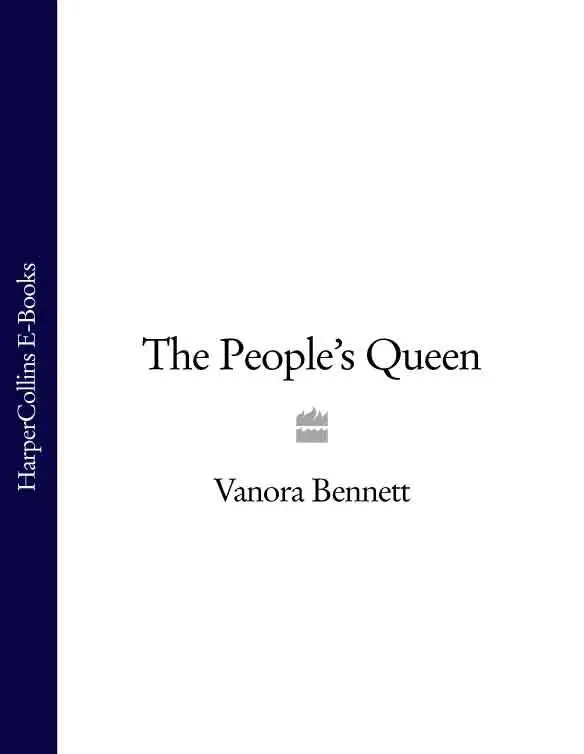
- Название:The People’s Queen
- Автор:
- Жанр:
- Год:неизвестен
- ISBN:нет данных
- Рейтинг книги:3 / 5. Голосов: 1
-
Избранное:Добавить в избранное
- Отзывы:
-
Ваша оценка:
The People’s Queen: краткое содержание, описание и аннотация
Предлагаем к чтению аннотацию, описание, краткое содержание или предисловие (зависит от того, что написал сам автор книги «The People’s Queen»). Если вы не нашли необходимую информацию о книге — напишите в комментариях, мы постараемся отыскать её.
The People’s Queen — читать онлайн ознакомительный отрывок
Ниже представлен текст книги, разбитый по страницам. Система сохранения места последней прочитанной страницы, позволяет с удобством читать онлайн бесплатно книгу «The People’s Queen», без необходимости каждый раз заново искать на чём Вы остановились. Поставьте закладку, и сможете в любой момент перейти на страницу, на которой закончили чтение.
Интервал:
Закладка:
Chaucer feels the muscle on that arm even through the gown; it’s as if Brembre, despite his peaceful calling, is made of iron. Brembre has straight, thick, dark eyebrows too; smooth jet-black, like his smooth hair once was. He raises one of these determined eyebrows, and smiles directly into Chaucer’s eyes. Chaucer feels exhilarated by that frank, compelling gaze. ‘And I’, he says, finding his voice, borrowing the warmth of his tone from that of the merchant, ‘am delighted to be once again among the kind of men I can do business with.’
They murmur appreciatively.
Here’s where the future will happen, Chaucer sees, as, bowing his big square head in exaggerated respect, Brembre propels him, with a large, warm, clean hand, to where he will sit, inside the Customs House, now he is comptroller.
Across the room, behind the wall of velvet-clad shoulders, stands an enormous desk. Over there, the merchants of London, every day, write down on the Roll exactly how much wool has been weighed and dispatched, and what taxes have been charged on it. Over here, but separately, at a second enormous desk, Chaucer the comptroller will keep his own independent record in the Counter-Roll. Once a year they’ll compare Roll and Counter-Roll. With all the tact at his disposal, Chaucer will have to tackle these powerful financiers over any discrepancies, and make the sums add up to the King’s satisfaction.
Chaucer takes a deep breath to calm his fast-beating heart. Bowing again to the gathering, he says, skittishly, ‘So, masters, let me try my seat for size,’ and acknowledges their rumbles of laughter with a bow as he gathers his robes in his hands and sits down behind his desk.
He’s glad to be seated while they’re standing – all those big, well-covered men with enormous hands and strong bodies that don’t notice the heat, despite their long furry gowns. They remind him of a flock of waterfowl – geese, or swans, or herons – all so large, yet so implausibly smooth in every movement. They’re tougher than their peaceable gowns make them seem. For all their puffed-up chests and dignity, he can imagine any or all of them mercilessly pecking out the eyes of any impertinent lesser bird, any duck or moorhen or coot that gets in the way of their majestic glide through the waters they rule. And how they’re devouring him with their watchful eyes, all of them, he thinks, suddenly. They’re no fools. They’re wondering if he’ll be trouble. Sizing him up.
Behind him, he’s aware of Latimer and Stury, his court friends, giving Walworth and his merchant friends the same beady looks the merchants are giving him. They’re wondering whether Chaucer will be tough enough to stand up to the merchants. They’re sizing them up.
Chaucer knows, secretly, that his court friends are right to worry about his loyalty. A part of him feels he’s come home as he looks at these smooth merchant faces. When, a moment ago, Brembre has flamboyantly presented his stout friend as ‘my worshipful colleague, John Philpot, a grocer like myself…alderman for Cornhill Ward…you may recall?’ Chaucer knows he’s only just managed to find it in him to refrain from laughing in pure delight. For of course he knows Philpot, and definitely knows of him – he knows that Philpot and Brembre are financing a fleet for the south coast, and have also just reshaped the City’s trade association for victuallers, giving it the new name of grocers and spending fortunes on setting it up grandly.
But that’s not why he’s having to struggle to keep the merry grin off his face. The grin’s because of the memory that pops unbidden into Chaucer’s head of Philpot’s smooth hand reaching out towards him, passing over a gingerbread man with a silvery crown on its head, and of that soft voice, quivering with amusement, saying, ‘Don’t make yourself sick now, my boy.’
Chaucer can’t choke off that memory altogether. He isn’t able not to pronounce the words ‘Dear Uncle John’ with a rush of real affection, or to refrain from saying, out loud, ‘Why, of course. We’re old friends.’ And even he’s surprised to find himself embracing both princes of grocers with such affection that, for a dangerous moment, he feels the mercantile deputation melt and relax, while the courtiers behind him bristle. He’ll have to get a grip: to reapply his courtly manners and his air of polite watchfulness, before any of them take him for a pushover. Forget the gingerbread. He has a job to do.
It’s only as the group walks across the City to the dinner at Chaucer’s new apartment that one of the lesser merchants breaks through the shoulders of Brembre and his friends.
‘I hope you will not be offended,’ the unfamiliar man says to the comptroller, with the heavy accent of Flanders, ‘but I have sent a small gift ahead to your new home, to welcome you to your post. A tun of Gascon wine.’
The man then bows, with a big man’s slouching-shouldered imitation of modesty, includes Chaucer in a huge rolling laugh, and introduces himself as Richard Lyons. He’s almost unnaturally large and luridly coloured, though without an ounce of fat on him. He makes Brembre look small and weak. He has thighs like tree trunks, a pink face, sly, amused eyes, pale orange hair peeping out from under his hat, and a warm, rich voice that projects without effort over everyone else’s. No grey in his stubble – he can’t be older than forty – and plenty of gold at wrist and chest.
Chaucer never met Lyons while a boy in London, but of course he’s heard his name since. Lyons has only emerged as a wealthy man very recently (and, Chaucer remembers, his father, in his latter years, wasn’t always too sure that this new wealth was very honestly acquired, though naturally that’s the kind of thing almost any Londoner will automatically say about almost any foreigner). Chaucer knows the Fleming is now very rich indeed. Even though he’s a foreigner, Lyons is about to serve as one of the next mayor’s two sheriffs – high office – which seems to suggest that the London elite walking down this street favour him, except that it’s very easy to see that, actually, they don’t want him there at all; they feel awkward around him, and are doing everything they can to keep him to the back and dilute his overwhelming presence among them.
Chaucer understands why they’d be nervous. Lyons has been biding his time. He’s stayed in the background, and kept his peace for the past hour. But he’s been the first, all the same, to get in with his charming little bribe.
‘I thank you,’ he says, bowing very politely, ending the conversation. Secretly, he’s breathing a big sigh of relief that, for the moment at least, Lyons, who’s a vintner like Chaucer’s own father, is only here for curiosity’s sake; he’s hoping that this pink-and-orange-and-red-and-gold force of nature doesn’t, in the near future, start getting tied up in the wool trade. At least until Chaucer’s got everything worked out. He can see, right off, that Lyons is a man on the rise, and a man who does things his own way, and a man who’ll always be a focus for trouble.
By the time Lyons bows and moves away, the whole procession, dignitaries, aristocrats, and the new Comptroller of Customs and Subsidy on Wool, Sheepskins and Leather in the Port of London, has passed north and east across half the City – a brisk ten-minute walk, right through the parish of All Hallows Barking, up Water Lane, over Thames Street and Tower Street, and on up Mark Lane into neighbouring Aldgate parish – and is on Aldgate Street itself, heading for the City wall and the gate. All around them, there’s the deafening crash of midday bells for sext.
The City is a democratic place. It’s too small for anything but walking, for even the greatest of men, and Geoffrey Chaucer likes the quiet freedom of strolling through the crowds. It’s one of the pleasures of London, that you can go everywhere on foot. He clings to this notion of enjoying walking, because he’s suddenly a little wobbly inside about how much he really likes London. Travelling has blunted so much of his old pleasure in his home city. Once you’ve seen honeystone Florence, you’re spoiled for ever. Afterwards, how can you feel anything more than slightly pitying affection for this twisty, stinky, thatched, wattle-and-daubed, cobbled, overcrowded, provincial old place? Of course, that isn’t a feeling to share with the men now whispering confidingly into his ear, one by one, that they’ve had a box of pepper, or spices, or fish, or cushions, delivered to his new home as a housewarming gift. True Londoners will always be proud of their White City. They call it the Ringing City, sometimes – all the church bells. It’s a place to walk endlessly through the ringing of bells. That’s one of the things I’ll be doing, from now on, Chaucer thinks, not quite happily.
Читать дальшеИнтервал:
Закладка:
Похожие книги на «The People’s Queen»
Представляем Вашему вниманию похожие книги на «The People’s Queen» списком для выбора. Мы отобрали схожую по названию и смыслу литературу в надежде предоставить читателям больше вариантов отыскать новые, интересные, ещё непрочитанные произведения.





Обсуждение, отзывы о книге «The People’s Queen» и просто собственные мнения читателей. Оставьте ваши комментарии, напишите, что Вы думаете о произведении, его смысле или главных героях. Укажите что конкретно понравилось, а что нет, и почему Вы так считаете.