Olivia Goldsmith - Bestseller
Здесь есть возможность читать онлайн «Olivia Goldsmith - Bestseller» — ознакомительный отрывок электронной книги совершенно бесплатно, а после прочтения отрывка купить полную версию. В некоторых случаях можно слушать аудио, скачать через торрент в формате fb2 и присутствует краткое содержание. Жанр: unrecognised, на английском языке. Описание произведения, (предисловие) а так же отзывы посетителей доступны на портале библиотеки ЛибКат.
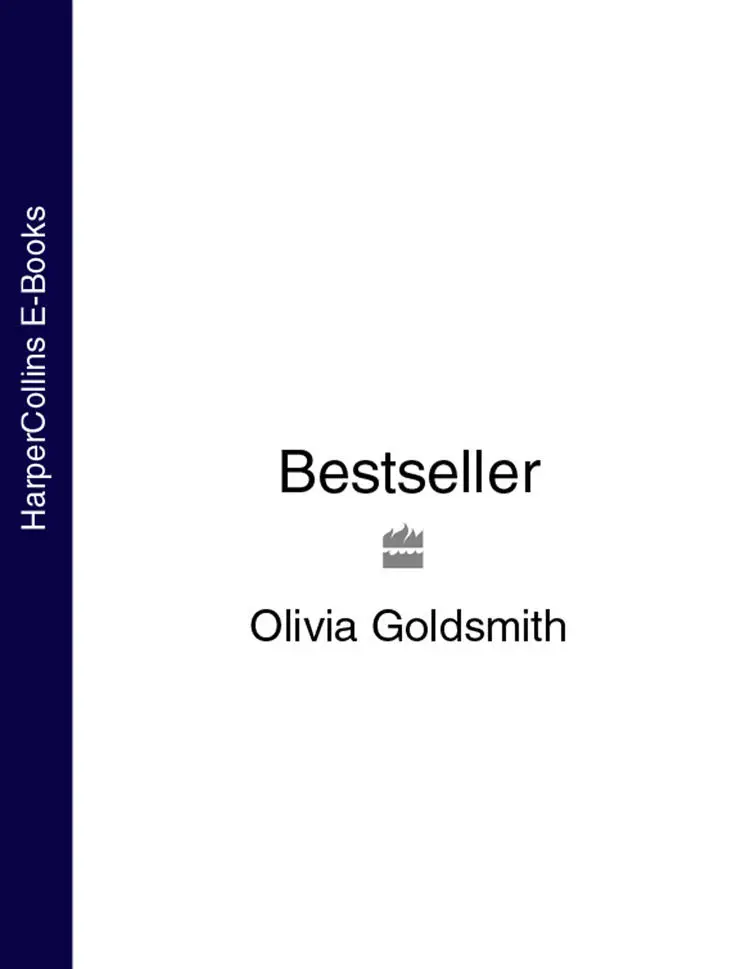
- Название:Bestseller
- Автор:
- Жанр:
- Год:неизвестен
- ISBN:нет данных
- Рейтинг книги:5 / 5. Голосов: 1
-
Избранное:Добавить в избранное
- Отзывы:
-
Ваша оценка:
Bestseller: краткое содержание, описание и аннотация
Предлагаем к чтению аннотацию, описание, краткое содержание или предисловие (зависит от того, что написал сам автор книги «Bestseller»). Если вы не нашли необходимую информацию о книге — напишите в комментариях, мы постараемся отыскать её.
Bestseller — читать онлайн ознакомительный отрывок
Ниже представлен текст книги, разбитый по страницам. Система сохранения места последней прочитанной страницы, позволяет с удобством читать онлайн бесплатно книгу «Bestseller», без необходимости каждый раз заново искать на чём Вы остановились. Поставьте закладку, и сможете в любой момент перейти на страницу, на которой закончили чтение.
Интервал:
Закладка:
Yet the police told her that there were no manuscripts, no papers of any kind found. Only the burnt offerings in the fireplace. Opal simply couldn’t believe that. A mother might kill herself, but she would never kill her child. Or Terry wouldn’t have. Opal knew the manuscript was here. They’d simply overlooked it.
But at first all she saw in the drawer were neatly folded clothes—a few sweaters, two old shirts. Then, underneath them, she glimpsed a cigar box. Not big enough for a manuscript, but perhaps … Opal’s heart began to beat faster. Terry had been scribbling since she was a toddler. She wrote about everything . Terry’s whole life had been dedicated to writing, and Opal’s to preparing her and helping her to write. Surely Terry wouldn’t go without leaving some explanation, some clue, to help Opal through this. The box looked just like the one Terry had kept letters in back in high school. Opal knew that the box was waiting for her.
She carefully lifted out the brightly colored box and wedged her thumbnail under the lid, flicking it open. Inside there was nothing but a collection of pencil stubs, markers, and the kind of click-top ballpoint pens that had the name of various businesses on their sides. Opal bit her thin lower lip and threw the box in the trash. She put the sweaters and blouses into in her canvas bag. Terry was—had been—a big girl; Opal couldn’t wear these things, but somebody could. Neither of them had approved of waste.
One drawer left. Something had to be there. Slowly, Opal opened it. But all it held was a few pair of neatly folded corduroy slacks and a Columbia sweatshirt. Opal remembered Terry wearing it on her last visit to Bloomington, and her eyes filmed over again. Fighting back the tears, she emptied the contents of the drawer into her bag.
Next she went into the tiny bathroom. Terry had never been one to fix herself up much—she took after Opal in that respect—but even Opal was surprised by how little there was. A toothbrush and a plastic cup, toothpaste, a stack of neatly folded washcloths, a bar of soap, and a hairbrush were all the objects laid on the sink and shelf. Opal cast all but the hairbrush into the trash and looked carefully at the brush before she put it in her canvas bag: Terry’s hairs were wrapped around the bristles. Was that all of herself that Terry was leaving behind? Opal opened the medicine cabinet, but it was stocked as sparely and impersonally as a hotel’s. A can of Band-Aids, a deodorant bar, cheap hand cream, tampons, aspirin, and a plastic tube of petroleum jelly sat primly on the little glass shelves. Opal shook her head and didn’t have the heart to clean any further. She’d leave that for the next tenant.
She walked out of the bathroom, past the fireplace and over to the single closet. Even with the light on it was difficult to see into it, but Opal didn’t need to see much to know how little there was inside. A worn London Fog raincoat (which Opal had given Terry for Christmas six or seven years before), a brown cloth coat that Opal did not remember, and a few skirts hung there beside a broom and a small upright vacuum cleaner. On the shelf above, two blankets and a pillow were arranged neatly. There was Terry’s computer, which the police told her had been emptied of all files. On the floor was a pair of rubber boots, two pairs of sturdy shoes, and a dustpan, along with a box of unused garbage bags. There was also a cardboard carton.
Opal squatted down, her heart racing as she reached for the box. Is this where Terry had stored early drafts of the book? But as Opal pulled the box toward her, its weight and its clanking gave her the bad news. She opened it to find nothing more than empty cans and bottles, ready for recycling, that was all.
Opal looked again at the room. She felt so very tired, it was as if she could not stand up for another minute. For her whole life, it seemed. Opal had stood for something. She had stood for education, she had stood for the idea that one could better oneself, she had stood for single women getting a place in the world and for individuality in a place that preferred conformity. She had stood up for her daughter’s dream, her talent and creativity, and believed that Terry could become a writer. Now Opal could stand no longer. She sank onto the daybed as if she, like Terry, would never rise again. She looked at the fireplace and the ashes in it. That was what her life was reduced to—ashes. There was no point in going back to Bloomington, to go on cataloging books, to go on reading. Terry was dead, and she had left nothing behind her.
Opal knew she was neither pretty, nor well dressed, nor well educated, but she was not so naive that she couldn’t see the message in the lack of a message. Terry was—had been—furious, not just at those publishers who had rejected her work, but also at Opal herself, who had encouraged her in the first place. Otherwise she would have left a word of comfort.
From all she had read, Opal knew that the writer’s life was a lonely one. But surely Terry had the muscle to live with that. As Opal had told Terry over and over during her childhood, you can never be lonely if you have a good book. And in this dingy apartment, on the bookshelves flanking the fireplace, there were plenty of those. But Terry must have been lonely, and desperate enough not to care. Lonely and desperate and angry.
At last, Opal began to weep. There was nothing that Terry had left behind—no message, no manuscript, no nothing. Just these rejection letters the policewoman had given Opal. They’d come from the ignorant, stupid, shallow publishers who had helped to kill Terry. Those were the key to this death scene. That is all that Terry meant for me to receive, Opal thought. That and my guilt. The hardness of it was shocking.
Opal cried as she hadn’t cried for thirty years. And while she wept, she cursed herself for encouraging Terry in a life so difficult. She carried my hopes with her, and the burden was too heavy. It’s my fault. Opal told herself. But what else could I have done? Terry was talented. Terry was an artist. It wasn’t just that she was my daughter. She was brilliant. Did she blame me because nobody else agreed? Did she lose faith in herself because mine was the only voice that supported her? Did she come to hate me? Opal looked around the grim room that accused her. She must have. She did. Opal moaned and nearly choked. She felt as if she’d go on crying forever.
The knock on the door startled her. She wiped her eyes with her hand and looked for a tissue. Before she could fumble for her purse, the rapping at the door began again. “I’m coming,” Opal said, and managed to get to the door. But she didn’t open it. She wasn’t stupid, after all, and she read the newspapers. In fact, she read the NewYork Times every day at the library. She knew what trouble could lurk outside a New York City door. “Who is it?” she asked, her voice wet and deep from her tears.
“It’s me.”
Well, that was the least helpful response she’d ever heard. “Who are you?” she asked.
“Me, Aiello, the super.”
Opal rolled her eyes and then wiped them again. Just what she needed! Some stranger’s condolences and morbid curiosity. If she wanted that, she’d have brought Terry’s body back to Bloomington, where all the townspeople could gape. She opened the door. “Yes?” she asked.
“I’ll need the keys back,” the man said. No “excuse me” or “I’m terribly sorry” or “Can I help you in your moment of need,” but a baldfaced demand for the keys! Opal was outraged. This city was heartless. No wonder Terry hadn’t been able to face it.
“I believe the rent is paid till the end of the month,” Opal informed him, “so I believe that gives me a legal right to the keys until then.”
Читать дальшеИнтервал:
Закладка:
Похожие книги на «Bestseller»
Представляем Вашему вниманию похожие книги на «Bestseller» списком для выбора. Мы отобрали схожую по названию и смыслу литературу в надежде предоставить читателям больше вариантов отыскать новые, интересные, ещё непрочитанные произведения.







Обсуждение, отзывы о книге «Bestseller» и просто собственные мнения читателей. Оставьте ваши комментарии, напишите, что Вы думаете о произведении, его смысле или главных героях. Укажите что конкретно понравилось, а что нет, и почему Вы так считаете.