Peter Hennessy - Harold Wilson
Здесь есть возможность читать онлайн «Peter Hennessy - Harold Wilson» — ознакомительный отрывок электронной книги совершенно бесплатно, а после прочтения отрывка купить полную версию. В некоторых случаях можно слушать аудио, скачать через торрент в формате fb2 и присутствует краткое содержание. Жанр: unrecognised, на английском языке. Описание произведения, (предисловие) а так же отзывы посетителей доступны на портале библиотеки ЛибКат.
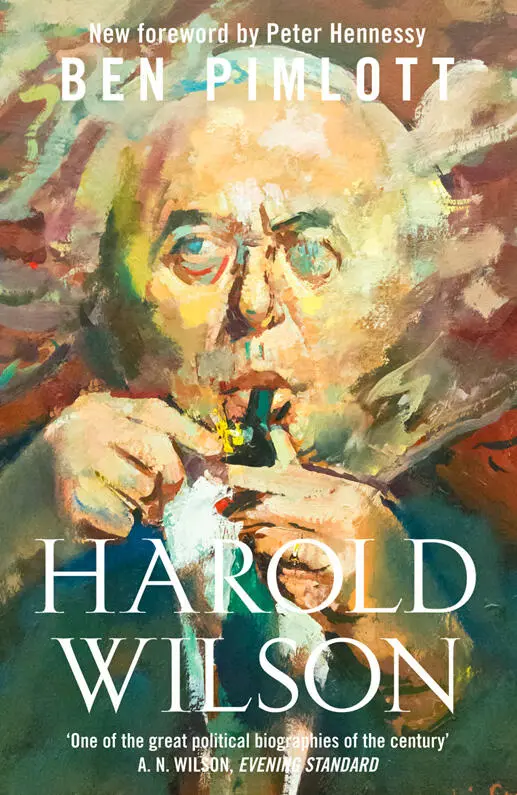
- Название:Harold Wilson
- Автор:
- Жанр:
- Год:неизвестен
- ISBN:нет данных
- Рейтинг книги:5 / 5. Голосов: 1
-
Избранное:Добавить в избранное
- Отзывы:
-
Ваша оценка:
Harold Wilson: краткое содержание, описание и аннотация
Предлагаем к чтению аннотацию, описание, краткое содержание или предисловие (зависит от того, что написал сам автор книги «Harold Wilson»). Если вы не нашли необходимую информацию о книге — напишите в комментариях, мы постараемся отыскать её.
Harold Wilson — читать онлайн ознакомительный отрывок
Ниже представлен текст книги, разбитый по страницам. Система сохранения места последней прочитанной страницы, позволяет с удобством читать онлайн бесплатно книгу «Harold Wilson», без необходимости каждый раз заново искать на чём Вы остановились. Поставьте закладку, и сможете в любой момент перейти на страницу, на которой закончили чтение.
Интервал:
Закладка:
Gladys retained her religious faith, in an amorphous, non-doctrinal way but she half-consciously rebelled against the narrowness of her religious training. Some of her later attitudes might be called permissive. ‘I’ve never worried much about so-called sin in personal relationships,’ she told an interviewer after Harold became Prime Minister. ‘What I mean is that I don’t care for religious attitudes and ideas of morality which seem to depend on intolerance of one kind or another. Especially intolerance of personal weaknesses, in matters of sex, for instance …’ 21That was in principle. In practice, her strict background left her with a strong sense of guilt, and of foreboding. Another legacy of her childhood was a desire to settle down and live securely in one place. Her early memories were of frequent, disruptive moves as her father’s ministry took him all over the country: she later complained that she had moved a dozen times before she got married.
Gladys was born in the village of Diss in Norfolk, and remembered ‘an old semi-detached house standing high’, which was her birthplace. 22She lived there until she was five. When Harold was Prime Minister and she consoled herself by writing poetry, she formed a friendship by correspondence with John Betjeman, who proposed a nostalgic trip to Diss. The visit produced two poems. ‘Yes it will be bliss / To go with you by train to Diss;’ his began. ‘Your walking shoes upon your feet, / We’ll meet, my sweet, at Liverpool Street.’ She responded after the event:
We find the house where I was born –
How small it seems! for memory
Has played its usual trick on me.
The chapel where my father preached
Can now, alas, only be reached
By plunging through the traffic’s roar;
We go in by the Gothic door
To meet, within the vestry dim,
An old man who remembers him. 23
When she was five, the family moved to Fulbourn in Cambridgeshire, where they lived until she was ten. 24It was this home she was recalling when she wrote another poem (‘The Old Manse’) also evoking an image of her Victorian, powerful, profoundly religious father, whom she saw as the fount of domestic happiness, as well as of domestic duty:
O what a longing, a burning deep desire
Here in my father’s house, to be a child again; …
Within the study, where the sunlight never falls
My father writes his sermon, hooded eyes down-bent;
His books of reference wait round the walls –
He shapes each phrase, deploys each argument
And turns from time to time, instinctively
To the great Bible, open on his knee.
Flowers in the garden, her brother on a bicycle, her mother baking bread in the kitchen, the village school bell summoning her to lessons, are also in this poem, providing a backcloth. 25
After Fulbourn the Baldwins left East Anglia and the Fens permanently and went to live in Nottinghamshire. The move upset Gladys and a little later she became ill. She began to write poems while she was convalescing, and the habit stayed with her. At first, it was a way of articulating what, in the heavily moral atmosphere of her father’s house, she felt unable to say. ‘All I know is that, [almost] as far back as I can remember, from time to time I would feel very deeply about something’, she later tried to explain, ‘and the feeling would be so strong that I had to express it, and the only way of doing this was to write a poem.’ 26It is notable that scarcely any of her poems touch on politics.
After her illness, she was sent to a boarding-school for the daughters of Nonconformist ministers called Milton Mount College, at Crawley in Sussex. This became a substitute for a geographically stable home, and she was happy there. Later she wrote a cheerfully witty poem about a schoolgirl’s crush on the French mistress:
My mouth is dry as she goes by –
One curving line from foot to thigh –
And with unEnglish liberty
Her bosom bounces, full and free;
Pale skin, pink lips, a wide blue stare;
Her page-boy fall of silky hair
Swings on her shoulders like a bell;
O how I love Mamzelle! 27
Unlike her older brother, Clifford Baldwin, who had taken an engineering degree at Cambridge and eventually became vice-chancellor of the University of Wales, she was not academically inclined. She read nineteenth-century English novels and poetry, and in later interviews mentioned her particular liking for the Brontes, Hardy, James, Keats and Tennyson. She admired scholarship in others, especially the men in her family, but had no desire to go to university herself. She left school at the age of sixteen in 1932, when her future husband was just entering Wirral Grammar School, and returned to live with her parents who by now had moved once again, to Penrith in Cumbria. Here she undertook the typical training of a girl of her age and station, for whom working life was likely to be a short interlude before marriage and the raising of a family. She attended a local establishment to learn shorthand and typing and, armed with this qualification, and with the independence which came from a boarding-school education, she left home to live in digs and take the job which brought her into contact with Harold. 28
Gladys later described herself as ‘round-faced, snub-nosed and pear-shaped’. 29Most people who met her described her as pretty – prettier, indeed, than often appeared from photographs, in which she usually wore a blank and harassed expression. She did not yearn to make an impact upon the world, or draw attention to herself. ‘I had been brought up in a tradition in which showing-off was frowned upon, and in which the Bible was taken literally,’ she said, shortly after Harold’s retirement from office. ‘“When thou doest alms, do not send a trumpet before thee, and let not thy left hand know what thy right hand doeth, that thine alms may be in secret”.’ 30But she was, perhaps in spite of herself, impressed by Harold and his narcissistic energy. The word ‘Oxford’ had an enticing ring: it reminded her of Cambridge, where her brother had recently graduated, and which had also been part of her childhood Eden. Because of her parents’ peripatetic life, she had few friends at home and there had been little time to acquire new ones in the Wirral. It is easy to see why this intelligent and unformed young girl, with her ‘quick sense of humour, mischievous yet compassionate, a complete lack of all pretension’ and firm set of values, 31turned the head of an ebullient sixth-former. At the same time Harold – cheerful, boastful, absurdly sure of himself, confidently planning the future – filled a need for her that summer. On 4 July, three weeks after they met, he announced that he would marry her. It was a declaration, rather than a proposal. She was touched, and amused. He also told her of his boyish plan, now of many years’ standing: he was going to be a Member of Parliament and Prime Minister. She laughed that off as well. Later, the family joke was that if she had believed him it would have been a short romance. 32He did not say, however, for which party.
When Wilson became Prime Minister, much was made of his lowly origins. Yet he was by no means the first non-public school boy to reach No. 10 Downing Street. Five twentieth-century predecessors had not attended a famous school, and two – Lloyd George and Ramsay MacDonald – had not been to university either. But one peculiarity did mark him out. He was an English provincial.
Amongst other prime ministers not of upper- or upper-middle-class origin, only one – H. H. Asquith – came from an English town, coincidentally the same as Wilson’s. But Asquith received only his early education in the North. At the age of eleven he was sent to board at the City of London School, and to acquire the speech and habits of mind of a Southerner. Asquith went to Balliol, was called to the Bar and represented Scottish seats for the Gladstonian Liberal Party: he became an honorary gentleman. Wilson, by contrast, wore his roots like a badge, continuing to speak in a Yorkshire accent which made some people feel, by a contorted logic, that the experience of Oxford and Whitehall ought to have ironed out the regional element, and the fact that it had not done so reflected a kind of phoniness. The truth was that, for all his other conceits, Wilson was the least seducible of politicians in social terms, remaining imperturbably close in his tastes and values – as in his marriage – to the world in which he had grown up. It was a bourgeois world, of teachers, clerks and nurses: an existence which drew its strength from patterns of work, orderliness, routine, respectability, thrift, religion, family, local pride, regard for education and for qualifications. It was a world from which luxury, party-going, fashion, drink, sexual licence, art and culture were largely absent.
Читать дальшеИнтервал:
Закладка:
Похожие книги на «Harold Wilson»
Представляем Вашему вниманию похожие книги на «Harold Wilson» списком для выбора. Мы отобрали схожую по названию и смыслу литературу в надежде предоставить читателям больше вариантов отыскать новые, интересные, ещё непрочитанные произведения.




Обсуждение, отзывы о книге «Harold Wilson» и просто собственные мнения читателей. Оставьте ваши комментарии, напишите, что Вы думаете о произведении, его смысле или главных героях. Укажите что конкретно понравилось, а что нет, и почему Вы так считаете.