Dr. Daniel - The Cancer Directory
Здесь есть возможность читать онлайн «Dr. Daniel - The Cancer Directory» — ознакомительный отрывок электронной книги совершенно бесплатно, а после прочтения отрывка купить полную версию. В некоторых случаях можно слушать аудио, скачать через торрент в формате fb2 и присутствует краткое содержание. Жанр: unrecognised, на английском языке. Описание произведения, (предисловие) а так же отзывы посетителей доступны на портале библиотеки ЛибКат.
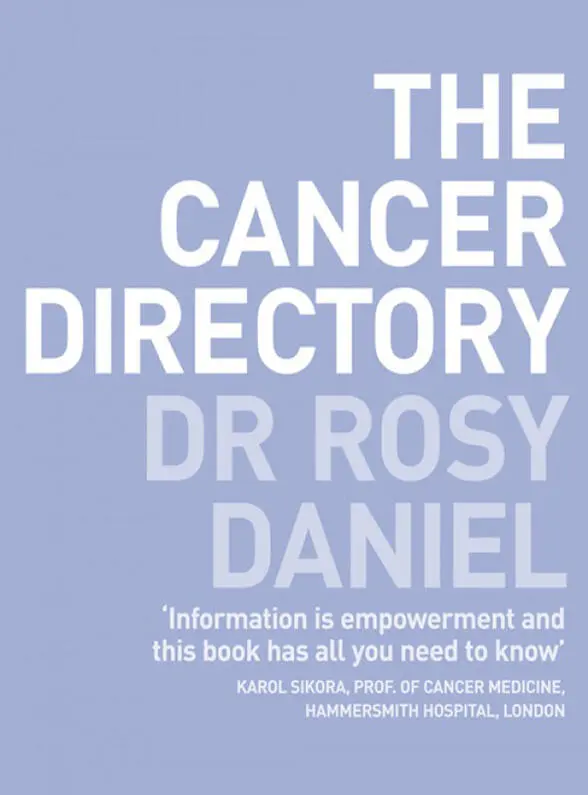
- Название:The Cancer Directory
- Автор:
- Жанр:
- Год:неизвестен
- ISBN:нет данных
- Рейтинг книги:3 / 5. Голосов: 1
-
Избранное:Добавить в избранное
- Отзывы:
-
Ваша оценка:
The Cancer Directory: краткое содержание, описание и аннотация
Предлагаем к чтению аннотацию, описание, краткое содержание или предисловие (зависит от того, что написал сам автор книги «The Cancer Directory»). Если вы не нашли необходимую информацию о книге — напишите в комментариях, мы постараемся отыскать её.
The Cancer Directory — читать онлайн ознакомительный отрывок
Ниже представлен текст книги, разбитый по страницам. Система сохранения места последней прочитанной страницы, позволяет с удобством читать онлайн бесплатно книгу «The Cancer Directory», без необходимости каждый раз заново искать на чём Вы остановились. Поставьте закладку, и сможете в любой момент перейти на страницу, на которой закончили чтение.
Интервал:
Закладка:
Heat is a very effective means of killing cancer tissue. As tissue temperatures rise above 113°F (50°C), protein is permanently damaged and cell membranes fuse. The process is rapid, typically requiring less than 10–15 minutes of exposure for a 3-cm tumour. This can be done without causing too much damage to surrounding tissues. There are some specialists in the UK who use this procedure, but it is only useful for tumours that are 5 cm or less in size.
Effects are similar to that of a microwave, where heat is generated from the inside out. Destroyed cells are reabsorbed by the body over time.
Therasphere
This is a system whereby millions of microscopic glass beads embedded with a radioactive element are delivered directly into the blood vessels feeding a tumour.
It is currently used for tumours in the liver – both primary and secondary. The tiny beads (one-third the diameter of a human hair) are passed through a catheter placed in the femoral artery (in the thigh). They are then guided via the hepatic artery (the main blood vessel in the liver) to the blood vessel supplying the tumour. The beads remain in the body and lose their radiation within two weeks.
Patients can return home the same day, and there is no risk to family members. Possible side-effects include vomiting, mild fever, abdominal pain and gastric ulcers but, so far, the main complaints have been fatigue and nausea.
Clinical trials in many different countries so far show that patients are living twice as long with this treatment – and with good quality of life. It has also been successfully combined with chemotherapy. There have even been one or two recorded incidences where a liver cancer had shrunk sufficiently to become operable, or potentially curable. Its limitations, as with all forms of treatments involving radiation, are related to the size and volume of the tumour, as too large a tumour would require an unsafe dose of radiation.
Fractionated Stereotactic Radiosurgery
This is a non-invasive therapy for brain tumours that, in the past, have been very difficult to treat. It directs precisely guided beams of radiation from many hundreds of different angles to converge on the tumour. It is called radiosurgery because the surgeon uses the radiation beams like a knife to cut out the tumour. By focusing these beams from so many different positions, the effects on the normal healthy brain and tissue are minimized while striking only the target with the prescribed treatment.
The main difference between standard radiation and fractionated stereotactic radiosurgery is that standard radiation will also irradiate large amounts of normal healthy brain compared with radiosurgery, which is focused almost exclusively on the tumour.
This approach is also proving effective for treating tumours of the head and neck, where there are many important nerves and structures very close together in one area.
Traditional surgery may result in a degree of facial paralysis and functional loss, so this form of treatment, if available, is highly desirable.
Brachytherapy
This is being used for prostate cancer that has been detected early and not spread beyond the gland. In this case, tiny radioactive ‘seeds’ or pellets, containing radioactive iodine, are implanted directly into the middle of the cancer via thin needles, where they will keep on giving off radiation for up to a year. Up to a hundred pellets are implanted through the skin, under either a spinal or general anaesthetic.
The radioactivity of the pellets slowly decays during the months after the operation; few long-term risks have been reported with this treatment.
Chemotherapy
We have seen how surgery and radiotherapy are used to deal with disease that is localized in a particular area. But if the disease has spread, or metastasized, then the treatment has to reach all parts of the body to eliminate cancer cells wherever they have lodged. Such treatments are called ‘systemic’, as they go right round the system. Since the 1940s, around 150 drugs with anti-cancer effects have been developed. They act in various ways to destroy or slow down the growth of rapidly dividing cancer cells.
There are several ways in which different types of anti-cancer drugs work:
• by preventing the DNA in the cancer cell nucleus from being copied, a vital process for cell division and growth of the tumour
• by depleting the cancer cell of the building blocks for DNA so that fewer raw materials are available for DNA to replicate itself
• by preventing the binding of enzymes that enable the production of key protein molecules in the cancer cells
• by blocking protein synthesis, especially those that maintain healthy cell activity as well as cell division.
The Discovery of Anti-cancer Drugs
The majority of anti-cancer drugs were discovered by accident. Initially, a few were designed specifically to inhibit tumour cell growth, but this is now changing.
Many successful cancer drugs come from natural sources – adriamycin comes from a fungus found on buildings on the Adriatic coast; vincristine originated from the pretty blue Vinca (periwinkle) plant, often seen in English gardens; taxol and taxotere, collectively called taxanes, were derived from the Pacific yew tree – and were also found by accident. There are now several other derivatives synthesized in the laboratory.
Chemotherapy Regimes
Chemotherapy is often given as a mixture of two or three drugs in a fixed pattern, known as a ‘chemotherapy regime’. There are many regimes, which are constantly changing, as research is ongoing to define the optimal combinations for the best effects. Specific regimes are not covered here as they would quickly become out of date. Once you know what chemotherapy drugs your oncologist is offering, further information about them can be obtained from:
• CancerBACUP. This organization has excellent leaflets about the various anti-cancer drugs, and a website with a comprehensive section on chemotherapy (www.cancerbacup.org.uk)
• Pharmacologists in the information departments of major hospitals
• Part 2 of the Resources Directory. This lists other useful websites and resources for more information about your treatment
• The UK Cancer Options team, which offers in-depth information, including the results of clinical trials using the drugs, the rates of responses, and how frequent and severe the side-effects were. It will also research the clinical evidence for you and let you have the facts.
Administration of Chemotherapy
There are several ways drugs can be given for cancer. Some can be taken as pills or capsules, but the majority are given through an intravenous drip. They may sometimes be delivered straight into a body cavity such as the bladder or abdomen. Most can now be given via an outpatients clinic.
Chemotherapy suites with comfortable reclining chairs and a bright, supportive atmosphere have sprung up throughout cancer-treatment centres. These are usually run by nurses, who are expert at dealing with the administration of chemotherapy. They are huge founts of knowledge about the side-effects, any likely problems that may be encountered and how to deal with them creatively.
The Side-effects of Chemotherapy
Effects on Fast-growing Tissues
Because tumour cells are so close in structure and function to normal cells, it is not surprising that any drug that reduces cancer growth also affects normal cells. This means that many cancer drugs have very potent side-effects, and are only prescribed by specialists in the field. Anti-cancer drugs inhibit cell turnover in general and so affect most severely the most rapidly dividing cells in the body. These include those in the bone marrow that form blood cells, and those in the lining of the intestines, skin and hair follicles. A depressed immune system is common with many anti-cancer agents because of their effect on bone marrow. Therefore, when considering your treatment plan and assessing your tolerance levels, you may wish to consider how to offset this effect on immune function by immune stimulation (see Chapters 5 and 7).
Читать дальшеИнтервал:
Закладка:
Похожие книги на «The Cancer Directory»
Представляем Вашему вниманию похожие книги на «The Cancer Directory» списком для выбора. Мы отобрали схожую по названию и смыслу литературу в надежде предоставить читателям больше вариантов отыскать новые, интересные, ещё непрочитанные произведения.







Обсуждение, отзывы о книге «The Cancer Directory» и просто собственные мнения читателей. Оставьте ваши комментарии, напишите, что Вы думаете о произведении, его смысле или главных героях. Укажите что конкретно понравилось, а что нет, и почему Вы так считаете.